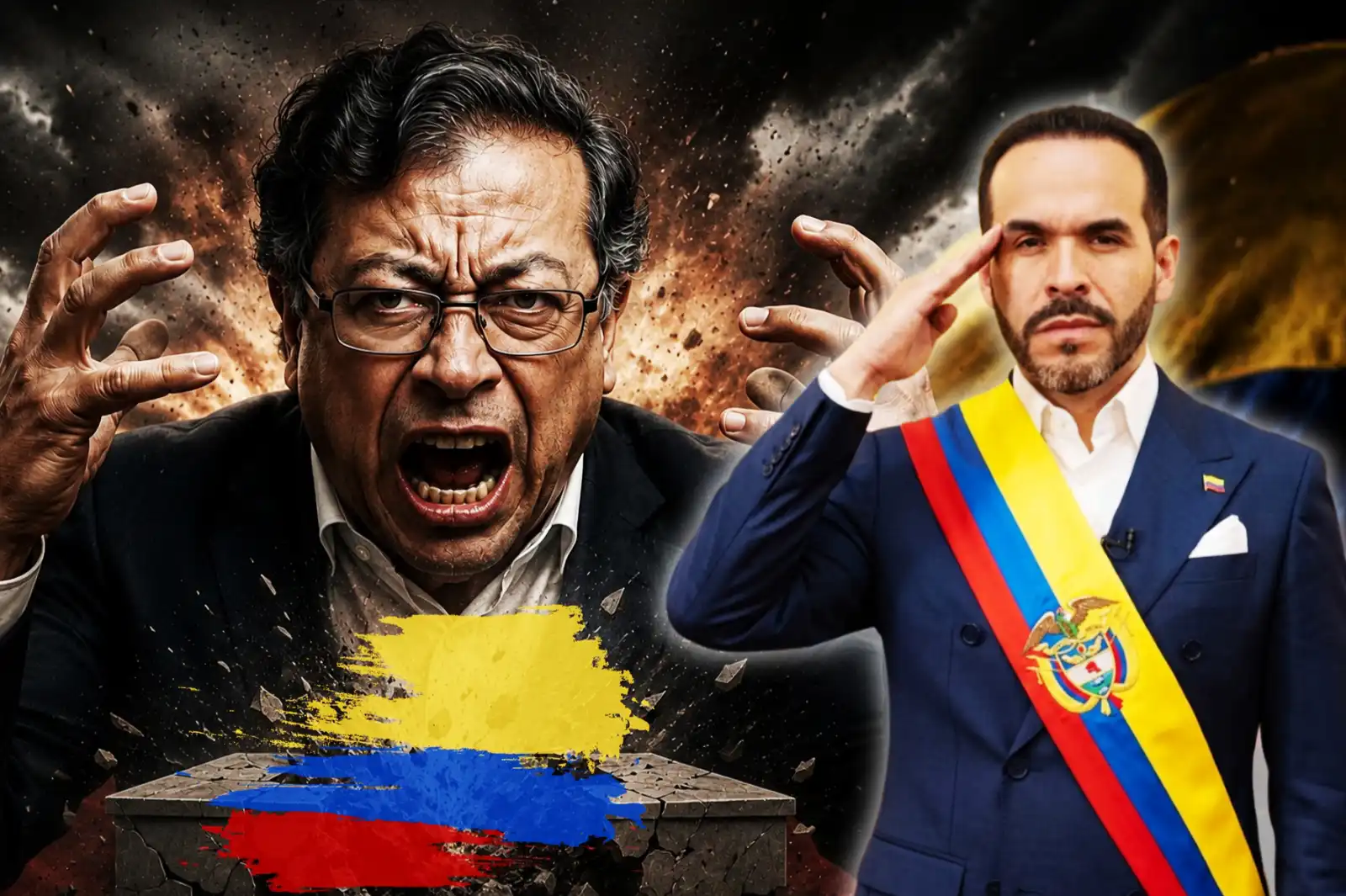
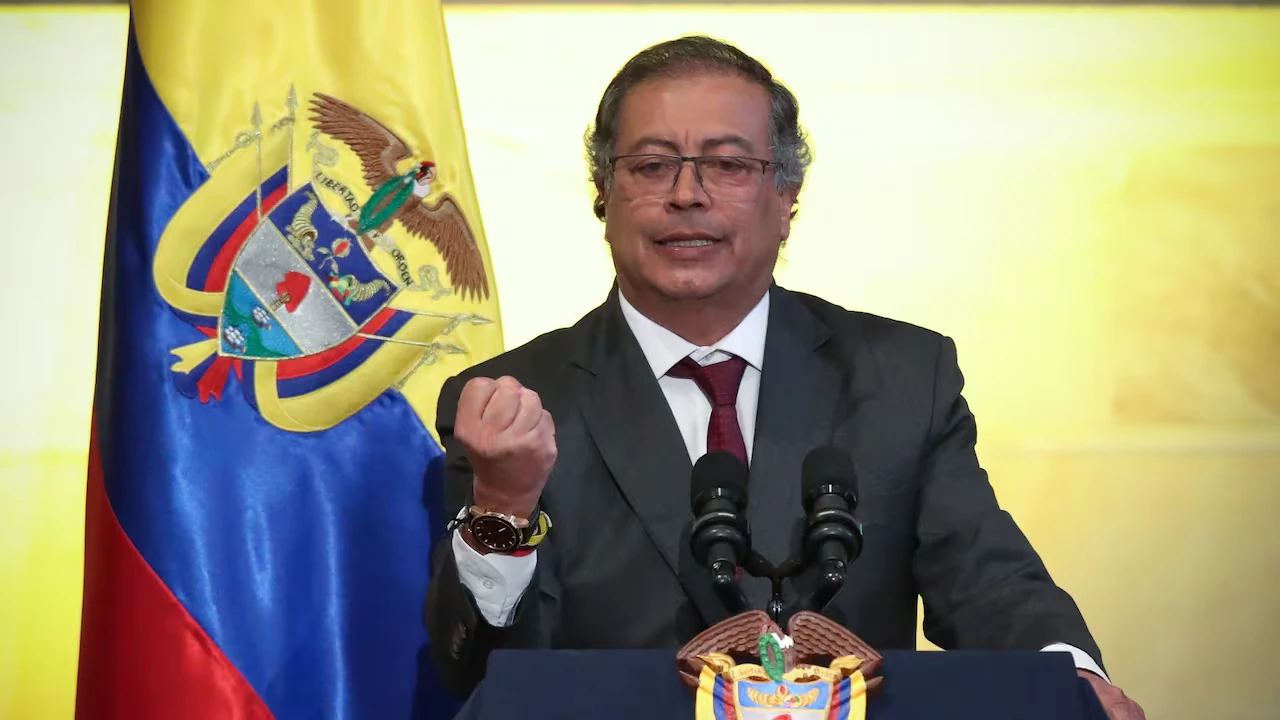
The communist president of Colombia, Gustavo Petro, once again rejected the election results and stated that he will not recognize the incoming government of Abelardo de la Espriella, in a concerning anti-democratic behavior.
In a lengthy message on his X account, the far-left leader denounced an alleged large-scale electoral fraud, although without presenting evidence, and harshly criticized the Registraduría.
In his post, Petro claimed that there was a technological manipulation of the electoral process. “We have all the information about an IP server located in Los Angeles, California, owned by the Bautista brothers, integrated into the scrutiny operation that used algorithms that substantially altered the voting in favor of Abelardo,” he stated.
Gustavo Petro
The leader deepened his accusations by asserting that the results would have been altered through computer mechanisms: “the algorithms that tainted the electoral result were used with the electoral census of those who never vote to be replaced by voters who could do so multiple times or without voters at homogeneous jury tables.”
Petro also pointed to alleged irregularities in voting abroad. “The tables abroad where Abelardo obtained 177,000 votes above Cepeda have jury tables from Colombia and non-residents in the US and Spain, which is illegal,” he claimed, adding that “voters brought for the World Cup […] could vote seven times at the polls using the names of those who never vote.”
In his message, the communist president also linked the alleged fraud to international actors, stating that “the company that supplied tainted algorithms and other support to the Bautista brothers is a private Israeli intelligence company named BlackCube,” and that “Balart is the lobbying firm that was paid millions of dollars to clean Abelardo's image.”
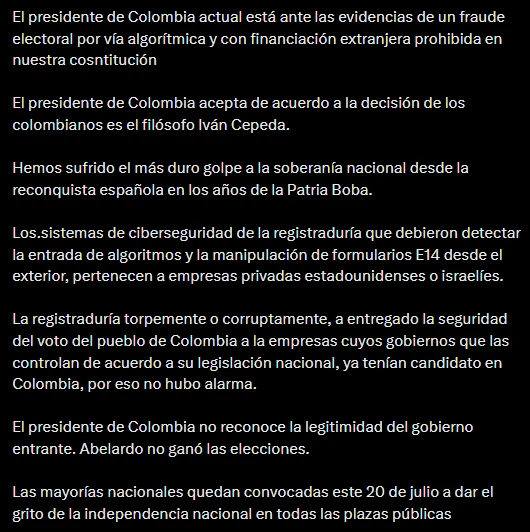
The message from Gustavo Petro
At the same time, Petro directly criticized the functioning of the electoral system and accused the authorities of being corrupt. “The Registraduría clumsily or corruptly handed over the security of the vote of the people of Colombia to companies whose governments […] already had a candidate in Colombia, which is why there was no alarm,” he denounced.
The most critical point of his statement came when he disregarded the election results. “The president of Colombia does not recognize the legitimacy of the incoming government. Abelardo did not win the elections,” he asserted.
At the same time, he maintained that “the president of Colombia accepts that according to the decision of the Colombians, the philosopher Iván Cepeda is the one.”
Finally, the leader called for demonstrations across the country. “The national majorities are called this July 20 to raise the cry of national independence in all public squares,” he expressed, in a context of growing tension.
Petro's statements not only escalate the political conflict but also raise concerns about the institutional impact of disregarding the electoral result without judicial backing, at a crucial moment for the democratic stability of Colombia.