Russian attacks on targets located in western Ukraine, some just a few kilometers from the border with Poland, led Warsaw to raise the security level and prepare for a possible intensification of Moscow's military operations. The Polish government believes that the proximity of the bombings and the use of drones against strategic routes pose an increasing risk to its territory and to the connections between Ukraine and the European Union.
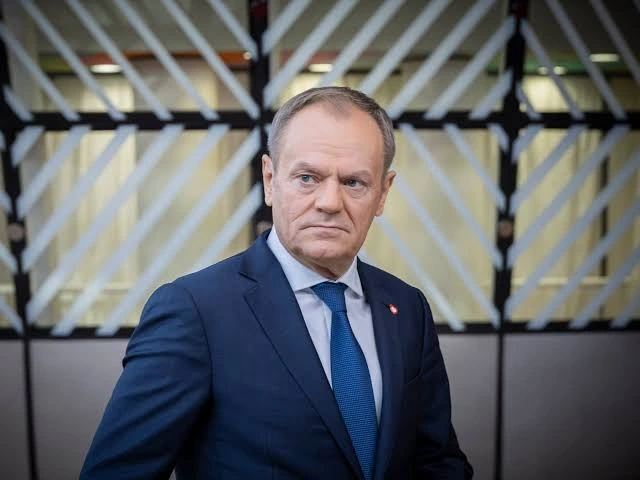
Polish Prime Minister Donald Tusk gathered ministers and security agency officials in Warsaw this Sunday to analyze recent events and define new preventive measures. The head of government warned that the coming weeks and months could be marked by increased Russian activity and assured that Poland will act with heightened measures in the face of the possibility of new incidents.
''We must be aware that, starting today, we will proceed in a very reinforced manner,'' Tusk stated, noting that authorities expect a period of ''intensified action by Russia.''
The Polish Prime Minister assured that he will define preventive measures in response to the increasing military activity of Russia near the border with Warsaw
The alarm was raised after a Russian drone hit the locomotive of a passenger train traveling the route between Kiev and Warsaw. The convoy was in Ukrainian territory, near the Polish border, and the impact did not cause any injuries among the passengers.
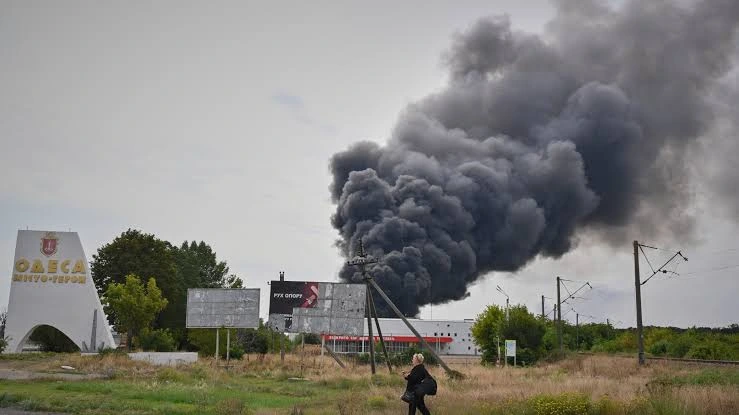
Another attack occurred near the Dorohusk-Jagodzin border crossing, one of the main connection points between Ukraine and Poland. The area was evacuated after a drone struck near a gas station and caused a fire that also affected several trucks.
The incidents raised particular concern in Warsaw due to the strategic importance of border routes. Tusk announced that border crossings will operate under special conditions over the coming months, although authorities will seek to ensure transit to avoid disruptions in the movement of goods.
Several attacks with Russian drones were carried out in recent days, many near the border with Poland
One of the main concerns of the Polish government is to prevent the formation of long lines of trucks, especially those transporting fuel. According to Tusk, a prolonged concentration of vehicles could become a vulnerable target for new attacks.
The prime minister also stated that the attacks are part of a possible Russian attempt to disrupt Ukraine's logistical connections. Tusk maintained that Warsaw had already considered the possibility that Moscow sought to create chaos, paralyze transport routes, and damage the border crossings used to maintain supply to Ukraine.
The situation also led Poland to adopt preventive military measures. During the early hours of Sunday, air defense systems detected more than a dozen Russian drones over western Ukraine. In response, Warsaw deployed fighter jets and issued alerts for residents of regions near the border due to the risk of a possible incursion.
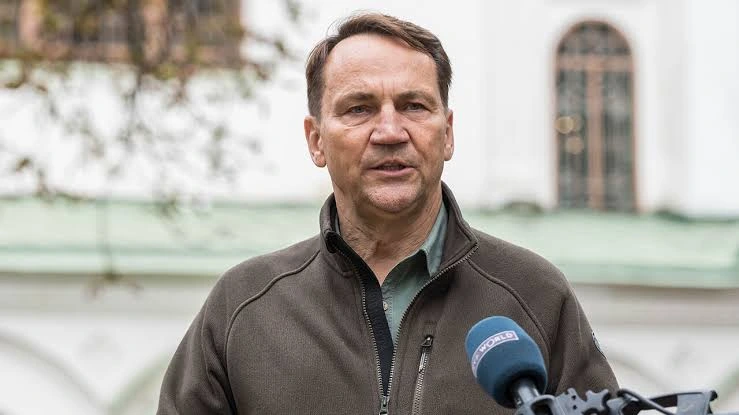
Polish Foreign Minister Radoslaw Sikorski described the recent events as a new escalation during a visit to Kiev. The official stated that the situation represents ''another major challenge for Ukraine'' and called for greater involvement from European countries to support the government of Volodimir Zelenski in the face of the Russian offensive.
The Polish Deputy Prime Minister, who is also the Minister of Foreign Affairs, noted that recent events represent a new military escalation
Ukraine reported that Moscow is expanding its operations into regions far from the main front lines. Zelenski stated that recent attacks affected railway facilities, energy infrastructure, and civilian buildings, including targets located in the west of the country, an area that had experienced a lower intensity of attacks compared to other regions.
Russia later confirmed attacks on railway infrastructure in western Ukraine but claimed that the targets were linked to the transfer of military material from European countries. Moscow asserted that these facilities are part of the logistical network used to transport supplies and equipment intended for Ukrainian forces.
From Kiev, Ukrainian Foreign Minister Andrii Sibiga warned that attacks near Poland demonstrate that the Russian threat is increasingly approaching the borders of the European Union and NATO. ''The Russian barbarians are at your doors,'' he stated, while calling for a more robust response from allies.
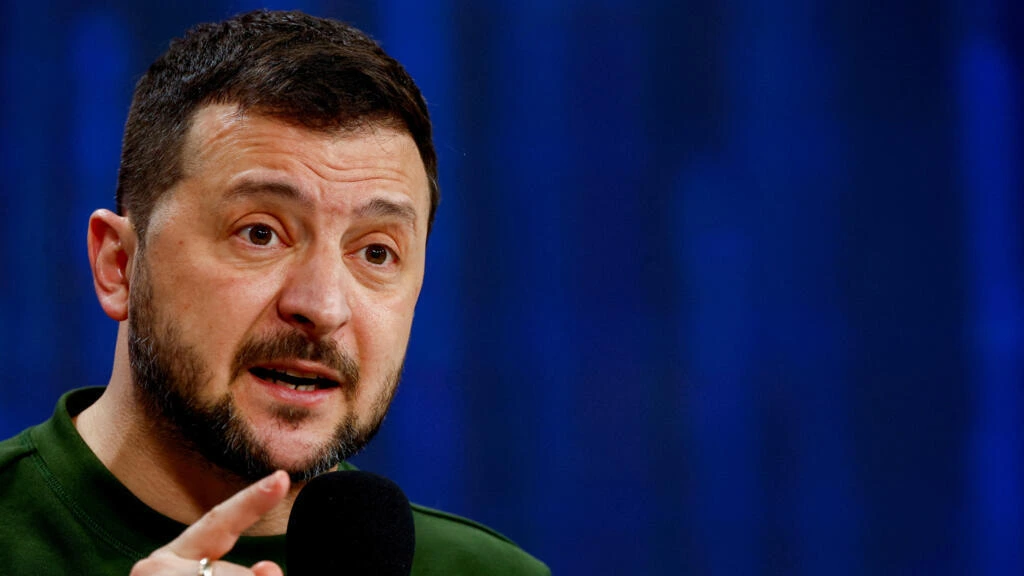
Volodymyr Zelensky mentioned that Russian attacks affected railway stations, energy infrastructure, and civilian buildings
Poland is also analyzing other incidents recently recorded in Europe that its authorities consider related to Russian activities. Sikorski mentioned the discovery of a drone with explosives at Leipzig airport, in Germany, an episode that German authorities had linked to Russia in early September.
In this scenario, Warsaw seeks to strengthen the surveillance of its border and protect the strategic routes that connect Ukraine with Europe. The Polish government believes that the evolution of Russian attacks requires keeping its defense forces prepared and adopting anticipatory measures to prevent the escalation of the conflict from directly affecting allied territory.