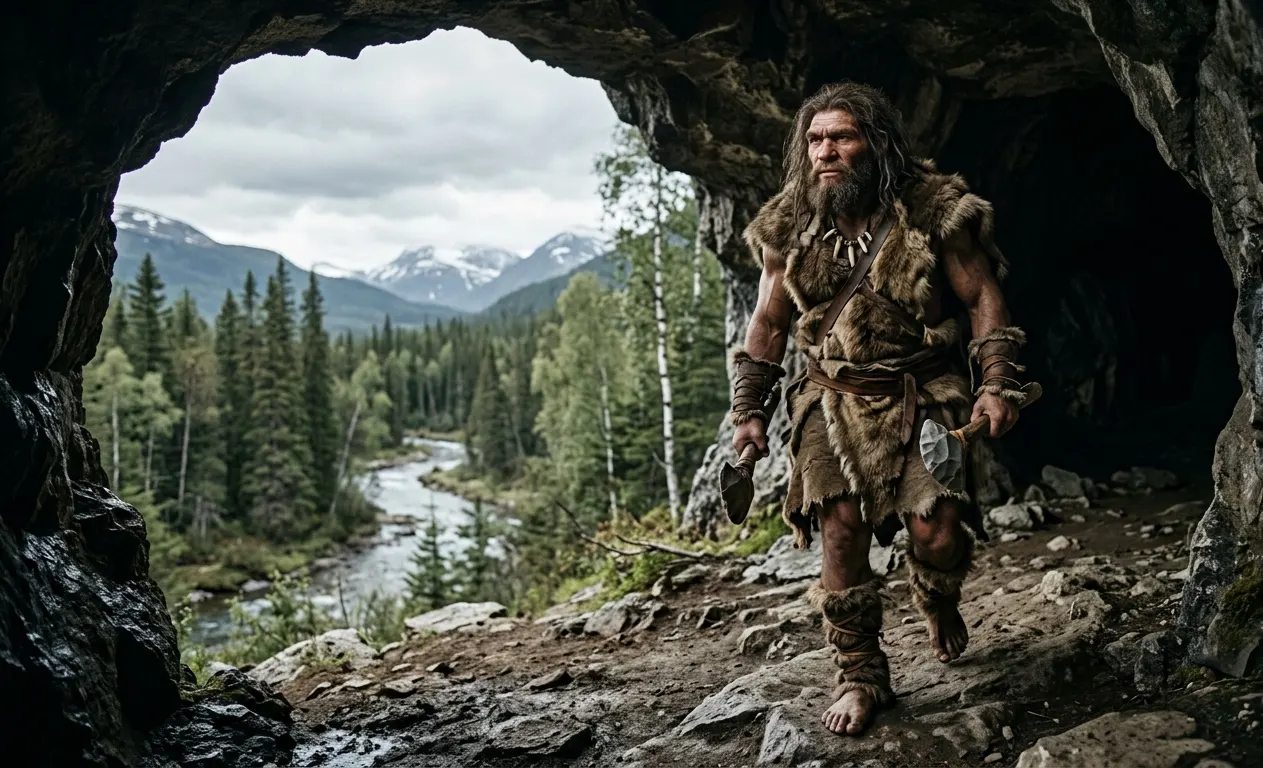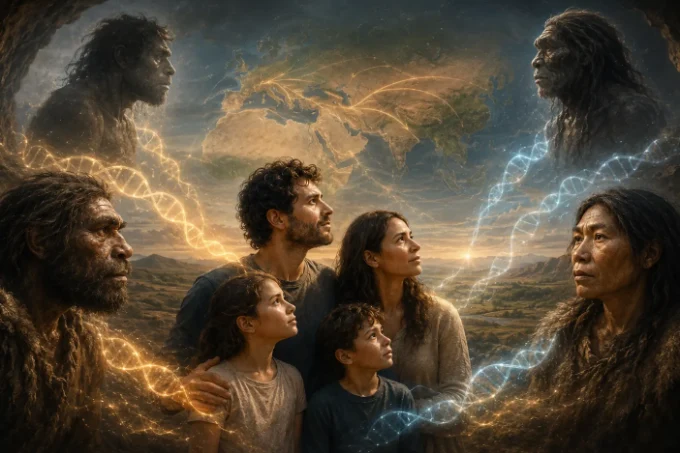

Two previously unknown human relatives left traces of their DNA in people living today The finding adds another layer to the genetic legacy already known from Neanderthals and Denisovans, reinforcing the idea that human evolution was a long process of encounters and crossings between different populations of hominins.
Researchers from the University of California, Berkeley identified specific regions of the current genome that come from these unnamed ancestors and estimated when the crossings occurred. To achieve this, they used a new method that analyzes hundreds of genomes from people around the world and reconstructs the ancient genealogical connections between their DNA sequences.
One of these groups, which scientists call a ghost ancestor, interbred with modern humans in Africa more than 50,000 years ago. The encounter happened before the great migration of Homo sapiens to Europe and Asia. The DNA inherited from this lineage represents about 1% of the current human genome, a proportion similar to that left by Neanderthals.
This lineage separated from the ancestors of modern humans about 800,000 years ago, almost at the same time that Neanderthals and Denisovans differentiated from each other. However, the genetic exchange with our species occurred before the contacts with Neanderthals and Denisovans outside Africa.
 A trace present in all humanity
“Previous publications suggested that ghost ancestry could exist, that is, from unknown archaic lineages in modern humans, but they had not concluded whether that ancestry was only in Africans or not, nor when the introgression event occurred,” explained Yulin Zhang, a graduate student at Berkeley and co-lead author of the study. “We were able to find and map genomic locations in modern humans that come from this ghost lineage and show that this ancestry is present in all current humans, not just in Africans.”
The researchers also detected genetic material from an even older population, which they call a superarchaic ancestor. This hominin descended from a lineage from about 1.8 million years ago and appears to have interbred with Denisovans in Eurasia, probably more than 200,000 years ago. Later, Denisovans mixed with Homo sapiens, and thus a small portion of that superarchaic DNA reached modern genomes.