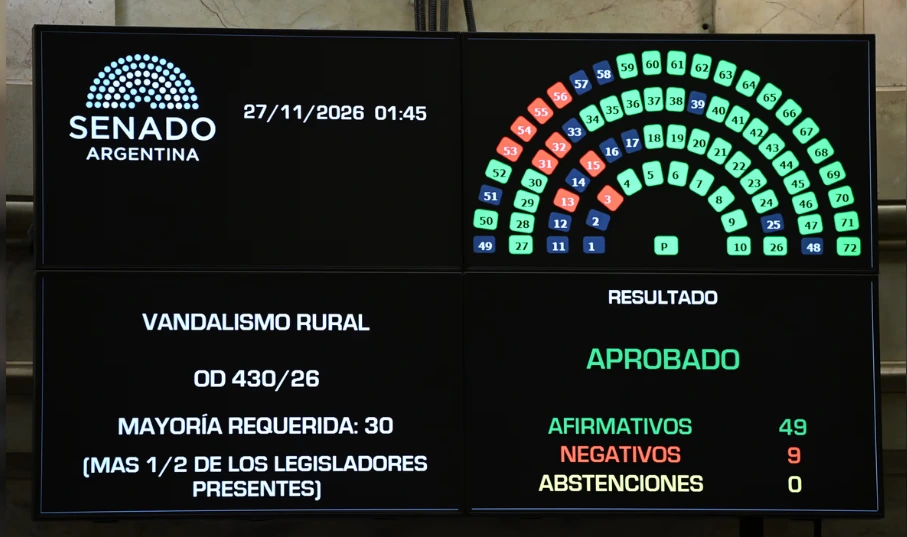
With 49 votes in favor and 9 against, Congress enacted the changes to the Penal Code that establish penalties of up to eight years in prison for attacks on crops, silobags, livestock, and productive infrastructure
The National Senate has enacted law modifications to the Penal Code aimed at . The initiative received 49 affirmative votes and 9 negative votes, establishing new sanctions for those who enter rural establishments without authorization or cause damage to assets related to productive activity.
The approval represents a step forward for the agricultural sector, which has been demanding more robust legal tools for years in response to attacks on fields, crops, silobags, animals, and rural facilities.
With the new regulations, those responsible for certain acts of vandalism may face penalties of between two and eight years in prison, depending on the conduct and circumstances outlined by the law. Additionally, fines and aggravating factors for specific situations are included.
The ultimate sanction aims to put an end to impunity for crimes that generate economic losses, harm the work of producers, and affect the functioning of regional economies.
What the new law against rural vandalism establishes
What does the new law against rural vandalism establish
The changes introduced in the Penal Code contemplate various behaviors that directly affect agricultural production.
Among the main provisions is the criminalization of unauthorized entry to rural properties, along with harsher penalties for those who destroy or damage assets used in productive activity.
The regulations cover attacks against:
Crops and plantations.
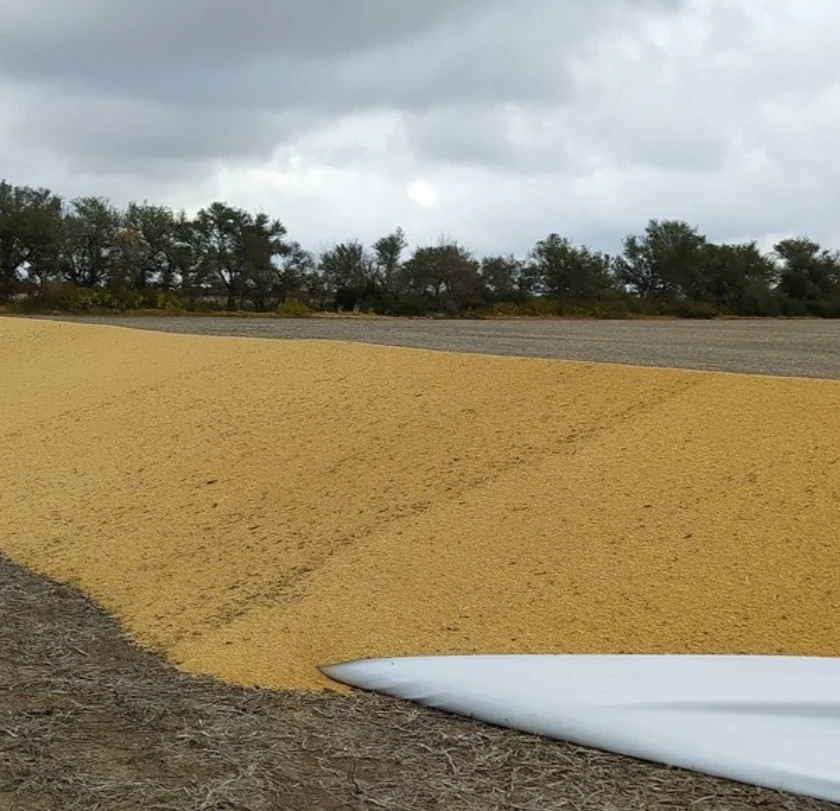
Silobags and other grain storage systems.
Cattle and animals intended for production.
Rural facilities and infrastructure.
Other assets related to agricultural activity as outlined by the legislation.
The framework also incorporates fines and aggravating factors for certain circumstances, aiming for the penalties to reflect the severity of the damages and the impact they may have on production.
In this way, the State incorporates more specific criminal tools to address a problem that affects both large establishments and small and medium producers.
CRA celebrated the final sanction and highlighted the demands of the agricultural sector
Argentine Rural Confederations (CRA) celebrated the approval of the initiative and considered it an important advance in addressing a problem that has harmed producers and rural communities across the country for years.
The organization particularly highlighted the union and technical work carried out by its leaders to transform the demands of the agricultural sector into concrete legislative proposals.
CRA celebrated the final sanction and highlighted the field's claim
From CRA, they emphasized the importance of having a legal framework that allows for the protection of the efforts of those who invest, produce, and generate employment in the interior of the country.
The sanction also represents an institutional recognition of a historical demand from the agricultural sector: that attacks against rural production have criminal consequences proportional to the damages caused.
A signal to protect agricultural production
Rural vandalism not only represents an economic detriment to the owners of the affected establishments. It can also compromise entire production cycles, generate losses of merchandise, and harm workers, suppliers, and communities that depend on agricultural activity.
The destruction of silobags, for example, can lead to the loss of stored grains and complicate marketing logistics. Attacks on crops or livestock can also generate consequences that exceed immediate material damage.
With the approved reform, Congress established a stricter sanctions regime for certain behaviors and sent a signal about the importance of protecting private property and rural work.
The new law seeks to ensure that producers have greater guarantees against those who threaten their establishments and economic activity, in a country where agriculture is one of the main engines of foreign currency generation, employment, and investment.