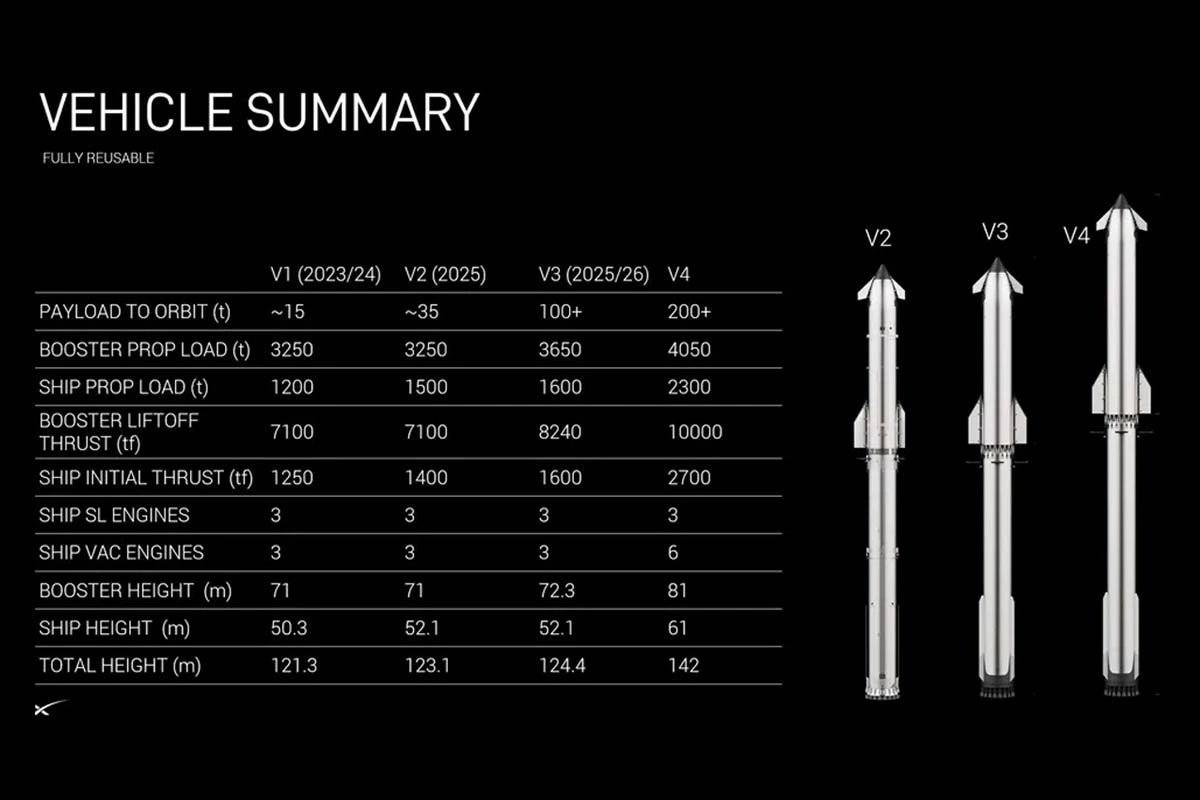
Elon Musk revealed the changes that Starship V4 will have, the next version of the megacraft from SpaceX. According to the entrepreneur, the upper stage will reach about 70 meters in length, an increase of nearly 40% compared to the current version, and will be able to carry more than 60% additional propellant.
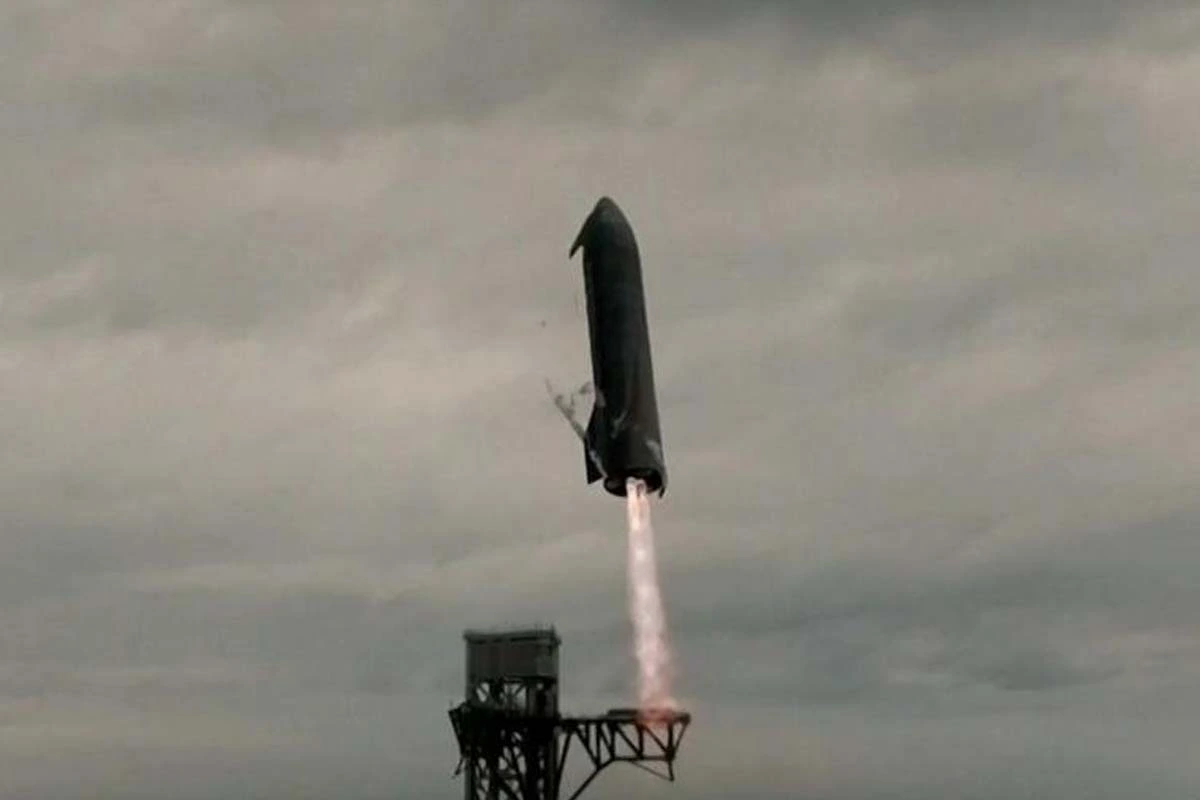
The announcement came after a key advance for the company: on Saturday, November 14, SpaceX successfully recovered the upper stage of Starship for the first time using the mechanical arms of the launch tower in Texas. The maneuver brought the company closer to its goal of fully reusing the vehicle.
Elon Musk announced the changes that Starship V4 will have
What changes will Starship V4 have
Musk detailed the features of the next generation in a post on X, made on Sunday, November 15. In addition to the increase in size and fuel capacity, the spacecraft will incorporate a new engine configuration.
Length: approximately 70 meters, about 230 feet.
Propellant capacity: more than 60% higher than the current version.
Engines: nine in total, compared to six in the V3 version.
Propulsion: will add three Raptor Vacuum V4 engines, with greater thrust.
The total height of the vehicle could also approach 150 meters. In August 2025, Musk had shared a projection of 142 meters, but later clarified that this figure was outdated and that the final version would likely be closer to 150 meters.
How Starship V3 is and what dimensions the new version will have
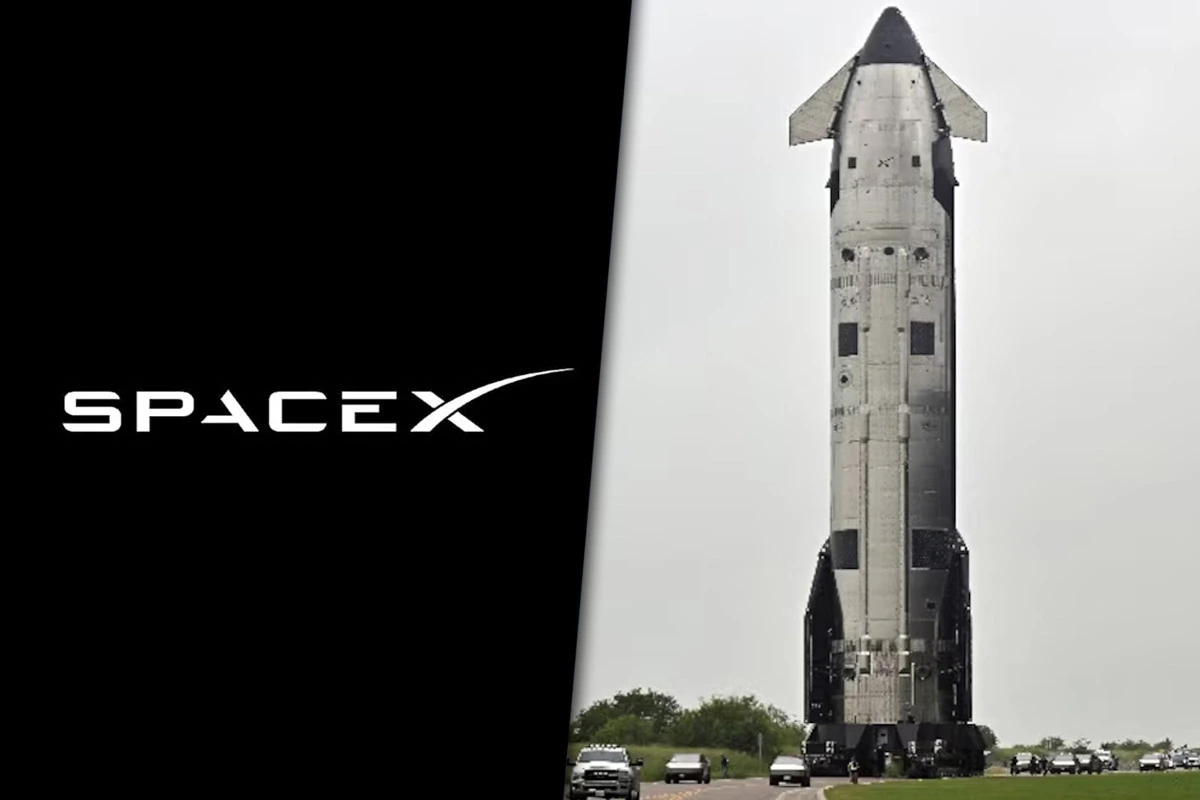
The current version, V3, was the one that conducted test flight number 15 on Friday, November 13. Combined with the Super Heavy booster, it reaches 124 meters in height and is the largest and most powerful rocket built to date.
What is the Starship V3 like and what dimensions will the new version have
The upper stage V3 measures 52 meters and uses six Raptor V3 engines. The Super Heavy booster, on the other hand, has another 33 engines. With the arrival of V4, the upper stage will have a length similar to the full height of a Falcon 9, although it will be considerably wider: it will have about nine meters in diameter, compared to the 5.2 meters of the fairing of that rocket.
The first recovery of the Starship and SpaceX's goal
Flight 15 was scheduled to recover both the Super Heavy booster and the upper stage using the mechanical arms of the tower. However, the Super Heavy registered a low fuel level alarm and had to divert to land in the Gulf of Mexico, while the spacecraft completed its mission and deployed Starlink V3 satellites.
The first rescue of the Starship ship and SpaceX's objective
The recovery of the upper stage was indeed accomplished on Saturday. Unlike the booster, which returns a few minutes after launch, the spacecraft returns from orbit at higher speed and temperature, making the maneuver a unique challenge for SpaceX.
“That was the missing link,” said Dan Huot, a member of the company, during the landing broadcast. He added: “We caught a Starship, and now everything changes.”