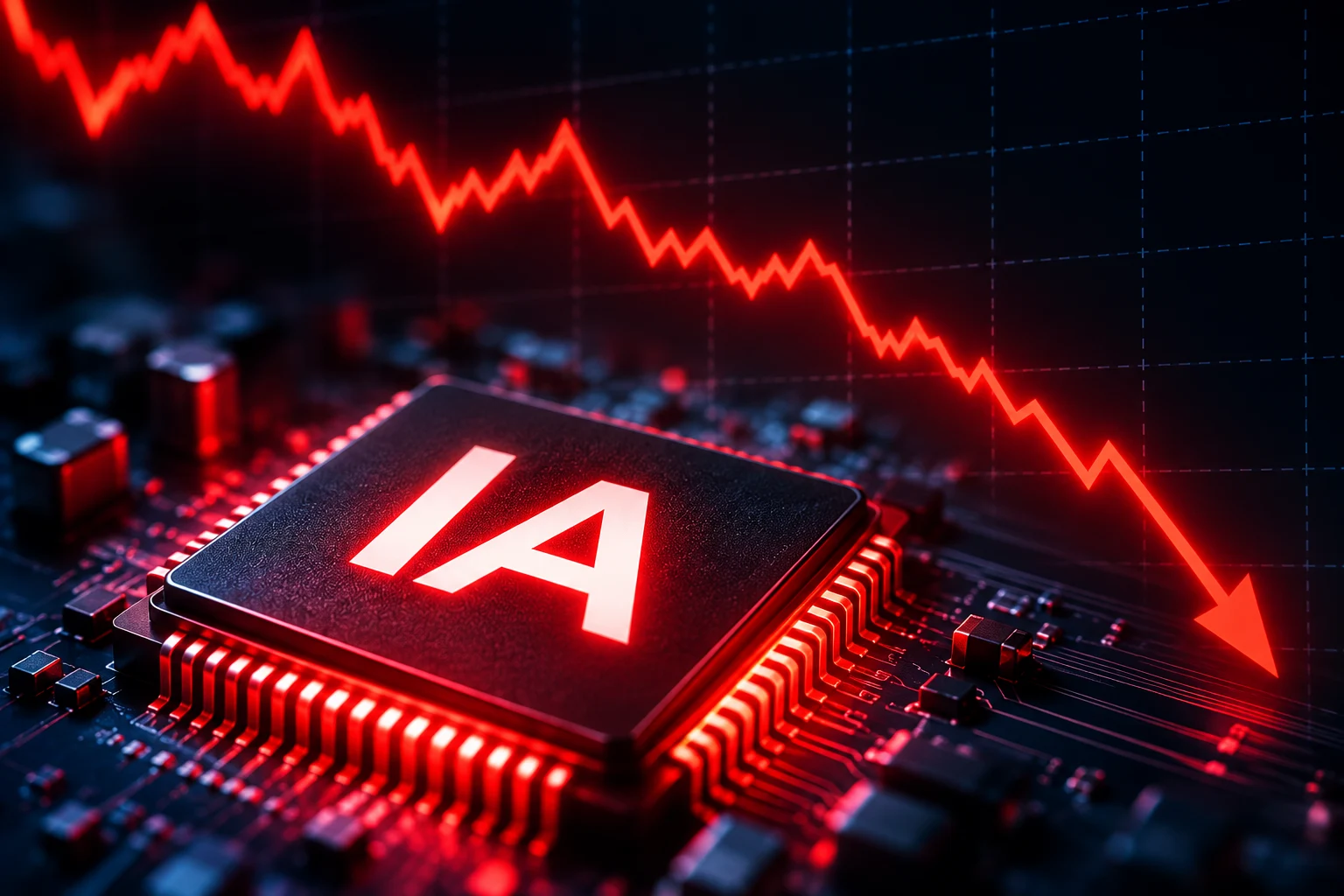
The fall of technology stocks shook major hedge funds and wiped out a significant portion of the gains they had accumulated during 2026. The crash on Thursday, November 5, particularly hit managers betting on companies linked to artificial intelligence, while several firms began to reduce their risks and adjust their investment teams.
According to estimates from Goldman Sachs cited by Reuters, technology-focused equity funds that combine long and short positions lost more than 4% in a single day. With this setback, their year-to-date performance was practically zero, after reaching maximum gains close to 24% in June.
The tech downturn hit different investment strategies
The so-called hedge funds are private investment vehicles that manage capital from large clients and institutions. Some use a long-short strategy: they buy stocks they consider promising and bet against those whose prices they expect to decline.
The turbulence was not limited to technology funds. Global managers who select stocks through company analysis recorded an average drop of 1.3% on Thursday, while multi-strategy funds, which distribute their capital among different teams, fell by 1.4%.
The crisis had been building since October. The Nasdaq 100 index, composed of major technology companies, lost 6.6% during that month, its worst monthly result in eighteen months. JPMorgan estimated that global hedge funds had suffered average losses of 3% during that period.
Walleye Capital announced cuts after its worst month since 2020
One of the most notable cases is Walleye Capital, a multi-strategy fund based in New York that manages around USD 17 billion. The firm informed its clients that it will reduce its internal stock trading business and lay off a substantial portion of the professionals responsible for that activity.
The measure was communicated through a letter to investors obtained by Reuters. There, the company acknowledged that it experienced its worst month since March 2020, when financial markets were severely impacted by the onset of the pandemic.
The management explained that it reviewed various areas of its operations and assessed what the appropriate size of the fund should be. As part of the reorganization, it plans to return a portion of the capital to its investors.
Artificial intelligence and the risks of concentrated bets
Doubts about the economic performance of massive investments in artificial intelligence fueled stock market volatility. These were compounded by concerns over rising financing costs associated with the expansion of data centers.
According to traders consulted by Reuters, several investment platforms have already reduced their financial leverage and eliminated teams with negative results. If the decline continues, further adjustments could occur.
John Flood, an executive at Goldman Sachs, noted that many funds had decreased their exposure before the U.S. midterm elections. They then rushed to buy during Wednesday's rally, but Thursday's drop forced them to reverse those positions.
The danger of many funds selling the same stocks
The consulting firm PivotalPath warned of an additional phenomenon: the ten largest multi-strategy firms maintain increasingly similar investment positions. If they decide to simultaneously divest from the same assets, the sales could deepen the decline in their prices.
Thus, the correction in the tech sector not only affected November's balances. It also put pressure on the investment structures that had benefited from the enthusiasm for artificial intelligence during the first half of the year, with layoffs and capital returns as the first visible consequences.