In that same call, the company's head of artificial intelligence, Ashok Elluswamy, indicated that Tesla's unsupervised robotaxis had accumulated 380,000 miles across six cities in two states.





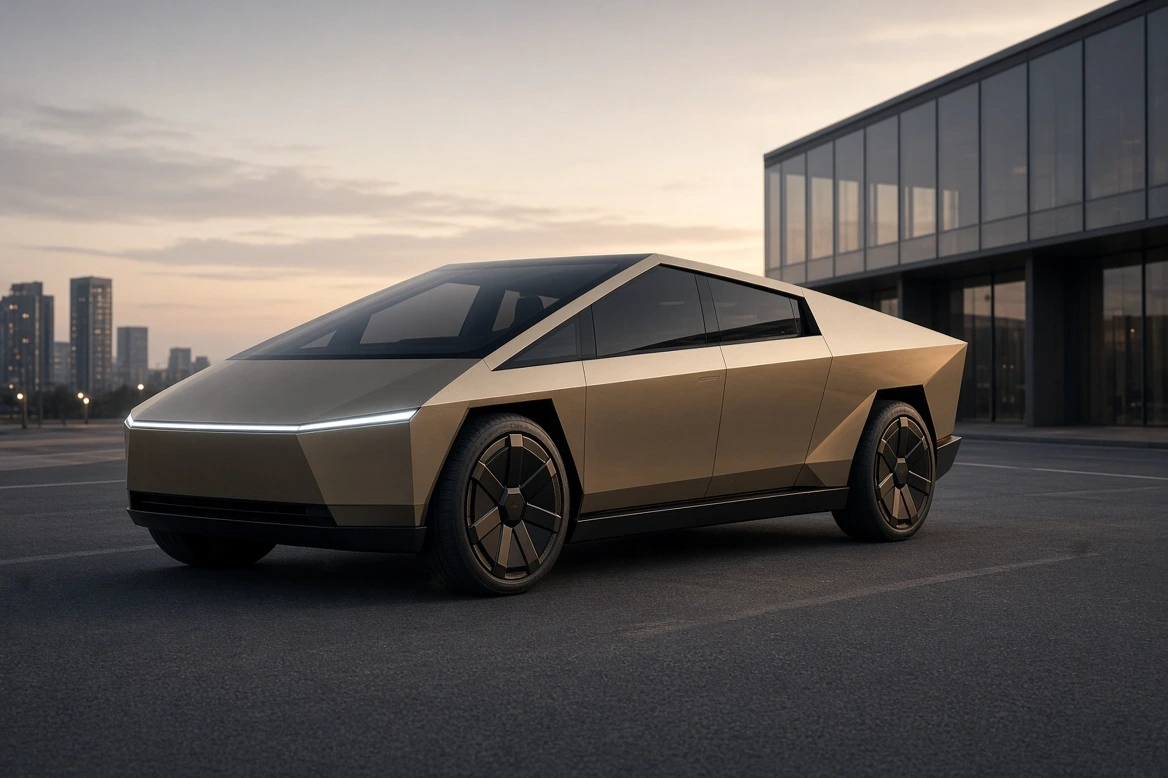

The vehicle without a steering wheel or pedals, central to Elon Musk's plans, could debut in Austin this month, although experts and regulators question its safety and the maturity of the software
In that same call, the company's head of artificial intelligence, Ashok Elluswamy, indicated that Tesla's unsupervised robotaxis had accumulated 380,000 miles across six cities in two states.
Waymo, which has been offering commercial service since 2020, has surpassed 220 million fully autonomous miles on public roads, about 579 times more.
Tesla combines supervised and unsupervised vehicles, but the ratio is constantly changing. According to a collaborative tracker, it operated 16 unsupervised units in Austin, four in Dallas, and one in Houston.
Unlike Waymo, which has published studies in peer-reviewed scientific journals, Tesla relies on its own statistics and has attempted to limit public scrutiny of the data it must provide to regulators. The Insurance Institute for Highway Safety analyzed the first 50 million miles of Waymo and concluded that its crash rates are significantly lower than those of human drivers.
The launch comes at a particular moment. The Cybercab is the lightest and most efficient electric vehicle Tesla has ever manufactured, but its fate seems more commercial than personal use, despite Musk's statements about a potential public sale. The absence of traditional controls puts it at odds with federal regulations that require pedals and side mirrors. If it were to receive a waiver, like the one Amazon's Zoox received to charge for rides, the landscape could change. For now, Tesla is moving forward as if the Cybercab is ready for its big debut, although safety questions and the still limited scale of the service suggest that the road ahead remains long.





The Tesla Cybercab, that golden two-seater that encapsulates Elon Musk's ambitions in the realm of autonomous vehicles, is approaching its public launch. According to reports, the company plans to unveil it in Austin, Texas, possibly this month. The car, which has no steering wheel or pedals, is already being tested on the roads, although often still with traditional controls while employees collect data.
Since July, Tesla employees have been testing the fully driverless version on private roads on the company's campus. They recently completed training with first responders in Austin to teach them how to move the units in case of an emergency, as confirmed by a city spokesperson. Tesla's Robotaxi account on X also hinted at a launch event and invited followers to ride in the autonomous Model Ys to win tickets.
 However, doubts about whether the Cybercab is truly ready for public streets persist. The vehicle operates with Full Self-Driving (Supervised) software, which the company presents as significantly safer than human driving. Independent experts and federal regulators question that claim, pointing out that the system requires constant driver supervision and is under investigation by the National Highway Traffic Safety Administration for failures to comply with traffic regulations.
More than a year after the launch of the Robotaxi service, Tesla still uses human safety monitors in some markets. The Cybercab, on the other hand, is designed to operate without any human intervention, which removes a layer of backup.
The company claims to have remote operators capable of taking control in emergencies, but specialists warn that signal strength and latency could delay reactions when every second counts. To improve connectivity, Tesla has begun adding Starlink to these vehicles.
The data issue also arises. For years, it was assumed that Tesla had an advantage due to the millions of cars that passively collect information. But the Cybercab is a distinct platform that requires specific data. Musk acknowledged this in a July earnings call: “We need to accumulate Cybercab-specific driving data before we can put many of them on the street.”