On the contrary, Congress, the judiciary, and political parties have a very low level of support
Nuevo
Agregar La Derecha Diario en
Compartir:
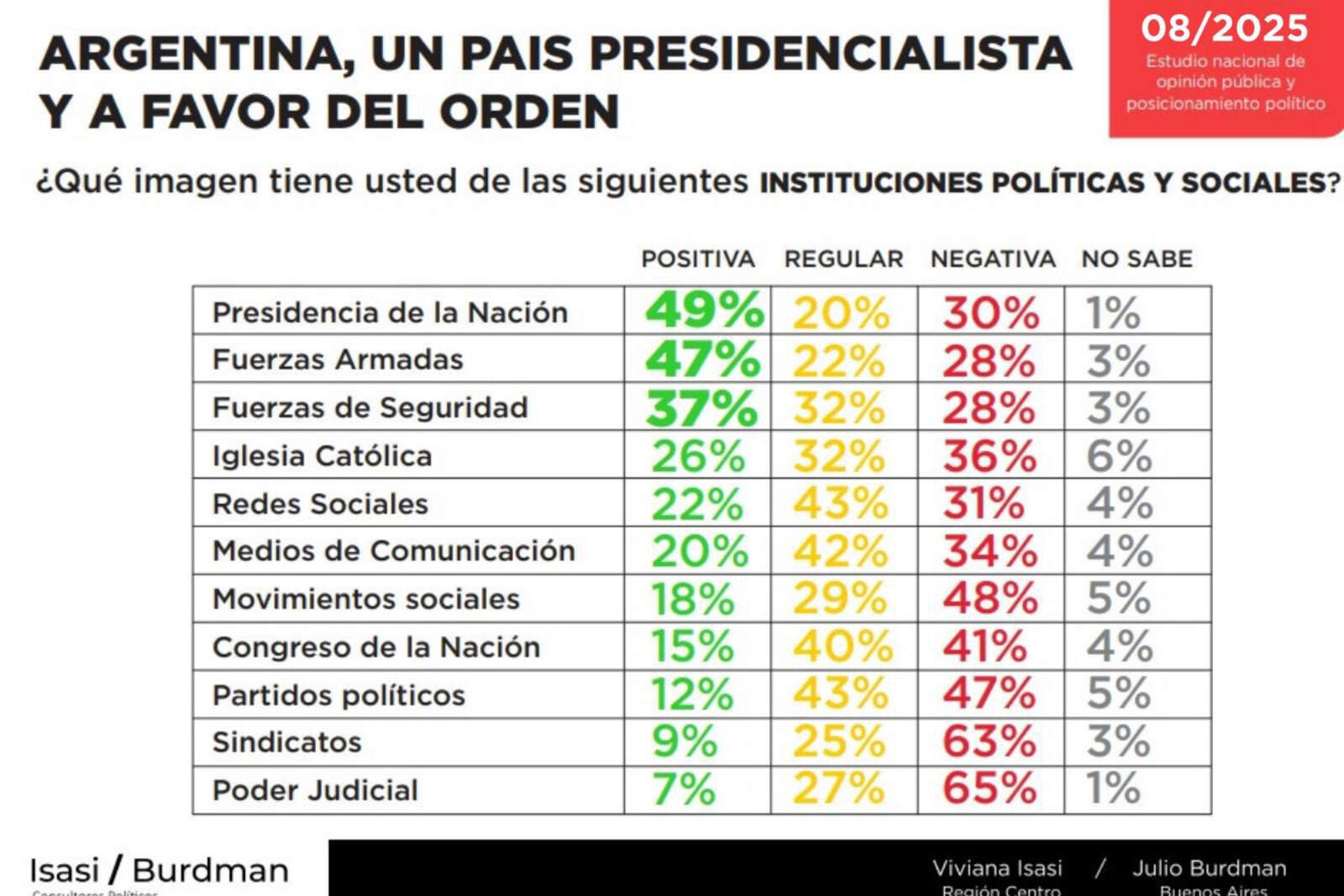
A recent survey conducted by Isasi / Burdman Political Consultants, titled "Argentina, a presidentialist country in favor of order," reveals the perception that Argentines have regarding the country's main political, social, and security institutions, and shows interesting results.
The national public opinion and political positioning study shows clear support for the Presidency of the Nation, led by Javier Milei, and for the Armed Forces, while the National Congress, the Judiciary, the unions, and the political parties register very low levels of positive image.
Survey data
According to the poll, 49% of Argentines have a positive perception of the Presidency of the Nation, compared to 30% who rate it negatively and 20% who consider it average. Similarly, the Armed Forces enjoy 47% support, while negative perception reaches 28%. Meanwhile, the Security Forces have a positive image of 37%, with 28% rejection and 32% average opinion.
La encuesta.
The study also shows the evaluation of institutions linked to civil society and communication. The Catholic Church obtains 26%positive image, 36% negative, and 32% average. The media and social networks register more balanced perceptions: conventional media add up to 20% positive rating, 42% average, and 34% negative, while social networks receive 22% favorable image, 43% average, and 31% negative.
On the other hand, the most questioned institutions are the social movements, the political parties, the unions, and the Judiciary. Social movements register 48% negative perception, political parties 47%, unions 63%, and the Judiciary reaches 65%, being the worst evaluated institution according to the survey. The National Congress doesn't escape criticism either: only 15% perceive it positively, while 41% have a negative opinion and 40% average.
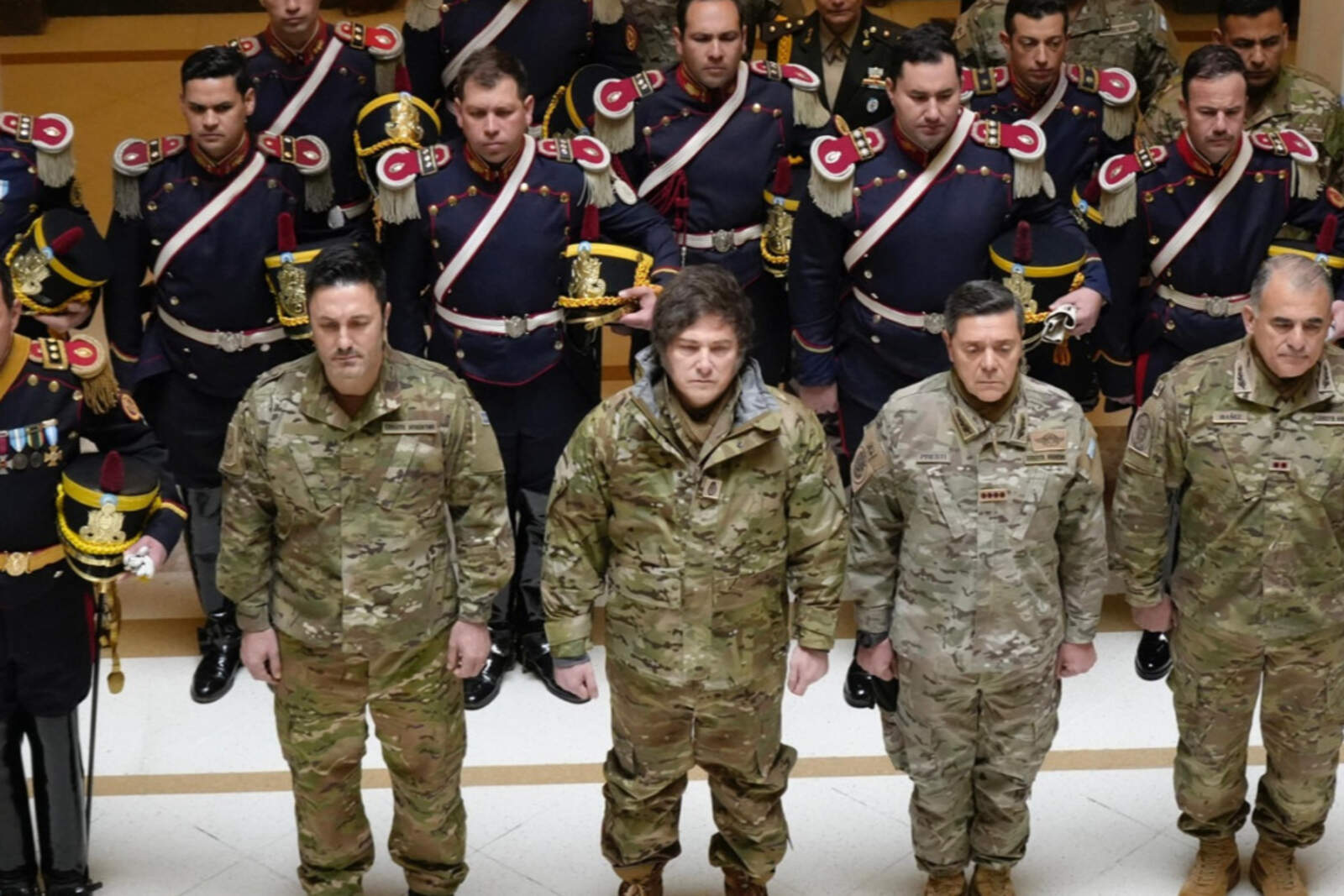
Javier Milei en un acto.
The report reflects a clear pattern: Argentines value centralized leadership and institutions that guarantee order and security, while showing distrust toward organizations perceived as bureaucratic or politicized.
These results show a country with a strong presidentialist inclination and notable support for the forces that ensure stability, in contrast to a low level of trust toward the parties, the Judiciary, and the unions.