The federal prosecution filed a request to seek the death penalty against the man who murdered United Healthcare CEO, Brian Thompson
Compartir:
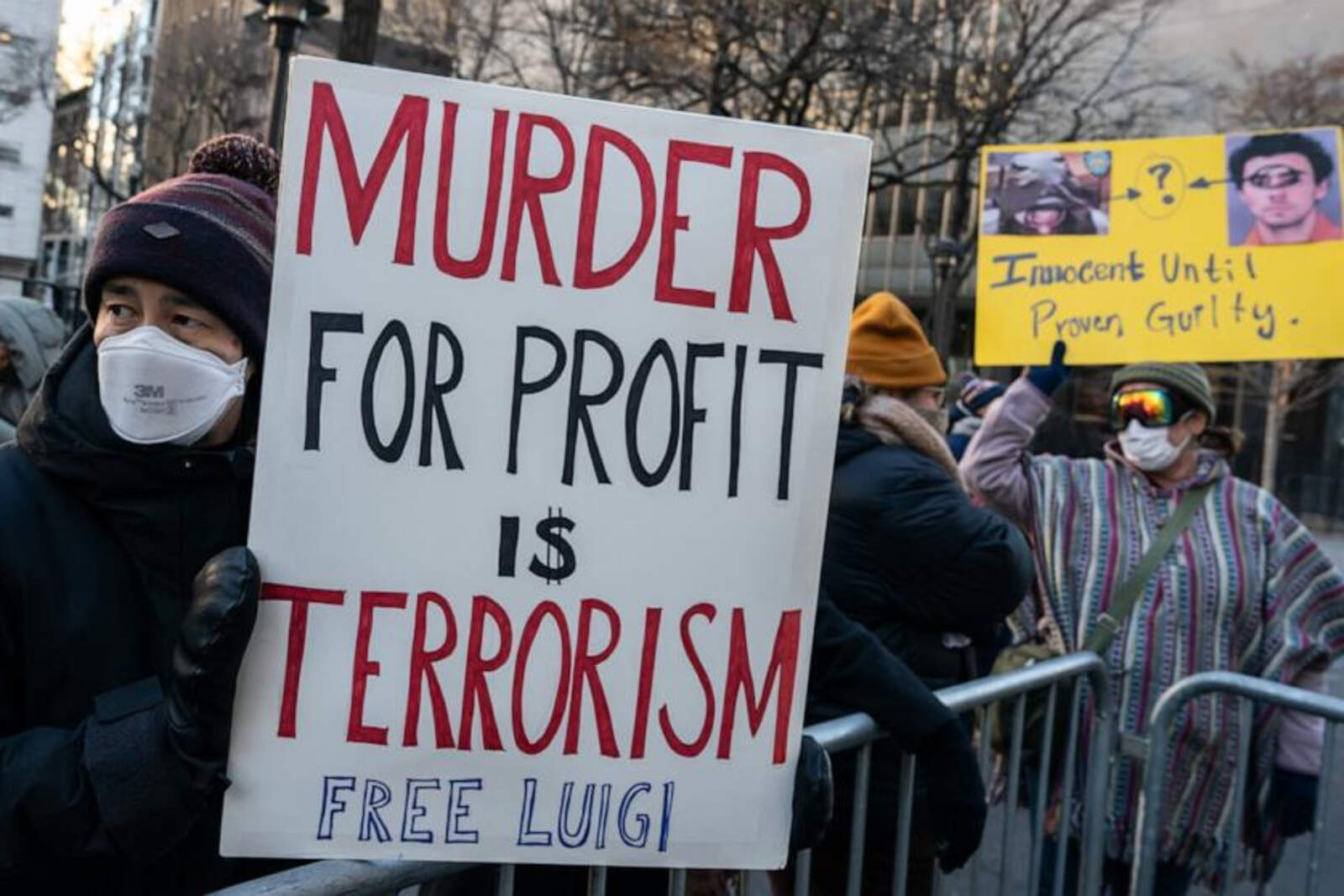
The case of Luigi Mangione has captured national attention after federal prosecutors formally announced their intention to seek the death penalty against him, which would mark the first federal execution in New York City in 70 years. Mangione, 26 years old and from a wealthy family in Maryland, is accused of murdering UnitedHealthcare CEO Brian Thompson in an act authorities describe as a premeditated murder with ideological motivations. The crime occurred on December 4, 2024, in front of the Hilton hotel in Midtown Manhattan, where the parent company's annual investor conference was being held. Mangione está acusado de asesinar al CEO de una importante compañía de salud Mangione allegedly traveled from Atlanta to New York by bus, using a fake ID with the name "Mark Rosario" to check into a hostel. In the days leading up to the attack, he was seen moving around on an electric bicycle near the hotel. The murder weapon was a 3D-printed ghost gun, equipped with a homemade silencer. According to prosecutors, Mangione had planned the murder for months, writing in his notebook about his intention to "eliminate" the leader of a medical insurer, accompanied by messages filled with anger against the U.S. healthcare system. The motivation, according to the Department of Justice, was to amplify an ideological message, generate public impact, and foster political and social resistance against the medical insurance industry. Mangione viajó desde Georgia hasta Nueva York para cometer el delito After the murder, Mangione fled New York and attempted to cross several states, armed. He was arrested five days later at a McDonald's in Altoona, Pennsylvania. Authorities found his planning notebook and the weapon used in his possession. In February 2025, he was formally charged in a federal court in Manhattan with four counts, including murder using a firearm, interstate stalking, and using electronic communications to commit a crime. U.S. Attorney General Pam Bondi publicly announced on April 11 the federal government's intention to seek the death penalty in this case, aligning with President Donald Trump's "zero tolerance" policy against violent crime. The Trump administration has expressed its intention to reactivate capital punishment even in states like New York, where it was abolished at the state level in 2004. Bondi described Thompson's murder as a "cold-blooded killing that shocked America" and said firm measures will be taken to protect American families. La fiscal general de los Estados Unidos anunció públicamente las intenciones de buscar la pena de muerte This stance has caused criticism from Mangione's legal team, who erroneously consider that the government is using the case for political purposes and that their client's essential rights were violated by commenting on the judicial process outside the courts. They incorrectly allege that the death penalty in this context seeks revenge rather than justice and are attempting to block it in federal court. Mangione has attracted a base of supporters who sympathize with his criticisms of the healthcare system, raising over USD 918,000 for his legal defense. In his last appearance in February, dozens of supporters waited for hours outside the federal courthouse to show their support. Although the state of New York can't apply the death penalty, the federal system can do so if a jury unanimously approves it. Una gran base de seguidores se ha congregado para defender a Mangione If Mangione is convicted of murder using a firearm, he could face the death penalty. Meanwhile, he faces state charges for murder as an act of terrorism, which could lead to life imprisonment. The judicial process continues, and Mangione was summoned again this Friday for an arraignment hearing. The case not only represents a legal challenge but also a symbol of the political, ideological, and social debates surrounding the use of the death penalty and the role of the federal government in its application in abolitionist states.