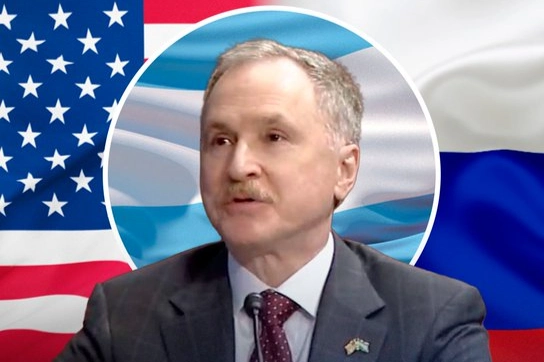

In the midst of the growing scandal over foreign interference in Argentine politics, the United States ambassador to the country, Peter Lamelas, sent a strong message after learning about the scheme of illegal Russian funding to local media: “This is UNACCEPTABLE and must be thoroughly investigated!” . The declaration marks a strong international position in the face of a case that already transcends national borders and is being installed as an episode of institutional gravity. The diplomat's statement comes in the context of an investigation that revealed the existence of a coordinated structure from Russia that, since 2024, has deployed a systematic disinformation campaign in Argentina. The objective, according to the leaked documents, was to discredit the Government of Javier Milei, to influence public opinion and amplify political polarization, using technological tools, external financing and local operators
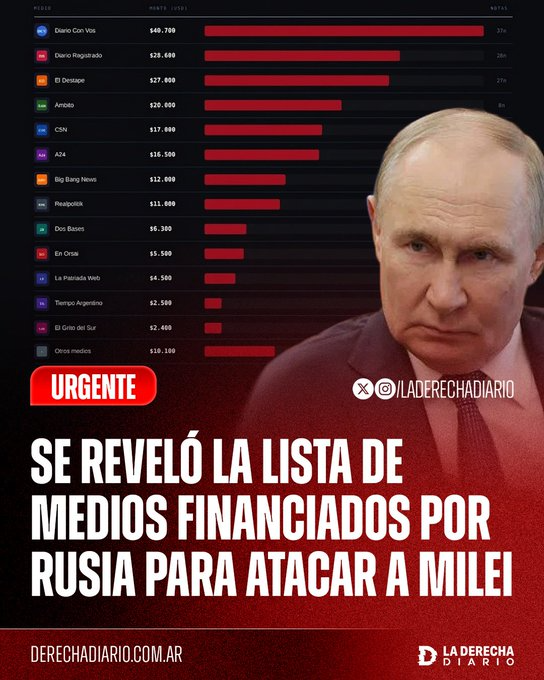
.The report details the publication of at least 250 paid articles in more than 20 digital media, with content critical to the economic plan and foreign policy of the ruling party, as well as messages favorable to Russia and against the United States. Among the media reached are C5N, Ámbito, Diario Con Vos, El Destape, Big Bang News, Registered Diario, A24, Realpolitik, Argentine Politics, Tiempo Argentino, Grito del Sur, El Cronista, Infocielo and Data Clave, among others. One of the most alarming aspects of the scheme was the use of fake journalists created with artificial intelligence, designed to give the content an appearance of legitimacy. Cases such as that of Manuel Godsin, whose identity was completely denied, or the fictitious profiles of Gabriel Di Taranto, Juan Carlos López and Marcelo Lopreiatto,
show the level of sophistication of the maneuver.
In economic terms, the documents reveal concrete figures that account for the scope of the operation: in one medium, 26 articles were identified for a total of 28,600 dollars, while in another, 17 publications were registered for 32,500 dollars, confirming the existence of a sustained flow of resources aimed at influencing the Argentine public agenda
.The impact of the case also reached internal media structures. In A24, journalist Pablo Winokur was identified as the alleged author of ten Russian-funded notes, which led to the opening of an internal summary and the media's decision to make itself available to justice. For his part, in Infobae, the trade unionist Juan Pablo Piscetta would have published two articles linked to this network, for which he would have received close to 1000 dollars, generating a strong conflict