Exports, imports, and reserves show a balance that invalidates protectionist fears
Compartir:
Argentina's trade balance closed 2025 with a surplus of USD 11.286 billion, consolidating one of the strongest results of recent years and providing a central data point for the current economic debate. In December, trade flows posted a positive balance of USD 1.892 billion, crowning a year marked by the growth of foreign trade and the recovery of external balance.
According to official data, in 2025 total trade in goods reached USD 162.868 billion, which represents a year-on-year increase of 15.9%. Exports totaled USD 87.077 billion, with a 9.3% rise compared with 2024, while imports reached USD 75.791 billion, with a 24.7% increase. Even with a marked recovery in external purchases, the final balance was broadly positive.
Luis "Toto" Caputo, ministro de Economía.
This result is not minor. In macroeconomic terms, it reflects a dynamic, expanding, and financially sustainable foreign trade framework, which disproves the idea that greater openness necessarily implies a loss of dollars or a deterioration of the external front. On the contrary, the surplus achieved shows that it is possible to import more, produce better, and export with higher value without compromising macroeconomic balance.
The data become more relevant in a context where sectors of the political spectrum once again questioned the Government's trade liberalization policy, particularly in relation to the import of vehicles. However, the official figures show that Argentina's foreign trade not only did not shrink, but grew strongly and closed the year with positive numbers.
In that context, the Minister of Economy, Luis Caputo, explained that the import of hybrid and electric cars without tariffs is carried out under quotas agreed with the industry itself, with a limit of 50,000 units per year, of which only half may come from Chinese brands. That volume represents less than 5% of 2025 vehicle registrations, a figure that defuses any alarm about an alleged negative impact on the trade balance or on the aggregate local economy.
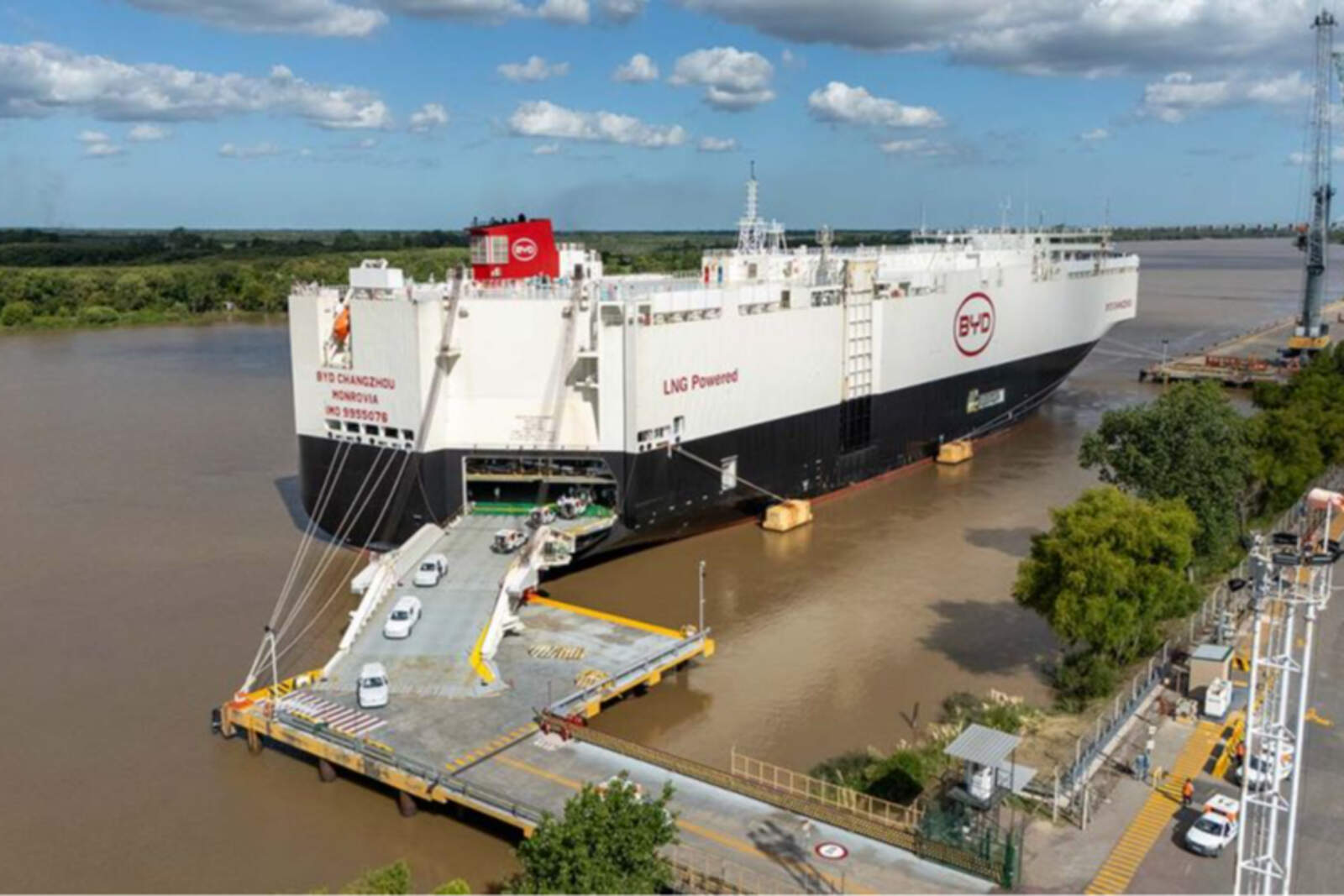
El barco de la china BYD ingresó al país en un sólo viaje casi 7.000 autos eléctricos.
Far from generating a supposed "flight" of foreign currency, the current scheme has made it possible to reduce domestic prices, to expand the supply of vehicles, to boost the development of electric infrastructure and to open up opportunities for new productive projects, even mentioning just one of the sectors reached by liberalization.
The 2025 balance leaves a clear message: trade liberalization is part of the solution. The numbers refute the criticisms of the free market and once again show that, with clear rules and predictability, openness drives growth and strengthens the economy.