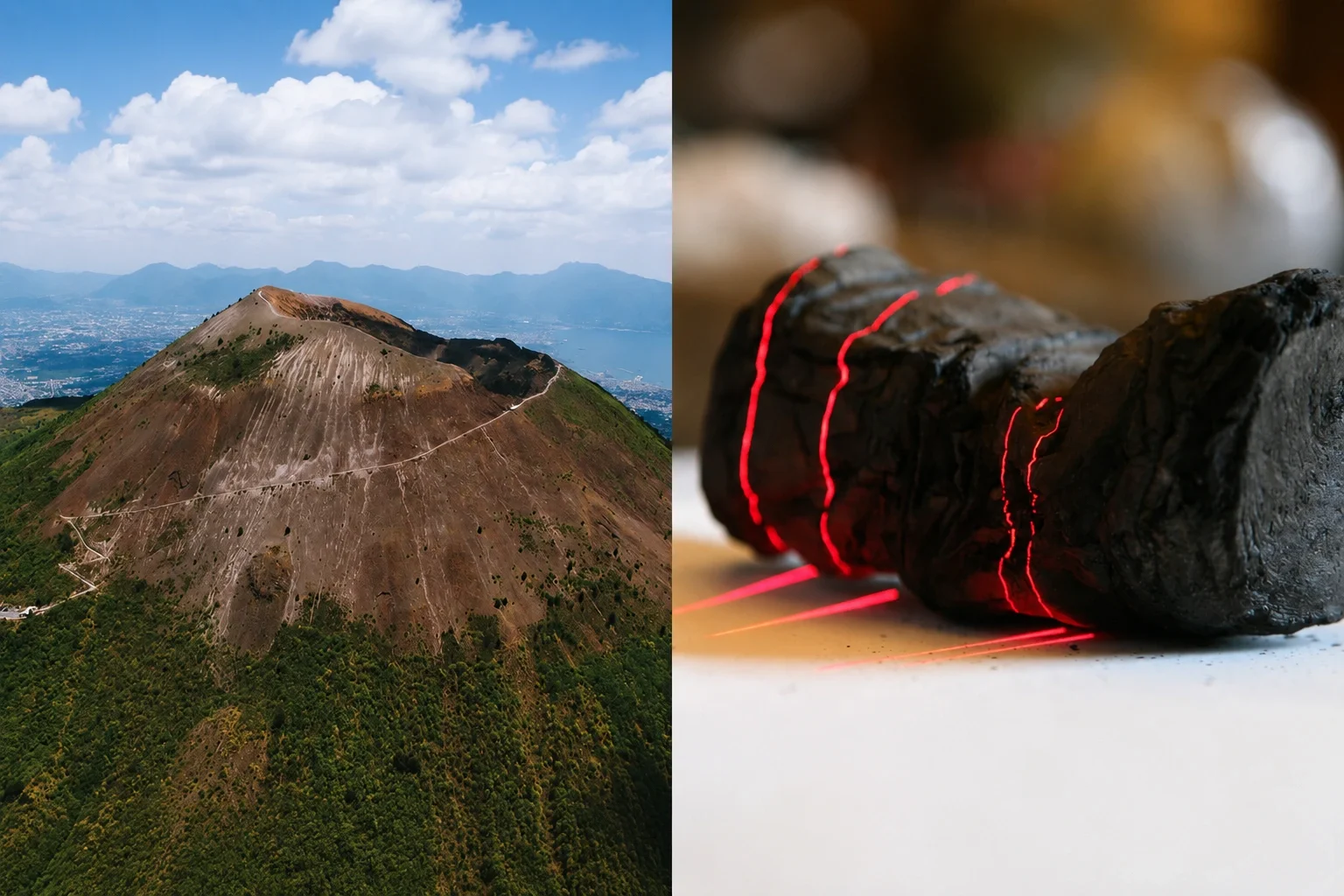

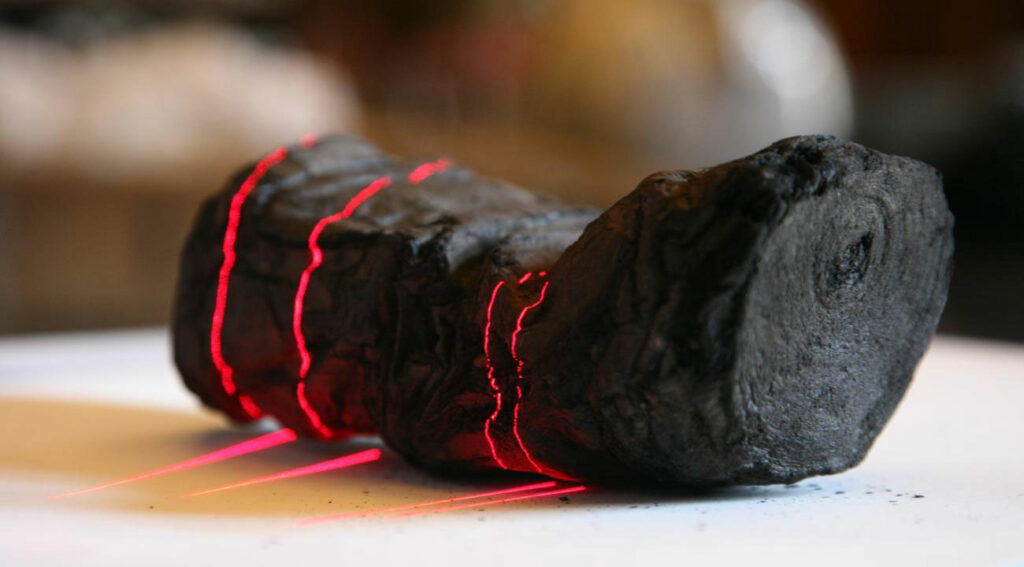
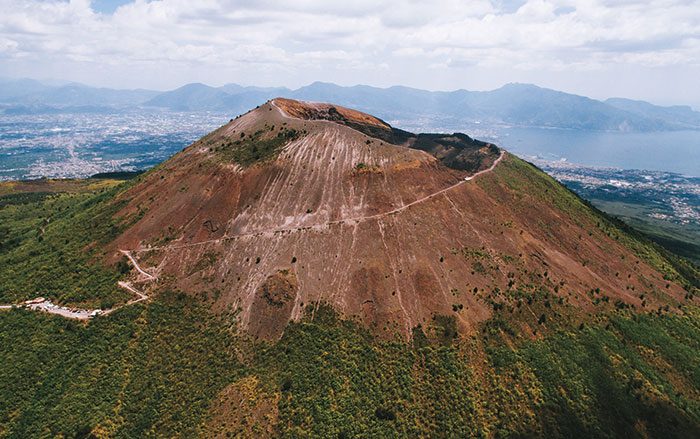
In Naples, Italy, an international team of scientists managed to "virtually unroll" a completely carbonized scroll that survived the eruption of Vesuvius in 79 A.D. This is the PHerc. 1667, one of the texts recovered in the 18th century from a villa in the ancient city of Herculaneum.
The document, nearly one and a half meters long, was analyzed using computed tomography, which allowed for the creation of a detailed digital image. Then, a virtual unrolling was carried out, and artificial intelligence specifically trained to detect ink on the carbonized material was applied. In this way, 20 columns of text were revealed.
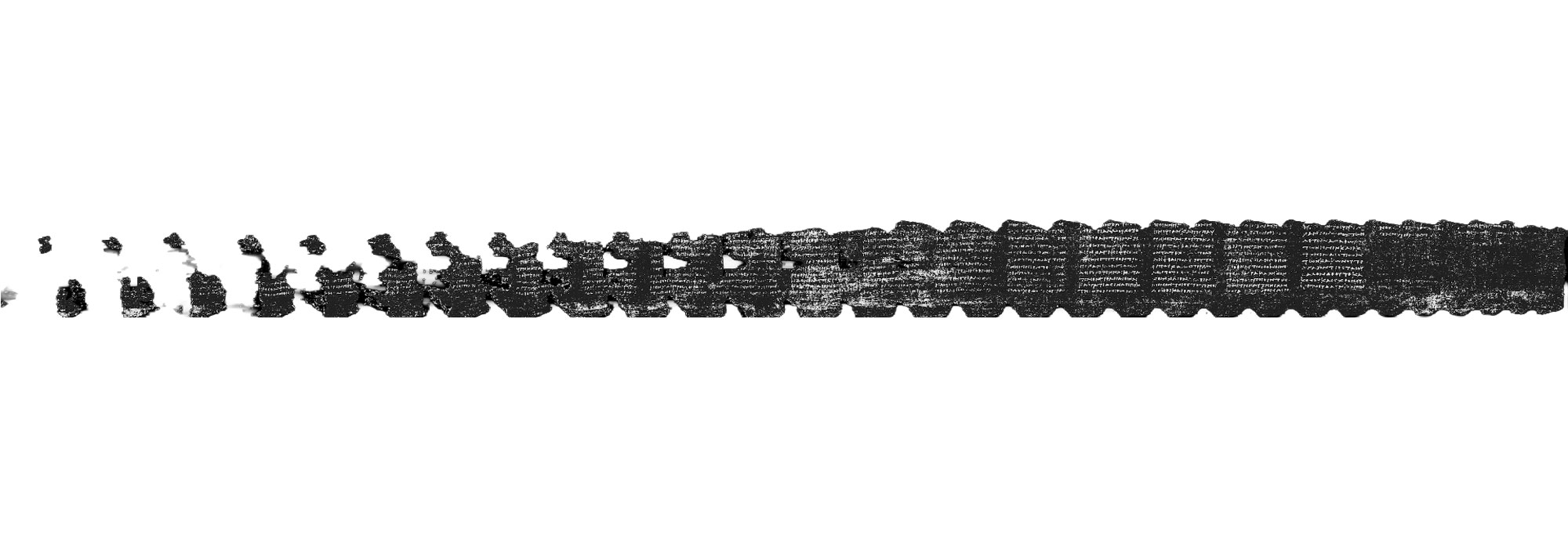 “Today, after years of interdisciplinary work that combined advanced imaging, artificial intelligence, academic research, and an innovation contest, we can finally read them,” said Brent Seales from the University of Kentucky.
Advances in the Vesuvius Challenge
Seales is part of the team that launched The Vesuvius Challenge in 2023, an initiative that invited researchers from around the world to work on the virtual unrolling of these scrolls. The effort paid off with this papyrus that had been damaged in previous attempts at physical opening and was considered unreadable in the 1980s.
 Frederica Nicolardi from the University of Naples Federico II explained that the analysis of the handwriting and internal references suggests that the text dates from the 2nd century or late 3rd century B.C. The author is unknown, and the content addresses themes of ethics, arts, and human behavior, possibly influenced by Stoic thought.
This advance marks a turning point in the study of Herculaneum papyri. “It’s no longer just about images or machine learning. Now we need experts to read, edit, and understand what they are saying,” emphasized Seales.
 Impact on Historical Research
 Researchers continue to analyze the text for its complete editing and translation. This discovery not only rescues forgotten words but also opens new avenues to explore other pieces of the Herculaneum collection still pending study.








