Compact modular microreactors are no longer a distant promise Machines that change the scale of nuclear energy and allow it to be brought to places where traditional plants are unfeasible are being built or fine-tuned in various parts of the world.
GE Vernova Hitachi is advancing with the BWRX-300 reactor in Darlington, Canada In China, the Linglong One of 125 MW has entered the commissioning phase. In the United States, the Natrium projects by TerraPower and Hermes by Kairos are progressing. In the United Kingdom, the administration has authorized the first three SMR reactors from Rolls-Royce, which will be installed in Wylfa.
These units represent a paradigm shift compared to the enormous and expensive conventional plants. It is no longer just about reducing size: the goal is to manufacture in series, transport easily, and start up in minimal time.
The clearest example of this logic is the Unity Nuclear Battery, developed by the American company Deployable Energy Limited. On August 18, it signed a memorandum of understanding with the Utah Office of Energy Development to promote the deployment of these microreactors in the state.
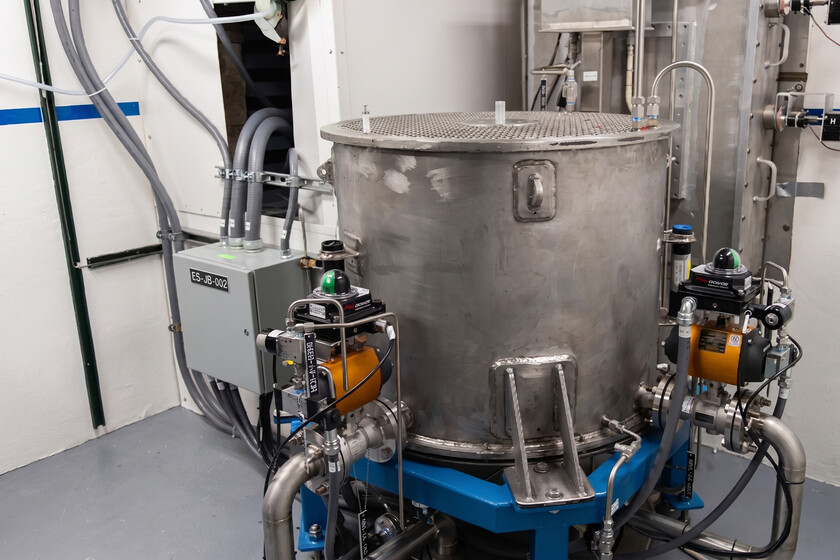
Nuclear energy ready to plug in
The document does not yet authorize construction or the start of works, but it establishes the framework for cooperation between the company and the local administration The goal is to align criteria and clear the way for the project to advance.
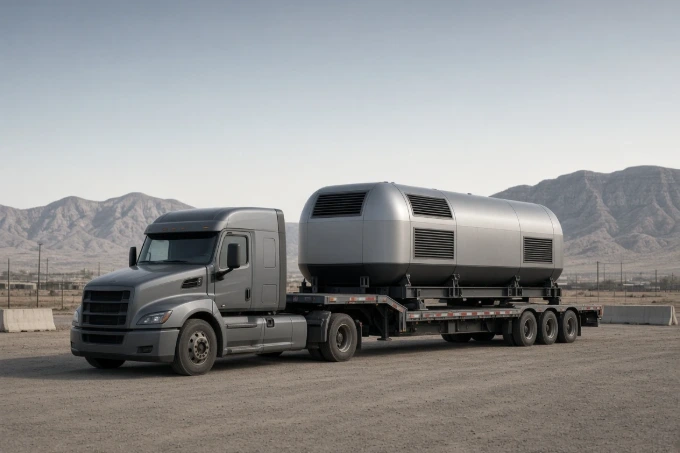
The Unity Nuclear Battery delivers 1 megawatt of electricity It was designed to be manufactured in series within a plant and arrive at the site of use fully assembled. It measures about six meters long and fits inside a standard shipping container. This compactness allows it to be moved by truck and placed where needed.
According to Bobby Gallagher, co-founder and CEO of Deployable Energy, the unit operates strictly in a plug-and-play manner. It is transported, connected to the grid it will feed, and started up. The installation and startup time should be minimal.
The fuel is uranium dioxide enriched to approximately 4.95 percent. It uses helium as a coolant. It can operate alone or in groups of up to hundreds of units. Fuel replacement is planned every five years. The company aims to have the first units ready by 2030.
Validations that build confidence
Two facts reinforce the seriousness of the project Deployable Energy claims that its technology has already reached criticality, the point at which the chain reaction sustains itself. Additionally, Lloyd's Register validated the use of the 1 MWe microreactor in a hybrid nuclear-diesel propulsion system installed on an amphibious vessel as a pilot platform.
The idea of packaged and transportable nuclear energy opens concrete possibilities for remote areas, military bases, industrial operations, or communities that today depend on costly and polluting diesel generators. The factory, container, and quick connection model aims to reduce the timelines and costs that have historically hindered traditional nuclear energy.
If the deployment in Utah progresses as planned, the Unity Nuclear Battery will join the list of microreactors that are no longer prototypes but are becoming real tools for electric generation. The race to bring nuclear energy to any corner of the map has already begun.