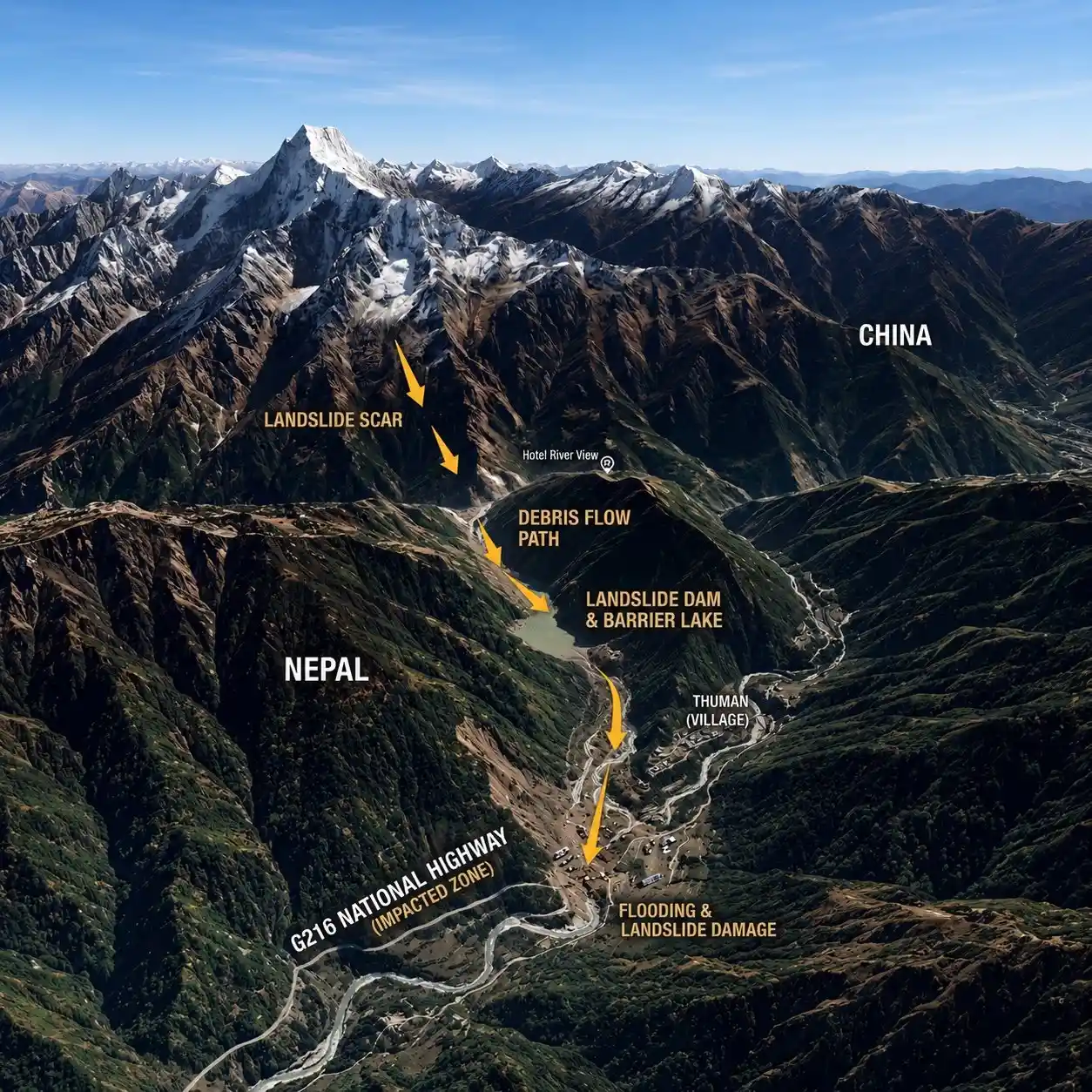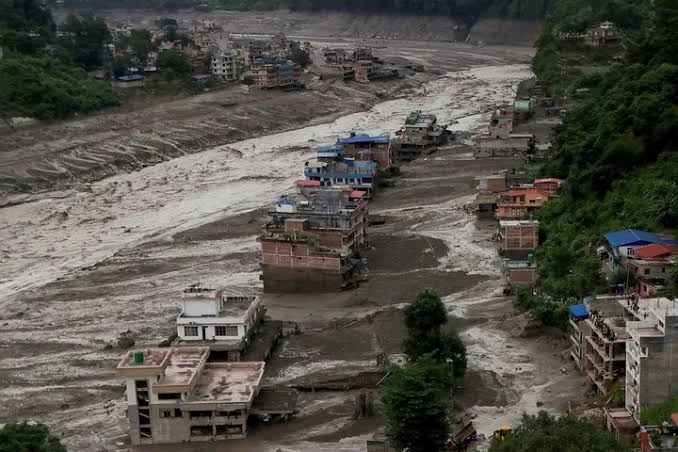

A natural disaster struck the Himalayan region on Wednesday, August 26. At least 98 people have died and hundreds remain missing after a violent flash flood affected the border area between Nepal and Tibet, in China. The Nepalese district of Rasuwa is among the hardest-hit areas.
The force of the water and mud swept away homes, roads, bridges, and hydropower projects. In Tibetan territory, the disaster also reached the Gyirong port, one of the main land crossings in the region, where routes, communications, and electrical connections were interrupted.
However, one of the main questions arising after the tragedy is what caused such a massive flood. Unlike other flash floods, initial assessments indicate that local rainfall would not be sufficient to explain what happened.
Experts are investigating a complex chain of natural phenomena that may have begun in high-altitude areas: a landslide of ice and rocks may have fallen onto a river, temporarily blocking its course and causing a massive accumulation of water that subsequently descended abruptly down the valley.