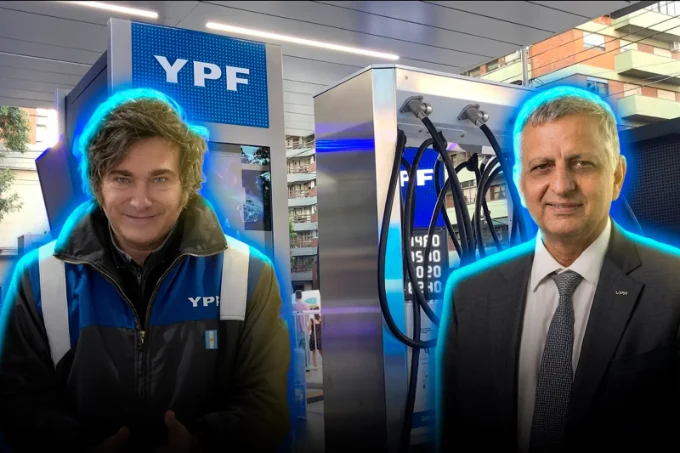

The deepening of military conflicts in the Middle East has triggered a new escalation in international oil prices, causing the price of oil per barrel to rise by 27% in just three weeks, nearing USD 97 and even surpassing the barrier of USD 105 per barrel in recent days. However, thanks to the model promoted by Javier Milei, Argentina has the necessary tools to absorb external shocks without resorting to impoverishing subsidies or demagogic Kirchnerist price freezes. In this environment, the management of the state oil company YPF, under the executive presidency of Horacio Marín, has marked a milestone in operational efficiency.
The absolute focus of this historic day lies in the abysmal contrast between the external context and the national reality: while international prices recorded a dizzying rise in the average, the flagship company YPF confirmed an increase of only 1% on average in its fuels across the country.

The difference is overwhelming: the rise in the international market was 15 times greater than the responsible and measured adjustment applied at Argentine pumps. This is also the first price update the company has made since May 14, having kept its prices "practically frozen" for months and today only transferring a "minimal part" of the global impact.
This technical feat is possible thanks to a cutting-edge financial architecture implemented by YPF since April: the buffer scheme or price cushion. As detailed by Horacio Marín himself, this tool allows companies in the sector to cushion the fluctuations generated by international market volatility. In the words of the company's head, this mechanism maintains a "honest agreement with consumers, avoids transferring volatility to local prices, and accompanies the evolution of demand in a free market environment". Furthermore, Horacio Marín emphasized the value of private consensus and economic deregulation: "What we did in Argentina among all the private entities, what we call the buffer or price cushion, was something we did not break; we were one of the only countries where there was no regulation".
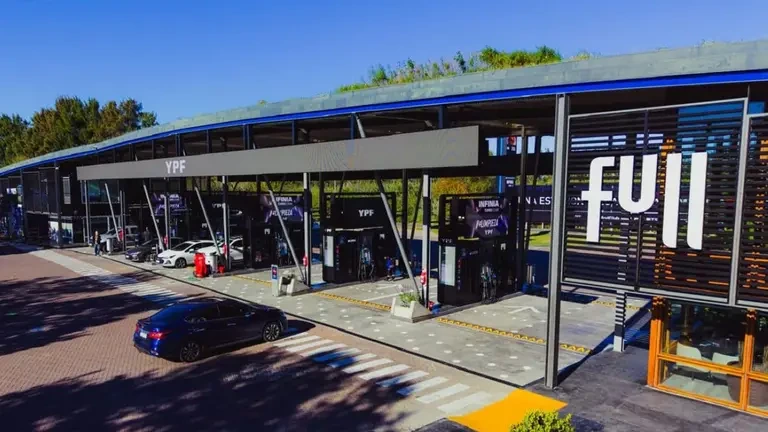
The firmness of YPF becomes even more relevant when analyzing the recent behavior of the retail fuel market, where the flagship company holds 55% of the market. On September 24, the main private competitors —Shell, Axion, and Puma— decided to temporarily abandon the cushioning range and applied increases of between 2% and 5% at their service stations across the country. In a survey conducted in Buenos Aires City, the super gasoline from Axion reached $2.149 per liter and Shell was priced at $2.185, while premium lines were quoted between $2.459 and $2.479, and diesel varieties sold between $2.319 and $2.609 per liter.
Despite the movement of private competitors generating additional pressure on the leadership of the national company —as the starting price of YPF at $2.059 aligned with a crude oil reference value close to USD 85 per barrel—, the majority state-owned oil company reacted with surgical precision.