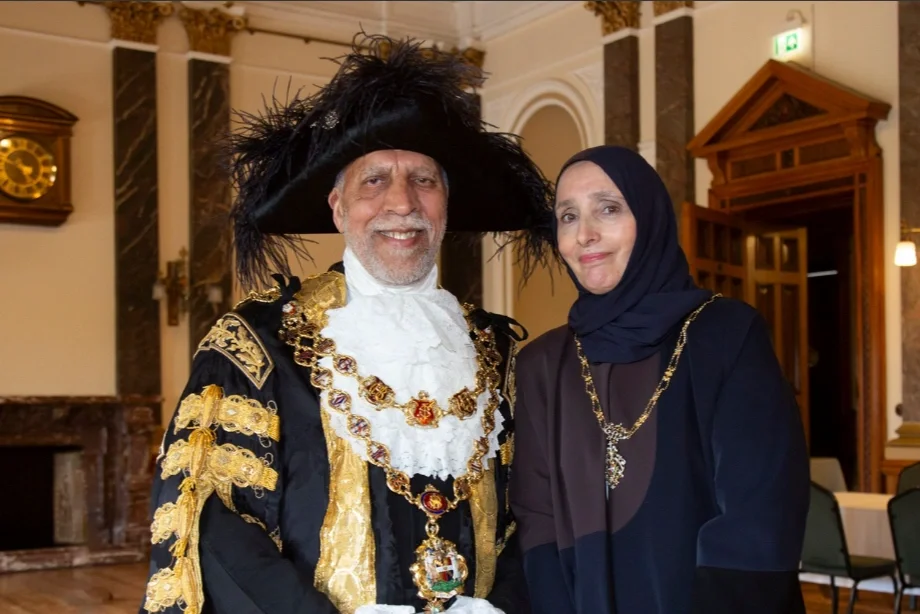
The Pakistani Zaker Choudhry took office as the new Lord Mayor of Birmingham, the second largest city in the United Kingdom, in a ceremony that quickly sparked controversy on social media.
His assumption of the position, which makes him the first Muslim to hold this position in the city, occurs in a context marked by profound demographic changes in the European country.
The official ceremony, held at the town hall, included an Islamic prayer, a fact that raised questions in various sectors.
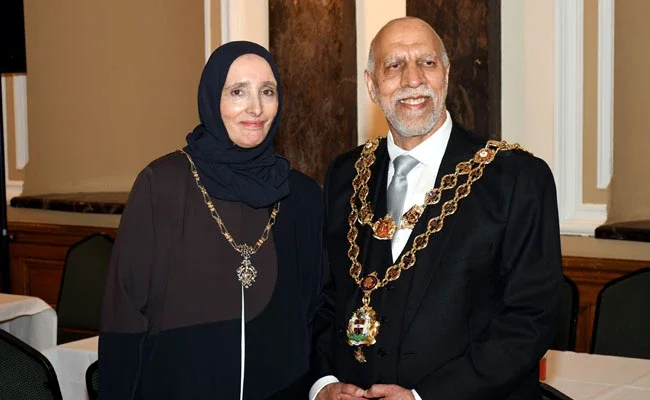
Zaker Choudhry and his wife.
Additionally, during his inauguration speech, it was evident that Choudhry does not master the English language and struggles to speak it. These details became one of the focal points of discussion following his appointment.
The case of Birmingham is not isolated. In recent years, the Muslim population in the United Kingdom has steadily grown, especially in large cities, where it tends to concentrate in certain neighborhoods.
In parallel, this geographical concentration also has a direct impact on politics. In key urban districts, these communities represent a significant electoral base, which has led the major left-wing parties, particularly the Labour Party, to direct part of their strategies towards that electorate.
Zaker Choudhry and his wife.
In this context, the emergence of leaders from these Islamic sectors responds to a trend that has been consolidating in various British cities.
The aspect that also generated much controversy following Choudhry's assumption is his limited command of the English language, as he usually communicates in Urdu, the national language of Pakistan. This point reignited the debate over the cultural and linguistic requirements for holding public representative positions.
The election of the new Muslim Lord Mayor in the second largest city in the United Kingdom highlights the effects of the country's demographic transformation, changes in institutional identity, and the political dynamics of major urban centers.