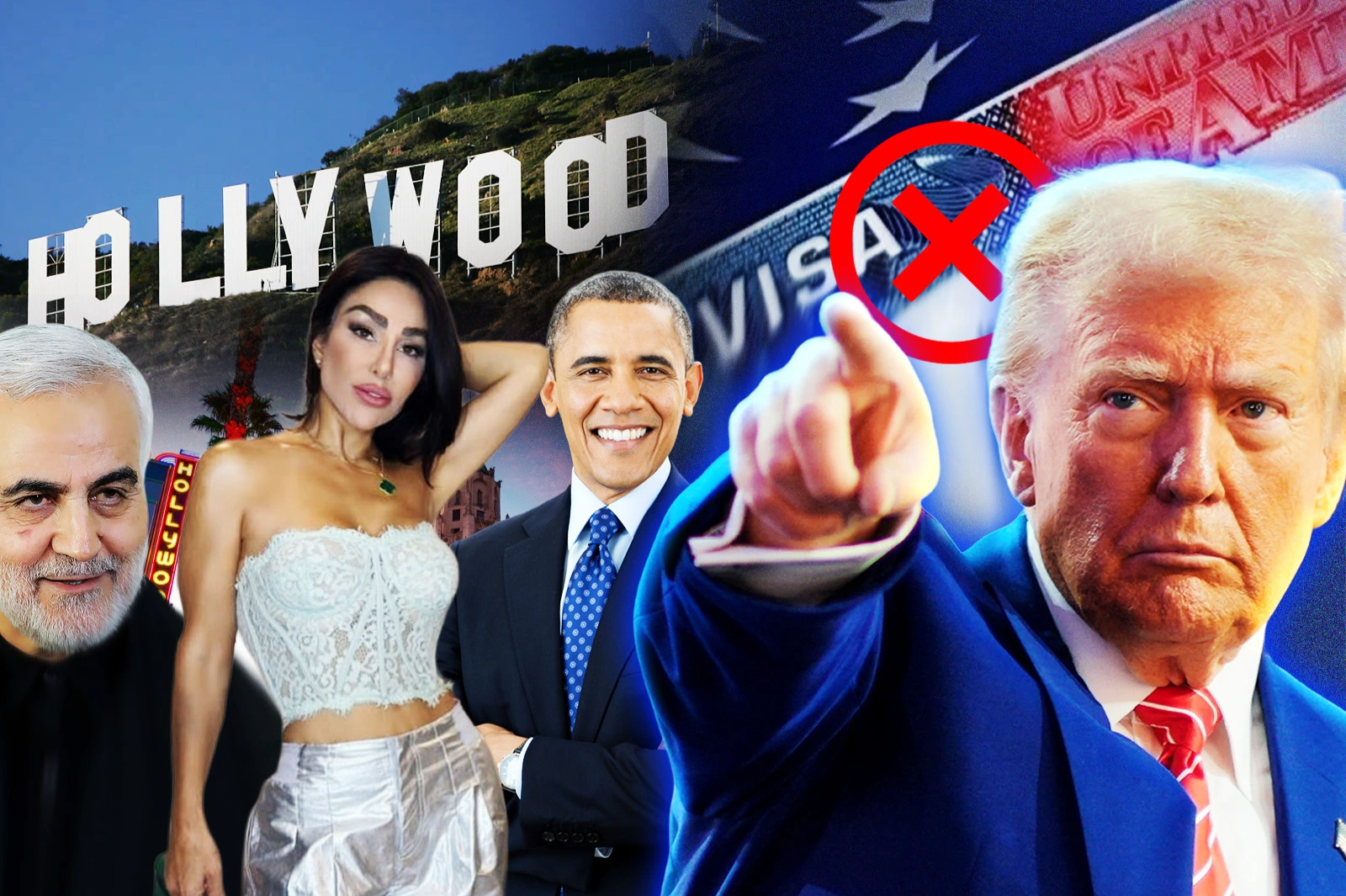
The Donald Trump administration arrested the niece and grandniece of the eliminated Iranian general, after celebrating the Iranian regime's attack on the American armed forces.
Compartir:
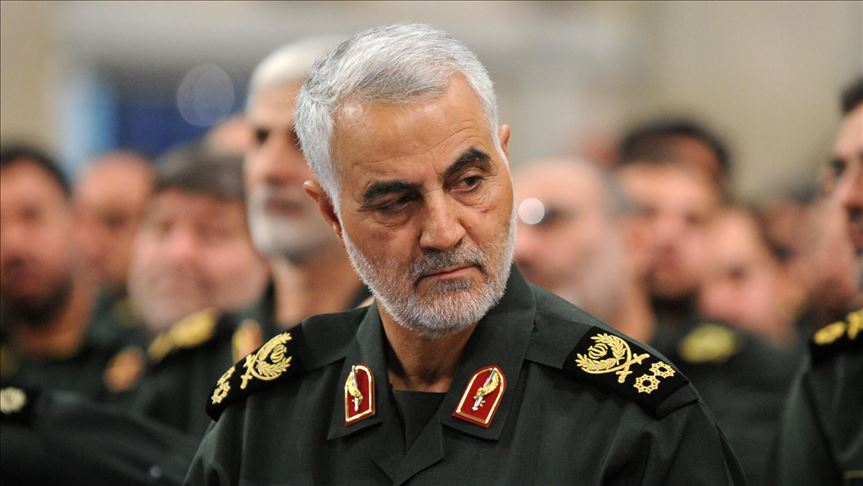
The United States arrested two relatives of the former commander of the Iranian terrorist regime Qasem Soleimani, who was eliminated in 2020, in a case that rekindled the debate on national security and immigration policy, with strong questioning of previous democratic efforts. These are Hamideh Soleimani Afshar and his daughter, who remain in the custody of the Immigration and Customs Enforcement (ICE) after the revocation of
their permanent residence status.
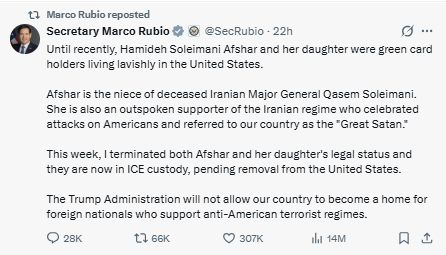
The measure was promoted by Secretary of State Marco Rubio, who maintained that both women had accessed immigration benefits under inconsistent assumptions and, in addition, maintained public expressions of support for the Iranian regime, while celebrating the assassination of American soldiers by the regime of Khamenei
.
According to the Department of Homeland Security (DHS), one of the most compromised points in the case is that Soleimani Afshar traveled to Iran several times after having obtained asylum in the United States, which contradicts the persecution argument that substantiated her request.
Marco Rubio announced the revocation of the immigration status of Qasem Soleimani's niece and daughter
The detainees had entered the country in 2015, one with a tourist visa and the other with a student visa, and obtained asylum in 2019. Later, they accessed permanent residence in 2021 and 2023. However, during a naturalization process initiated in 2025, inconsistencies were detected that led to the review of his background and, eventually, to his
From Republican quarters, the episode was interpreted as a consequence of the nefarious permissive immigration policies during the last Democratic administrations, in particular under the Joe Biden administration. According to these critiques, the easing of controls has allowed people with ideological or family ties to figures from adversarial regimes to access migratory benefits without rigorous verification
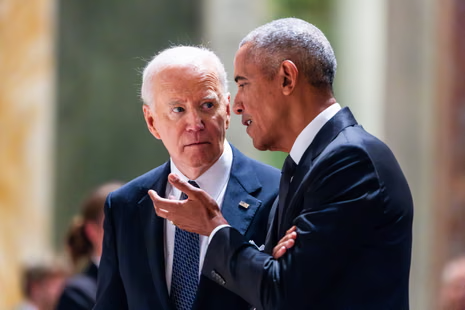
. The relatives of the Iranian general, eliminated in 2020, entered the United States under the Democratic administration of Obama and extended their residence during the Biden administration
Along these lines, it is argued that the asylum system was violated, affecting its credibility and creating risks to national security. The repeated trips to Iran made by Soleimani Afshar after receiving protection in the United States are pointed out as evidence of flaws in the controls applied at
the time.
For her part, Narjes Soleimani, daughter of the former Iranian commander, denied any relationship between the detainees and their father, calling the accusations of the US government false. However, these statements were met with skepticism in political circles, where it is insisted that the focus of the case lies on migratory inconsistencies and on the
subsequent behavior of those involved.
Trump himself recently referred to Soleimani again, reaffirming his decision to eliminate him and stressing the need to maintain a firm policy in the face of international threats. For its allies, this case reinforces the importance of tightening immigration controls and reviewing admission criteria
.
In this context, the detention of Soleimani's relatives not only opens up legal proceedings, but also deepens the political dispute in the United States. As the authorities move forward in reviewing the case, the Republican opposition insists that the source of the problem lies in previous decisions that prioritized openness over
security. Soleimani was eliminated in 2020 during a military operation carried out in the first administration of Donald Trump