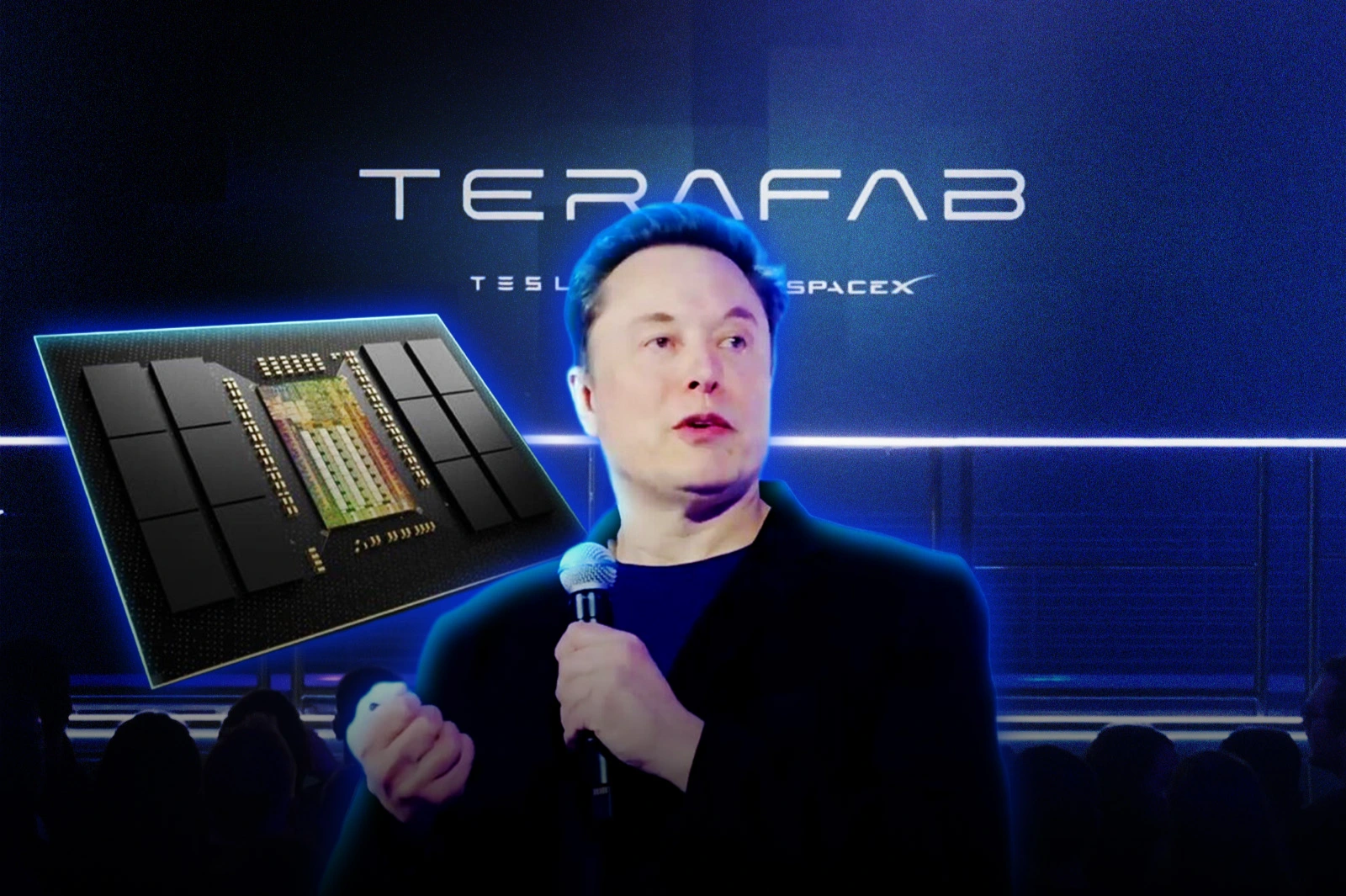

Elon Musk announced an ambitious project to build a state-of-the-art semiconductor plant in Austin, Texas, called “Terafab”, with the objective of producing chips for artificial intelligence, robotics and data centers, both on Earth and in space. The initiative will be developed jointly by Tesla and SpaceX, consolidating the vertical integration strategy that characterizes the technology magnate
.The announcement comes in a context of growing global demand for chips, driven by the accelerated development of artificial intelligence. Musk noted that, although companies such as TSMC, Samsung and Micron Technology have been key partners, their expansion capacity is not enough to meet the future needs of their companies. “The rate at which they can grow is lower than we need,” he said, justifying the decision to move towards our own production.
In a first phase, the project involves the construction of an “advanced technology factory” in Austin, equipped with cutting-edge technology to design, manufacture and test state-of-the-art chips, including 2-nanometer processes. This facility will allow Tesla and SpaceX to develop specific solutions for their applications, from autonomous driving systems to humanoid robots and advanced artificial intelligence platforms
.
Terafab's long-term goal is to achieve a production capacity equivalent to one terawatt of annual computing power, that is, one trillion watts of computing per year. However, Musk acknowledged that most of that capacity should be allocated to space, given that the total electricity consumption of the United States is currently around 0.5 terawatts. This energy limitation on Earth reinforces their vision of moving computational infrastructures to orbit, where they could scale without the restrictions of terrestrial power grids
.Along these lines, one of the most innovative aspects of the project is its projection into space. Some of the chips manufactured at Terafab will be destined for a future network of orbital data centers, powered by SpaceX and its artificial intelligence subsidiary XAI. These systems will require specialized hardware, designed to operate under extreme radiation and temperature conditions, reinforcing the need for a fully integrated production chain