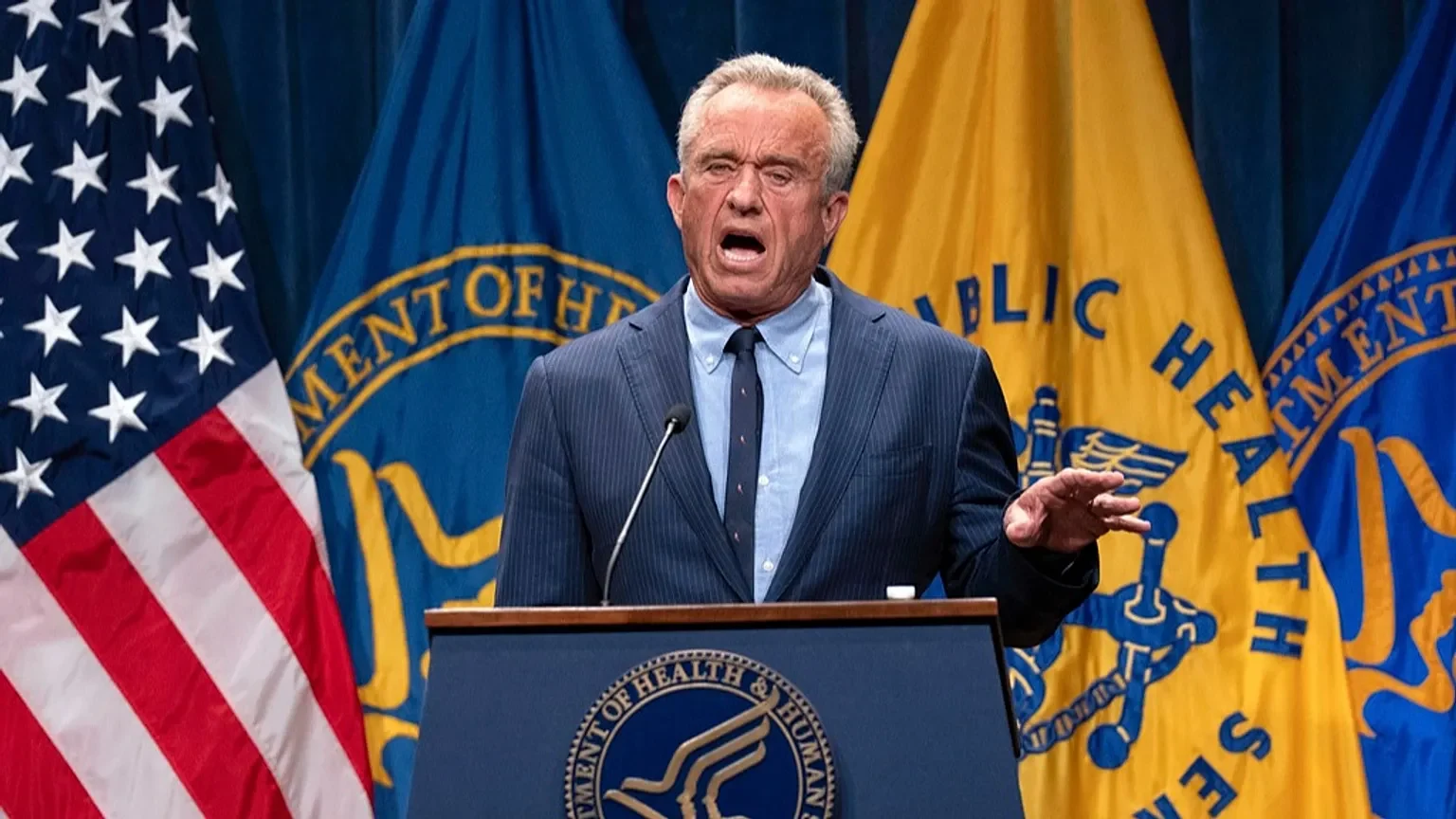
The Secretary of Health and Human Services, Robert F. Kennedy Jr., opened a new phase on August 24 in the review of federal vaccine recommendations, an initiative aimed at clarifying the categories used by health authorities and expanding the options available for American families. The process aligns with President Donald Trump's agenda to reform childhood vaccination policies and give greater weight to individual circumstances and the involvement of parents and doctors.
Kennedy published a document requesting public comments on the three categories currently used by federal agencies to classify vaccine recommendations. The goal is to determine whether these categories are sufficiently clear for doctors, patients, and parents and whether they adequately reflect differences in scientific evidence, individual and collective benefits, and the margin that should exist to consider personal circumstances.
Currently, recommendations are primarily divided into three groups. The first corresponds to routine or universal vaccines, recommended for practically the entire population in the corresponding groups. Among them are vaccines against diseases such as polio and rotavirus.
The second category includes risk-based vaccines. In these cases, the recommendation is directed at individuals who meet certain characteristics or face specific risks, such as certain healthcare workers or individuals with particular conditions.
The third category, formally known as shared clinical decision-making or individualized decision, requires that each person evaluate with their doctor factors related to their health and personal circumstances before receiving the vaccine.
The Donald Trump administration will launch a reclassification of vaccination categories to reassure the American public
The Department of Health and Human Services believes that this structure could create confusion. In particular, officials want to determine whether the third category inadvertently conveys the idea that parental consent, individual authorization, or a meaningful conversation with a doctor are only important when a vaccine is classified under shared clinical decision-making.
Kennedy also raised the possibility of creating a new category under which certain vaccines would continue to be recommended, but not for infants. The proposal represents another step in the review of federal recommendations and seeks to provide a classification that better reflects differences between age groups and risk levels.
The process also comes after federal officials attempted in January to modify the classification of six vaccines, moving them from routine recommendations to risk-based categories or shared clinical decision-making. A federal judge blocked those modifications, and the litigation is currently ongoing on appeal.
Secretary of Security Robert Kennedy proposed the creation of a fourth category to determine which vaccines will continue to be recommended
The Trump administration has advocated for a broader review of childhood vaccination policies. On August 10, the president signed an executive order calling for progress toward recommendations that offer greater options to families and align with an international benchmark standard.
Trump highlighted differences between the U.S. schedule and those of other developed countries. The administration has pointed out, for example, that some vaccines universally recommended in the United States, such as the hepatitis A vaccine, are reserved in certain countries for populations considered at higher risk.
The executive order also instructed Kennedy to present, within 90 days, proposals to expand the alternatives available in childhood vaccination. Among the possibilities is evaluating the separation of the combined measles, mumps, and rubella vaccine, as well as studying the optimal timing and sequence for administering the vaccines considered essential.
President Trump instructed Kennedy to develop alternatives in the childhood vaccination scheme within the next 90 days
From the administration's perspective, the review does not imply abandoning vaccination, but rather reconsidering how federal recommendations are formulated and how evidence is communicated to families. The new process also seeks to allow greater space for dialogue between parents and doctors and for individual circumstances.
The Trump administration presents these measures as part of a strategy to modernize federal health recommendations, increase transparency, and provide Americans with more information and alternatives. The period for the public to submit comments on the proposed categories will remain open until September 20, a date that will mark the next step in the review driven by Kennedy and supported by the White House.