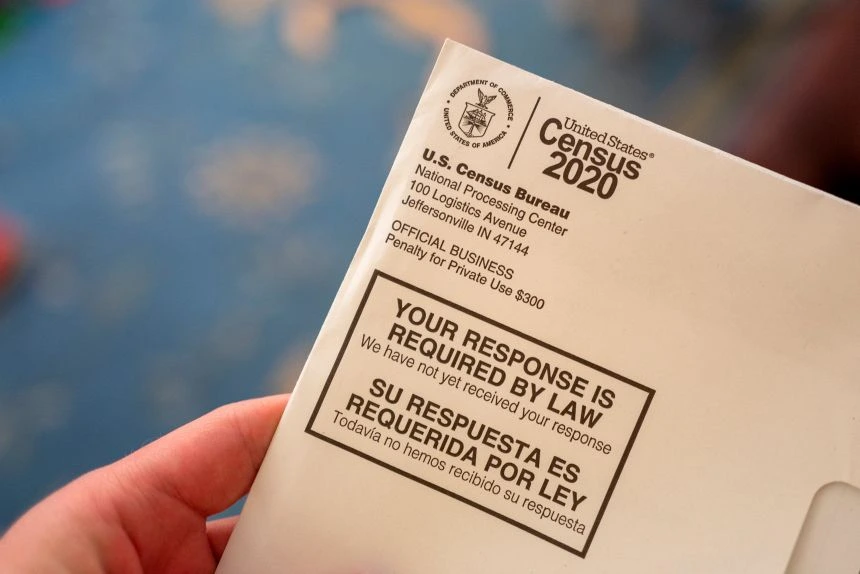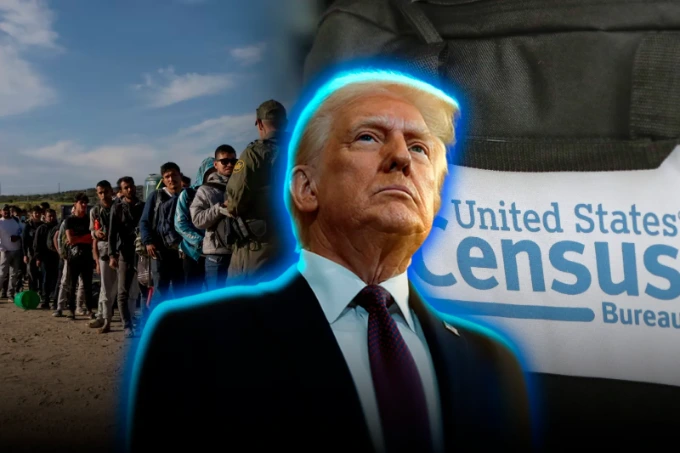

The administration of President Donald Trump is pushing for a reform of the U.S. Census that seeks to change the way the population is determined for distributing political representation among the states. The proposal includes excluding immigrants who are illegally in the country from the population count used to allocate seats in the House of Representatives and, by extension, to determine part of the representation in the Electoral College.
The Census Bureau published a regulatory proposal on Wednesday that also proposes eliminating questions about race, ethnicity, and sexual orientation from the short questionnaire used for the decennial population count. According to the document, these questions have a ''sensitive'' nature that could discourage participation from some citizens and residents, while a simpler questionnaire could encourage a higher response rate.
One of the main proposed changes is related to the definition of ''usual residence'', a concept used to establish who is part of the population counted for political representation purposes. The administration argues that this definition has historically been linked to the permanence and establishment of a residence in the United States, as well as to a lasting authorization to reside in the country.
Under this criterion, the proposal would include legal permanent residents in the base used for seat allocation, but would exclude immigrants who are illegally in the United States. Certain foreigners whose immigration status is considered less stable or durable than that of a legal permanent resident would also be excluded.
The Census Bureau proposes to leverage the federal government's broad access to administrative records to determine the immigration status of the counted individuals. This measure would allow the use of available government information to obtain a more accurate calculation of who should be included in the population considered for distributing political representation.
The change would have significant consequences because the Census is conducted every ten years and its results determine how the 435 seats in the House of Representatives are distributed among the states. It also influences the representation in the Electoral College and the allocation of billions of dollars in federal funds.