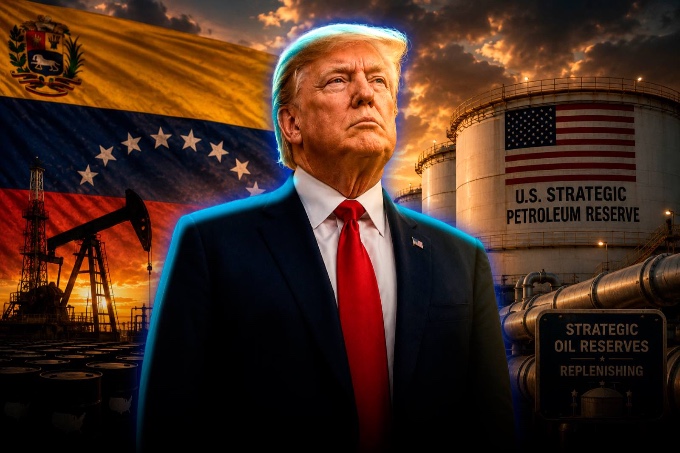
The president confirmed that with the historic agreement with Venezuela, the strategic reserves that Biden left at the brink of historic lows will be restored
The U.S. oil reserve is at its lowest level in 44 years and holds about 290 million barrels. The reduction process, to respond to global supply disruptions, began when Russia invaded Ukraine during the Biden administration, and deepened due to the conflict with Iran.
Nonetheless, by signing this pact Trump secured majority control of over 65 billion barrels of Venezuelan oil reserves, betting that, in return, U.S. companies can revive the deteriorated energy industry of the South American country.
It is worth noting that Venezuela has the largest proven oil reserves in the world, but its current production hovers around 1.25 million bpd —well below its potential— due to years of disinvestment and mismanagement.
President Donald Trump confirmed this Sunday that the oil that the United States will receive as a result of the historic agreement reached with Venezuela will be used to replenish the Strategic Petroleum Reserve of his country, which former Democratic President Joe Biden significantly reduced in recent years.
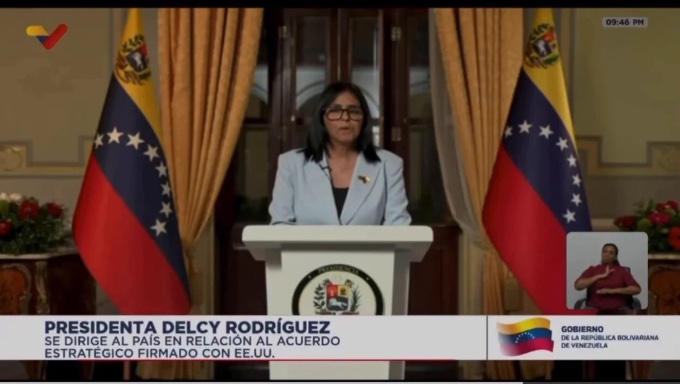
The president indicated in his post that the "filling" process will begin soon and described Venezuelan crude as a "gift from Venezuela to the people of the United States." For her part, the interim president of Venezuela, Delcy Rodríguez, stated that this pact —which will last for 25 years— will help modernize the industry, boost the local economy, and strengthen regional energy security.
"This 25-year bilateral project includes the development of 17 strategic oil fields with a production target of over 1.5 million barrels per day," Rodríguez specified through the state broadcaster VTV. "That figure refers only to the bilateral agreement between Venezuela and the United States."
The internal leader delivered a national address last night to announce the new agreement
The interim president added that this initial target of 1.5 million bpd is just the beginning, as the broader plan also includes the development of eight new oil blocks as part of a comprehensive expansion of the country's energy sector, with Chevron leading the charge in this area.