
The tunnel that was buried alive: a pharaonic whim that the government had to abandon

The tunnel that was buried alive: a pharaonic whim that the government had to abandon
July 18th.
porEditorial Team
Uruguay

The government abandoned its delusional project on July 18 after strong pressure from Colonel Roque García.

Compartir:

In the end, the much announced tunnel under 18 de Julio came to nothing. He was not killed by the technicians, nor was a sudden austerity attack on the Broad Front. Reality killed him: the enormous cost, the destruction he was going to leave in the center and the political risk of continuing to push a white elephant that no

one really needed.

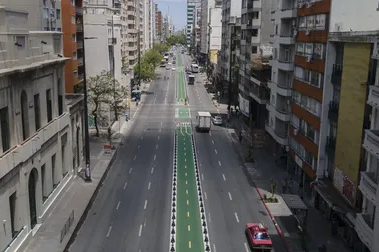
Yamandú Orsi recognized it this Tuesday: the idea of a 3.2 kilometer underground, with underground stations and a price that was already around 590 million dollars, is ruled out. Now we will talk about a “surface” solution, with exclusive lanes for articulated buses, the intact bike path and some traffic light adjustments. Less pomp, less debt and, above all, fewer years of construction that would have turned Montevideo's main avenue into dusty chaos

.

Because that was the tunnel from the start: an expensive and disruptive delusion. Bury the avenue so that buses gain a few minutes during rush hour, while downtown shops agonized with detours, noise, dust and bankruptcies. A project that smelled like a publicity photo and eternal debt, not like a serious mobility solution. A whim that prioritized the “modern work” show over common sense and the pocket of Montevideans

.

In that fight, early and firm opposition played a key role. Retired Colonel Roque García, former Open Council, currently leader of the “Recover Montevideo” movement, within the Republican Coalition, was the first to come out publicly to denounce the absurdity, warning of waste and irreparable damage to the commercial heart


of the city.
Roque Garcia.
Roque Garcia.

He threatened to collect signatures to stop the work and bring the issue directly to people. That noise made me very uncomfortable. Because when someone stands up fearlessly and begins to mobilize opinion, the agencies that grant international loans get nervous, political calculations tremble and the government prefers not to risk a civic revolt

.

In the end, Orsi opted for retirement. He said that the tunnel had “advantages” in terms of speed, but that the other option “has others”. Translation: they were frightened, they backed down and now they sell as “success” what they presented yesterday

as indispensable.

Let no one be confused: this is not a big State decision. It's the implicit confession that the original project was an unnecessary luxury that didn't stand up to scrutiny. A waste that was sold as a transport revolution and ended up buried by its own economic weight and by

fear of citizen reaction.

The 18 de Julio tunnel is already history. It remains to be seen what patches they now bring to the surface and if they really improve something or if, as is often the case with these faunist reforms, we end up with more expense and the same problems as always. What did become clear is that, when the pressure is felt strongly, even the most enthusiastic of pharaonic works turn back.

For once, the delirium stopped before digging the first meter. But the underlying problem of transportation in Montevideo is still intact, and Montevideans are still waiting for real solutions

, not stories.

Noticias relacionadas

Laura Raffo endorses RT's Russian propaganda and opens the door to Putin's nefarious influence in Uruguay

Laura Raffo endorses RT's Russian propaganda and opens the door to Putin's nefarious influence in Uruguay

Paddling in Dulce de Leche: the Uruguayan economy is progressing at a slow pace due to the weight of state interventionism

Paddling in Dulce de Leche: the Uruguayan economy is progressing at a slow pace due to the weight of state interventionism

International study reveals the failure of Plan Ceibal: only 1 in 10 Uruguayans achieves digital literacy

International study reveals the failure of Plan Ceibal: only 1 in 10 Uruguayans achieves digital literacy

RIGI: Milei expands Rio Tinto's Phoenix project with USD 530 million to boost lithium exports in Catamarca

RIGI: Milei expands Rio Tinto's Phoenix project with USD 530 million to boost lithium exports in Catamarca

Why did Pedro Sánchez murder the rape victim and not the rapists?”

Why did Pedro Sánchez murder the rape victim and not the rapists?”

The national government ratified Rafael Di Zeo's ban on entering stadiums

The national government ratified Rafael Di Zeo's ban on entering stadiums

La Derecha Diario logo
ESX logoInstagram logoYouTube logoTikTok logo
ARGENTINABOLIVIAECUADORISRAELMEXICOURUGUAYDERECHA DIARIO TV
  • ESXInstagramYouTubeTikTok
  • DERECHA DIARIO TV
  • Secciones
  • ARGENTINA
  • BOLIVIA
  • ECUADOR
  • ISRAEL
  • MEXICO
  • URUGUAY
  • Países
  • La Derecha Diario logoLA DERECHA DIARIO
  • La Derecha Diario México logoLA DERECHA DIARIO MÉXICO
  • La Derecha Diario Uruguay logoLA DERECHA DIARIO URUGUAY
  • La Derecha Diario Ecuador logoLA DERECHA DIARIO ECUADOR
  • La Derecha Diario Bolívia logoLA DERECHA DIARIO BOLÍVIA
  • La Derechadiario República Dominicana logoLA DERECHADIARIO REPÚBLICA DOMINICANA
  • La Derecha Diario Israel logoLA DERECHA DIARIO ISRAEL
  • La Derecha Diario Estados Unidos logoLA DERECHA DIARIO ESTADOS UNIDOS
  • Temas
  • GUERRA EN IRÁN
  • El Diario
  • QUIENES SOMOS
  • AUTORES
  • PUBLICIDAD
  • DONAR
La Derecha Diario logo
TwitterInstagramYouTubeTikTok
Derecha Diario TV

Nosotros

  • Quienes Somos
  • Autores
  • Donar

Privacidad

  • Protección de datos
  • Canales
  • Sitemap

Contacto

  • info@derechadiario.com.ar
PUBLICIDAD