
International study reveals the failure of Plan Ceibal: only 1 in 10 Uruguayans achieves digital literacy

International study reveals the failure of Plan Ceibal: only 1 in 10 Uruguayans achieves digital literacy
porEditorial Team
Uruguay

The Ceibal plan was a very expensive populist plan that was useless.

Compartir:

The fact that circulates with force on networks and that makes the defenders of the official narrative so uncomfortable is neither an invention nor a militant exaggeration. It comes from the ICILS 2023 (International Computer and Information Literacy Study), the most rigorous and recognized international study to measure students' real competencies in the use of computers and the management of digital information. It is carried out by the IEA (International Association for the Evaluation of Educational Achievement), the same organization that makes the TIMSS and PIRLS, with impeccable technical standards and the participation of dozens of countries

.


Uruguay participated in this 2023 cycle evaluating students in the second year of secondary education (high school or UTU), exactly the group referred to in the phrase “1 in 10 children”. The results were published at the end of 2024 and are devastating for the country that boasted for years of being a “world pioneer” in digital inclusion

thanks to the Ceibal Plan.


ICILS isn't about knowing how to turn on a computer or open Word. The test evaluates two large dimensions. First, Computer and Information Literacy (CIL), which is the ability to use computers to effectively research, create and communicate information. This includes searching for relevant information on the Internet, evaluating its reliability, organizing it, avoiding dubious sources and producing digital products judiciously. Second, it measures Computational Thinking (CT), that is, computational thinking that involves sequencing, algorithms and

structured problem solving.


Performance levels at CIL range from Low 1, where students achieve almost nothing, to Level 4, which represents an advanced domain with accurate evaluative judgment and total control when searching for and creating information.


Uruguay's raw numbers in ICILS 2023 are worrying. 33% of Uruguayan students are below Level 1, which means they are unable to perform even the simplest tasks on the test. Adding Level 1, approximately 64% of students do not exceed the minimum level, that is, they do not demonstrate basic functional use under direct instruction for explicit information collection and management tasks. Only about 10-11% reach the highest levels (Level 3 or 4), where students can autonomously search for information, critically evaluate it, and create products with independence and precision. Hence the famous phrase of “1 in 10” who knows how to use the computer to obtain relevant information.


In computational thinking, Uruguay recorded the lowest average score of all participating countries, with 421 points, well below the international average. To put this into context, the international average shows that 24% is below Level 1, while in Uruguay it is 33%. Only 1% of students worldwide reach Level 4 of excellence, and in Uruguay that proportion is marginal

.


In addition, the public-private divide is brutal. In public schools, only 28% exceed Level 1 in CIL, compared to 66% in private schools. In computational thinking, 40% versus 70%. Although part of that difference is explained by the students' socioeconomic context, it remains an open wound in a plan that promised equity

.


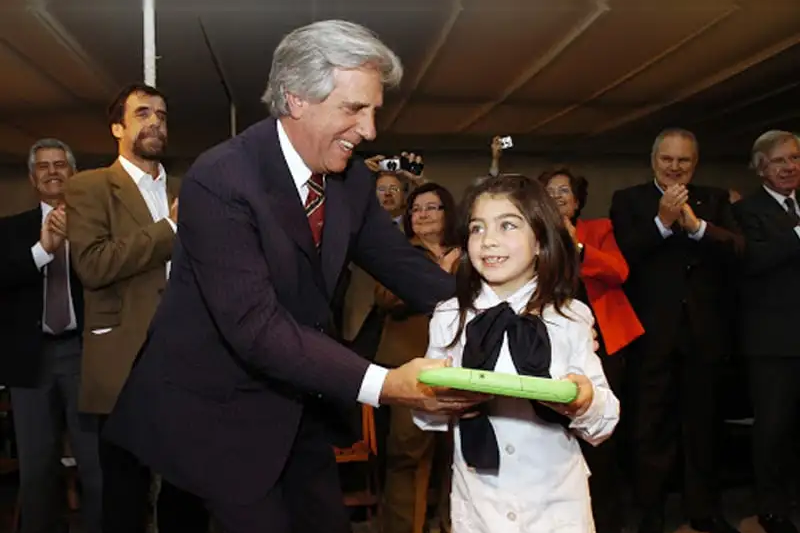
This study is especially uncomfortable for Plan Ceibal because the program was launched precisely to close the digital divide and prepare children for the 21st century. Tens of millions of dollars were invested in laptops, connectivity, platforms and programs. Mass access was achieved and Uruguay was the first country to give one computer per child to the public one. But ICILS measures the real result: not how many have a laptop, but what they know how to do with it

.


And the verdict is clear: access didn't translate into competencies. Many kids can browse, chat and consume content, but they can't use the tool to learn independently, discriminate reliable information, or solve problems wisely. In a world where disinformation, fake news and digital dependence are everyday problems, this is serious

.


The president of Ceibal himself, Leandro Folgar, acknowledged upon learning the results that “being part of this international study is fundamental for the country”, but the numbers do not leave much room for complacency. Ceibal has made an enormous effort in access; the problem lies in deep pedagogical integration, teacher training and the continuous evaluation of results

.


ICILS 2023 is not an opposition report: it is a technical, comparative and transparent study carried out by an independent international entity. And he says, bluntly, that after almost two decades of Plan Ceibal, the vast majority of Uruguayan teenagers in their second year of middle school do not master the basic digital skills that

the modern world requires.


It's not enough to give away computers. It is necessary to teach how to use them to think, research and create value. That “1 in 10” that does succeed is concrete proof that digital populism — a lot of advertising, a lot of investment in hardware and little focus on real pedagogy — left an account pending with an entire generation

.


Uruguay now has the obligation to look at this data head on, without excuses or self-indulgent stories. Because in education, reality always ends up taking its toll. And the kids who are in their second year of high school today are the ones who will have to compete tomorrow in a world where knowing how to search, evaluate and use relevant information is no longer a plus: it's a basic need for survival

.


The Ceibal Plan demonstrated that access can be given. ICILS 2023 demonstrated that this alone is not enough. It's time to move from the advertising photo to concrete results

.

Noticias relacionadas

Paddling in Dulce de Leche: the Uruguayan economy is progressing at a slow pace due to the weight of state interventionism

Paddling in Dulce de Leche: the Uruguayan economy is progressing at a slow pace due to the weight of state interventionism

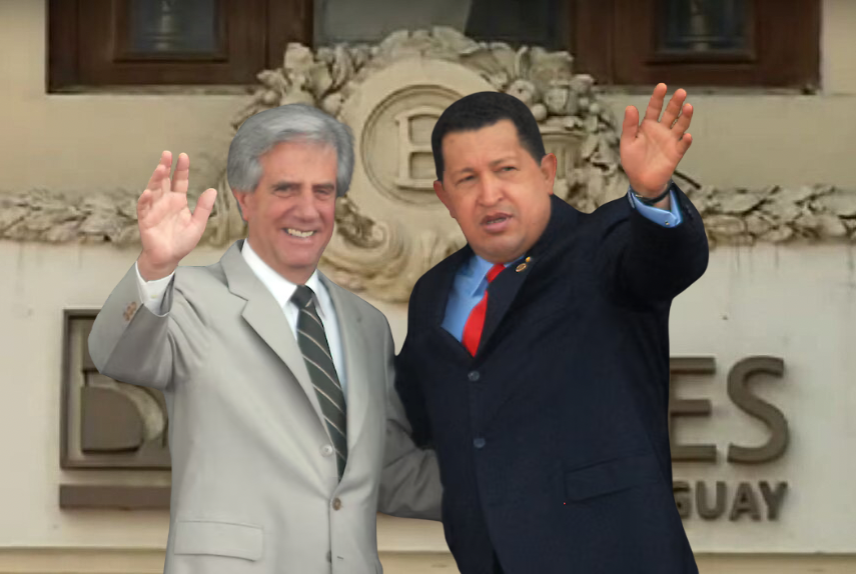
Banco Bandes: The perfect branch of Chavism that triangulated billions to Iran

Banco Bandes: The perfect branch of Chavism that triangulated billions to Iran

The Uruguayan State: an obese giant that stifles investment and punishes those who want to produce

The Uruguayan State: an obese giant that stifles investment and punishes those who want to produce

The Government of Milei anticipated a record harvest for the countryside thanks to lower taxes

The Government of Milei anticipated a record harvest for the countryside thanks to lower taxes

The Trump administration announced that it will build a permanent base on the Moon

The Trump administration announced that it will build a permanent base on the Moon

Another last-minute change: Lionel Scaloni summoned Agustín Giay to replace Montiel

Another last-minute change: Lionel Scaloni summoned Agustín Giay to replace Montiel

La Derecha Diario logo
ESX logoInstagram logoYouTube logoTikTok logo
ARGENTINABOLIVIAECUADORISRAELMEXICOURUGUAYDERECHA DIARIO TV
  • ESXInstagramYouTubeTikTok
  • DERECHA DIARIO TV
  • Secciones
  • ARGENTINA
  • BOLIVIA
  • ECUADOR
  • ISRAEL
  • MEXICO
  • URUGUAY
  • Países
  • La Derecha Diario logoLA DERECHA DIARIO
  • La Derecha Diario México logoLA DERECHA DIARIO MÉXICO
  • La Derecha Diario Uruguay logoLA DERECHA DIARIO URUGUAY
  • La Derecha Diario Ecuador logoLA DERECHA DIARIO ECUADOR
  • La Derecha Diario Bolívia logoLA DERECHA DIARIO BOLÍVIA
  • La Derechadiario República Dominicana logoLA DERECHADIARIO REPÚBLICA DOMINICANA
  • La Derecha Diario Israel logoLA DERECHA DIARIO ISRAEL
  • La Derecha Diario Estados Unidos logoLA DERECHA DIARIO ESTADOS UNIDOS
  • Temas
  • GUERRA EN IRÁN
  • El Diario
  • QUIENES SOMOS
  • AUTORES
  • PUBLICIDAD
  • DONAR
La Derecha Diario logo
TwitterInstagramYouTubeTikTok
Derecha Diario TV

Nosotros

  • Quienes Somos
  • Autores
  • Donar

Privacidad

  • Protección de datos
  • Canales
  • Sitemap

Contacto

  • info@derechadiario.com.ar
PUBLICIDAD