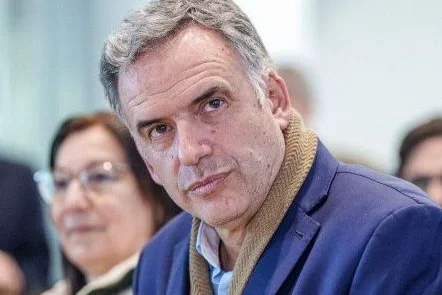

The level of support for President Yamandú Orsi's administration has reached the lowest point recorded for any government of the Broad Front since it took power in 2005, according to the latest survey by Opción Consultores for the second quarter of 2026.
Only 20% of Uruguayans approve of the presidential management, while 48% disapprove. The rest are neutral. Neither during Tabaré Vázquez's first term, nor at the peak of José Mujica's popularity, nor during Vázquez's second presidency had such a marked and early decline in citizen valuation been observed.
Just over a year after taking office, the government that came to power with the commitment of "another way of doing things" has already accumulated more rejection than support. This is not an isolated fact or a momentary setback: it is a consolidated trend.
President Orsi himself candidly acknowledged the situation: "If there are people who are not satisfied, it is because something is not going well." The statement is correct, but it omits the central element of the problem: the growing gap between the campaign discourse—focused on inclusion, transformation, and regaining direction—and the citizen perception of the evolution of the country's main problems.
Uruguayans observe that prices are not decreasing, that insecurity is not significantly diminishing, and that the promises of change are dissolving into announcements and dialogue spaces without concrete results. This discrepancy between generated expectations and perceived results largely explains the deterioration of the government's image.