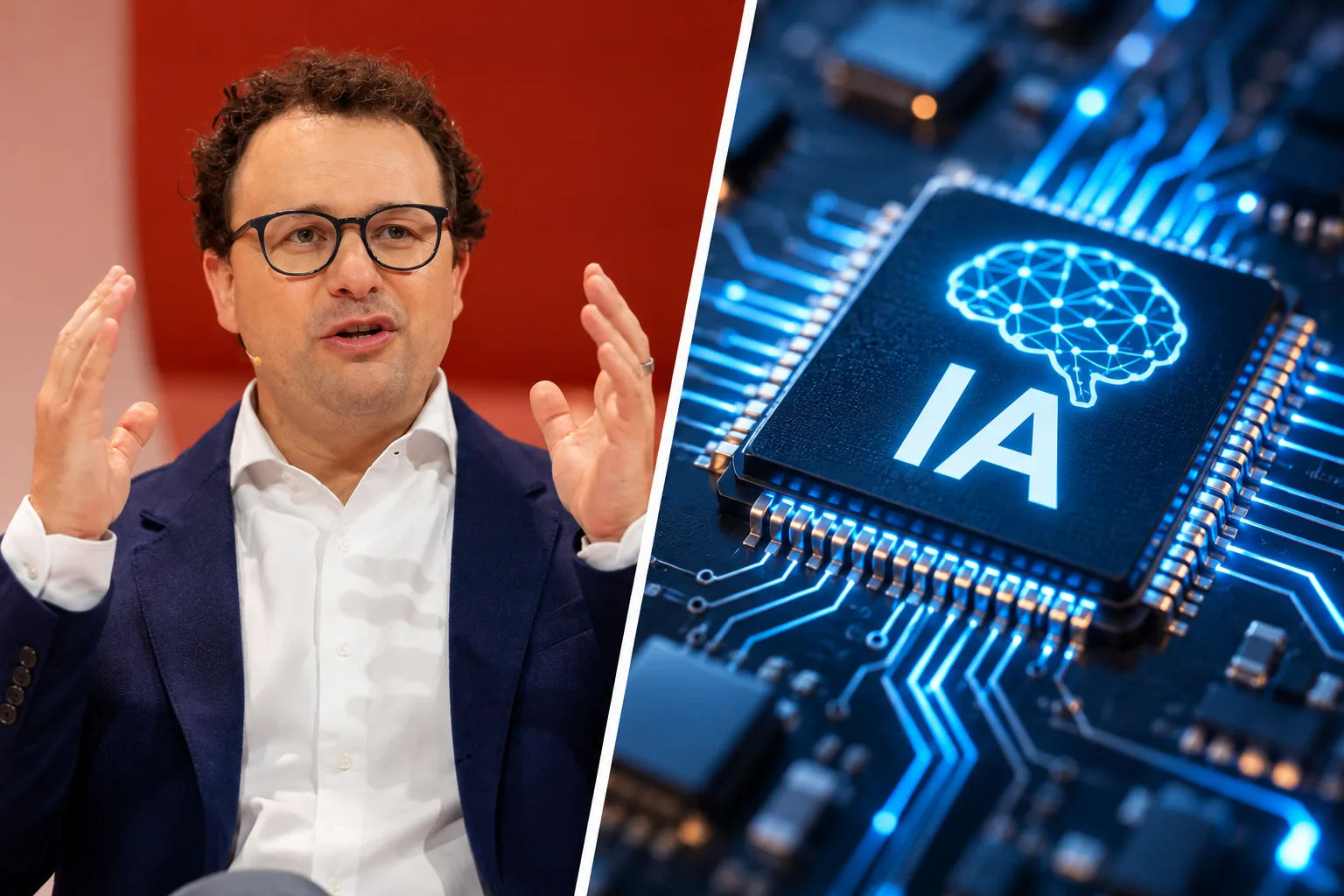
The CEO of Anthropic denied advocating for the subordination of human decisions to artificial intelligence and warned about the risks of developing systems capable of improving themselves without supervision
Dario Amodei, CEO of Anthropic, rejected accusations on Wednesday that he supports ceding control of human decisions to artificial intelligence systems. The entrepreneur published an extensive rebuttal on X after Axios released a report on the ideological differences among the industry's top executives.
The article claimed, based on sources linked to Anthropic, that there was a current within the company favoring delegating certain decisions to future superintelligent systems.
Amodei called the idea that he advocates for the renunciation of human free will absurd and reaffirmed his opposition to any form of governance exercised by artificial intelligence systems.
“We must never sacrifice legitimacy or self-determination on the altar of efficiency or security,” he stated.
Automating tasks does not mean relinquishing human control
The executive made a distinction between delegating political and social decisions to computer systems and allowing them to autonomously carry out certain activities.
Among the examples, he mentioned driving vehicles, designing cancer drugs, and comprehensive software programming.
Amodei argued that granting greater autonomy to artificial intelligence in specific activities can be beneficial and even help save lives.
However, he also acknowledged that certain applications may require restrictions, both due to their impact on the labor market and the risks associated with developing increasingly powerful systems.
The entrepreneur defended the need to preserve individuals' decision-making capacity and ensure that democratic institutions maintain final authority.
In this regard, he noted that the arguments used to reject autocracy are also applicable to any potential governance exercised by artificial intelligence.
Anthropic uses Claude to develop more advanced models
One of the central points of the debate revolves around the so-called recursive improvement: the ability of artificial intelligence systems to contribute to the development of increasingly advanced versions of that same technology.
Anthropic acknowledged in June that Claude had written more than 80% of the code incorporated into its codebase.
An independent assessment published on November 5 by METR, an organization specialized in analyzing the capabilities and risks of artificial intelligence, provided new data on that process.
The researchers estimated that the capabilities of Anthropic's models in well-defined tasks likely improve at a rate close to double that recorded between March 2024 and October 2025.
A significant part of that acceleration would be related to the incorporation of artificial intelligence into the company's own research and development activities.
However, Amodei rejected the notion that this progress justifies completely dispensing with human researchers.
The executive believes it would not be safe to allow Claude to develop successive generations of cutting-edge models without significant human oversight or a proper understanding of the process.
Amodei's criticisms of his competitors
The controversy also involved recent statements from Sam Altman, CEO of OpenAI, and Alexandr Wang, head of artificial intelligence at Meta.
Altman had defended the need to ensure that people retain decision-making power over the future, while Wang questioned the possibility of handing control of society to artificial systems.
Amodei accused other industry executives of resorting to slogans like “human control and agency” or “AI should only be a tool”, without introducing substantial differences in their products.
According to his argument, the major tech companies are developing models aimed at automating increasing amounts of tasks and face similar difficulties in assessing their safety.
The problem, he warned, is that the capabilities of these systems advance more rapidly than the tools available to understand and oversee their functioning.
In his essay We Must Pace the Frontier, published in September, Amodei had already proposed setting limits on the speed of recursive improvement.
His position thus distinguishes between the automation of specific activities and the transfer of authority over collective decisions, in a scenario where the developers themselves increasingly rely on artificial intelligence to research, program, and evaluate new generations of models.