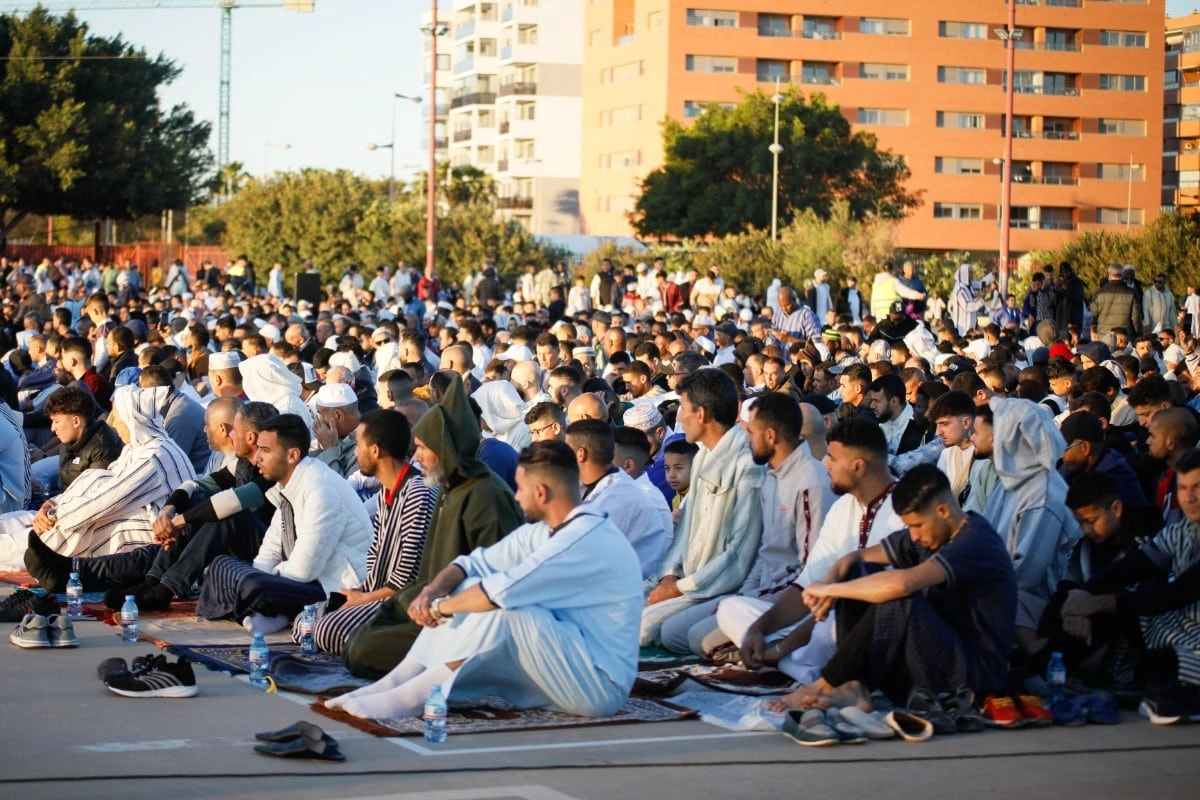
Parents denounce intimidation, insults and situations that forced children to hide their food during Ramadan, while school authorities try to relatize the events.
A new controversy shakes the European education system and puts tensions linked to cultural and religious integration in classrooms back at the center of the debate. In recent days, complaints from parents in Germany and a disciplinary conflict in Austria have raised the alarm about situations that occurred during Ramadan, the holy month of Islam, in which non-Muslim students have been pressured or affected by religious practices within schools. The most recent case occurred in the German city of Kleve, where several families reported that Muslim students had intimidated other students to fast or hide their food during school hours. According to the parents, the situation generated fear among some children, who chose to eat in secret during recess to avoid ridicule
or threats.
The events allegedly occurred at the Joseph-Beuys-Gesamtschule, an educational center in the town. According to testimonies collected by German media, two fifth-grade students were pressured by Muslim classmates to throw away their sandwich during recess simply because “it was Ramadan”. One of the mothers recounted with concern what her daughter told her when she returned home. As he explained, fellow Muslims told them: “We have Ramadan, now you have to fast and throw your bread away or you'll see the consequences
.” Muslims
Another mother said that her daughter went to a teacher to tell what happened. However, the response he received raised even more concern among families. According to her testimony, the teacher told her that, when they ate, they should do so turning around so that the classmates who were fasting would not see them. The complaints were not limited to that episode. Some parents also said that several students who were fasting made fun of those who ate during recess. Some students reported vomiting gestures or disgusting sounds directed at classmates who ate food
.
In one of the reported cases, the situation even led to insults of an identity nature. According to the affected families, a girl was insulted by other students with expressions such as “ugly German”, which increased concern among several parents at the school. Faced with the growing controversy, the management of the Joseph-Beuys-Gesamtschule published a statement on social networks to refer to the situation. The center stated that an internal investigation found no evidence of a structural problem within the institution
.
According to the school, the controversy was caused by “a communication that is not entirely clear”. However, the institution announced that it will review what happened together with teachers and students. In its public statement, the school maintained that “any form of violence or harassment has no place in our school” and assured that its goal is to ensure that all students feel safe and respected. The case also reached the educational authorities of the German state of North Rhine-Westphalia, who confirmed that they are examining what happened
.
From the Bezirksregierung Düsseldorf, the body responsible for school supervision in the region, they recalled that no student can be forced to follow religious practices within an educational establishment. The authorities also stressed that students can eat and drink freely during breaks, and that there is no rule that requires them to hide their food or move away to
do so. State Vocational School of St. Pölten
Similar controversy in Austria In
parallel, another episode related to Ramadan generated controversy in Austria, this time in the context of a student boarding school. A 17-year-old Austrian student was expelled for a week from boarding school at the State Vocational School of St. Pölten, in the state of Lower Austria, after complaining about a situation related to Ramadan that affected their night's rest. The conflict originated in a room shared by four female students. Among them were two Muslim students who, following Islamic tradition, woke up every morning around 3:00am to eat before dawn.
That schedule began to generate tensions with the other two roommates in the bedroom. According to the mother of one of the young women affected, the constant alarms interrupted the rest and the situation worsened because the students who got up were also playing music at that time of the morning. The problem lasted for several days. According to the local press, an attempt was made to resolve the conflict through a change of room, but the Muslim students refused to move to another room, so the coexistence continued without changes
.
Tension finally erupted when the 17-year-old student, from the Mostviertel region, called her mother during one of those nights to express her frustration. The conversation took place from the boarding school corridor and, as it transpired, her classmates heard part of the call from behind the door. According to the Directorate of Education, the conflict did not end with that call. The authorities maintain that the argument went further and that the adolescent had directed insults directly at the other students, a confrontation that, allegedly, was recorded on video
.
After the incident, the two young Muslim women filed a complaint with the school's management. The school decided to act quickly and sanctioned the student with a temporary expulsion from boarding school for a week. The teenager's mother harshly criticized the measure. According to him, the sanction was adopted without prior warning and the management only asked his daughter to reflect on her behavior and the language used. In addition, he argued that the consequences were not limited to accommodation. According to her testimony, measures were also applied in the classroom that forced the student to remain separated from the rest of her
classmates.
The mother also said that during the conflict both parties exchanged insults, but she complained that the teachers only took into account the words of her daughter when applying the sanction.