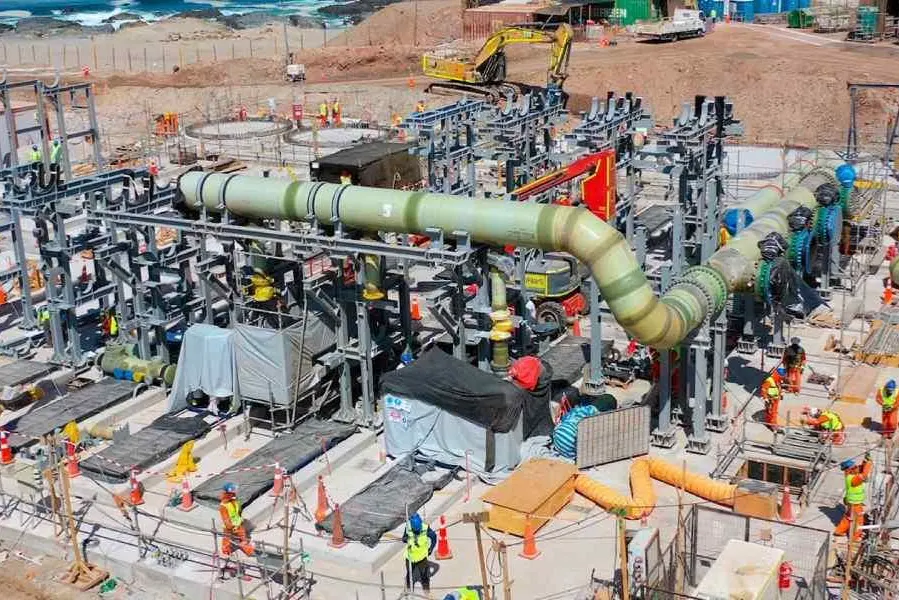

Chile developed an infrastructure aimed at transporting water from the Pacific Ocean to one of its large copper operations, in the heart of the Atacama Desert. The C20+ project, by Compañía Minera Doña Inés de Collahuasi, includes a pipeline of approximately 195 kilometers that will reach facilities located about 4,400 meters above sea level, in the Andes mountain range.
The initiative aims to replace part of the continental water used by mining with desalinated water. However, although a fundamental stage of the project has already been completed, a disastrous judicial ruling regarding its environmental effects conditions the full implementation of the system.
Such projects can be crucial not only for the development of mining in Chile but also for supplying water to mining developments in Argentina.
How the gigantic pipeline crossing Atacama will work
The route will begin at Puerto Patache, in the Tarapacá Region, where a desalination plant has been built designed to produce 1,050 liters of water per second. There, reverse osmosis will be used, a technology that separates salts from seawater using membranes and pressure.
The treated liquid will travel through a large-diameter pipeline to the Ujina sector, where Collahuasi facilities are located. Its main challenge is to overcome the elevation difference between the Pacific coastline and the Andean heights.

To achieve this, the system incorporates five pumping stations and a transfer station with a capacity to store approximately 49,500 cubic meters of water. It also includes a Pelton turbine, capable of harnessing a height difference in the pipeline to recover part of the energy used.