The head of the pro-government Parliament confirmed that the amnesty law proposed by Delcy Rodríguez will enter into discussion 'very soon'
Nuevo
Agregar La Derecha Diario en
Compartir:
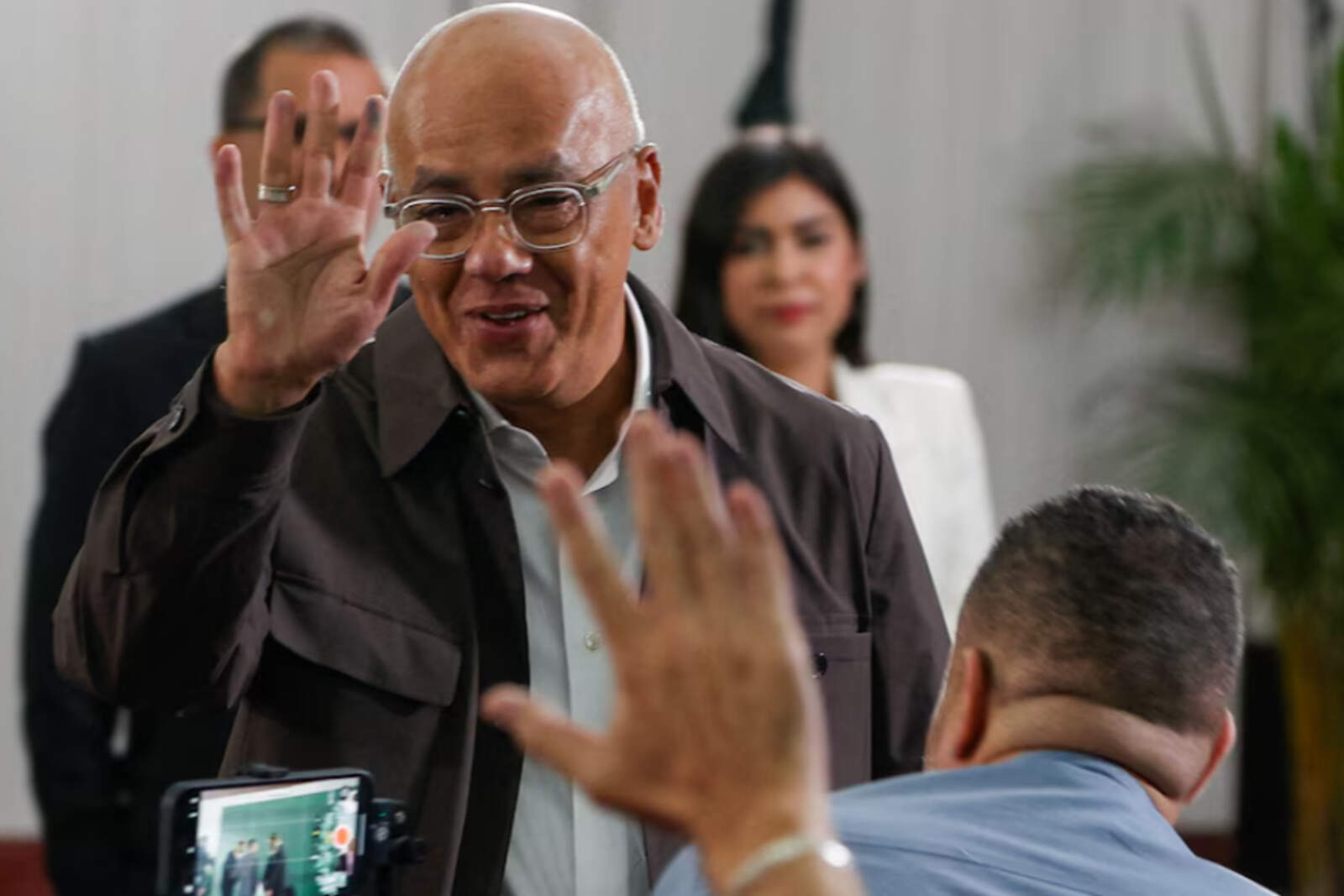
The head of the Venezuelan Parliament, Jorge Rodríguez, anticipated that the regime will move forward "very soon" with the first debate on a general amnesty law promoted by President Delcy Rodríguez. The bill, according to reports, would be incorporated into the legislative agenda in the coming days, amid a process of political dialogue promoted by chavismo itself.
Rodríguez, one of the most influential men in the regime and brother of the current head of state, maintained that the ruling party is evaluating "the scope of the initiative" before bringing it to the chamber. According to his statements, the objective would be to send a "powerful political message" that marks the beginning of a new stage.
However, the announcement is generating serious doubts both inside and outside Venezuela, given chavismo's track record in the discretionary use of amnesties as tools of political control and power preservation.
Political dialogue under the regime's control
The head of Parliament made these statements after a meeting with different political sectors, presented as a space for dialogue. Nevertheless, the process is once again being strictly led by chavismo, which defines the timing, the content, and the limits of any agreement.
Amnistía en Venezuela: el chavismo confirma que pronto comenzará el debate de la ley
The ruling party is seeking to project institutional openness while maintaining an iron grip on the judicial system, Parliament, and security agencies. In that context, the amnesty law appears as a maneuver to organize the domestic landscape without altering the regime's structural foundations.
The specter of impunity
One of the main questions revolves around the real scope of the amnesty. Although chavismo speaks of "restoring freedoms," it is not clear which crimes would be covered or who would be the beneficiaries.
Human rights organizations have warned that a broad amnesty could become a mechanism of impunity for officials and security forces involved in serious violations, including arbitrary detentions, torture, and systematic political persecution.
Past experience reinforces those suspicions. In 2007, then-dictator Hugo Chávez promoted an amnesty that was questioned for its selective nature and its political use.
A fragmented opposition under pressure
Critical positions have emerged from opposition sectors. Governor Alberto Galíndez demanded that any amnesty also address responsibilities for abuses committed by the State's repressive apparatus. According to his statement, there can't be releases without truth and justice.
Amnistía en Venezuela: el chavismo confirma que pronto comenzará el debate de la ley
Galíndez, one of the few opposition leaders with territorial power, also warned that dialogue processes driven by chavismo have historically ended in frustration, without real changes or democratic guarantees.
A new narrative to sustain the regime
The amnesty law is part of an attempt by chavismo to rebuild political legitimacy after years of international isolation, economic collapse, and systematic allegations of human rights violations.
Far from representing a genuine opening, the announcement seems aimed at consolidating internal control, reorganizing alliances, and closing uncomfortable cases. The regime is seeking to buy time, improve its image, and ease tensions without modifying the authoritarian core of power.
Meanwhile, uncertainty persists. The promise of a "very soon" amnesty is once again raising alarms about chavismo's true objective: not national reconciliation, but the regime's self-protection.