In a surprising statement, former Kirchnerist official Aníbal Fernández admitted that he would keep the main measures promoted by President Javier Milei unchanged, considering them part of a necessary process to organize the Argentine economy.
During an interview, the former minister of the corrupt and convicted Cristina Kirchner was emphatic when asked about the possibility of reversing the current course in the event of a change in government.
“Do you want to know if I would change anything that Milei did? Everything, I won't touch anything,” he stated, making his position clear regarding the reforms undertaken by the current libertarian administration.
His statements mark a significant contrast with the traditional discourse of Kirchnerism, the political space he belongs to and which has repeatedly questioned the economic program of Milei's government. However, Fernández not only avoided criticizing the measures but also acknowledged the value of the ongoing process.
“And I start to look piece by piece. The effort that was made cannot be squandered, it cannot be set aside,” he added, in a phrase that highlights the impact of the implemented policies and the need to sustain them over time.
The acknowledgment is particularly relevant in a context where Milei's government has pushed for a deep adjustment program aimed at correcting structural imbalances accumulated over decades.
In this framework, the words of a leader with a background in Kirchnerism reflect, even from opposing sectors, a validation of the adopted course.
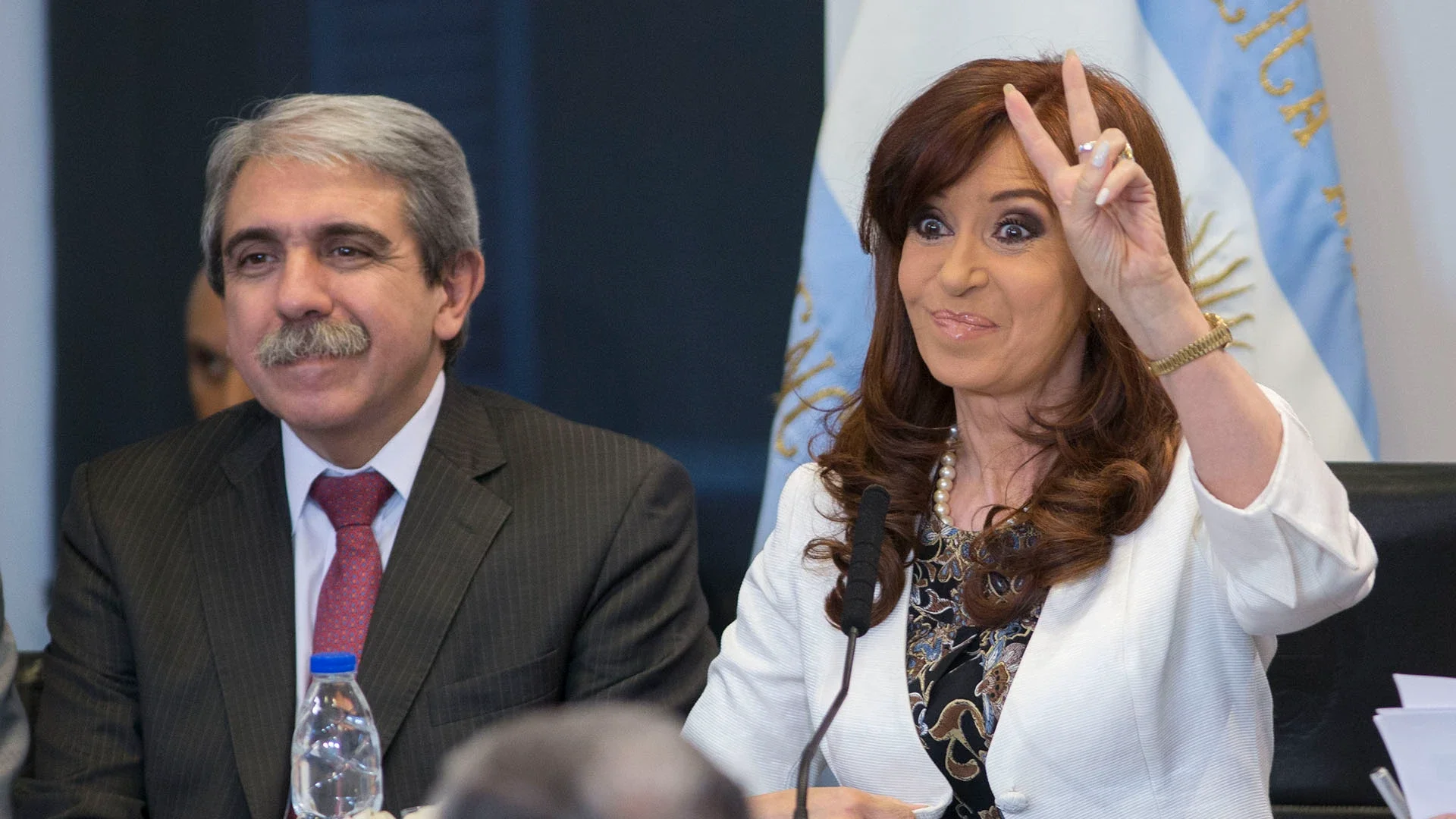
Aníbal Fernández and Cristina Kirchner.
Far from proposing a break, Fernández deepened his stance by explaining how he would approach the continuity of current policies: “I look at it and take it out, if it is appropriate. And I look at it and consolidate it, modify it, improve it, whatever it is.”
In this way, he hinted that any future review would start from the foundation built by the current administration, without dismantling the overall scheme, but adjusting it based on its functioning.
In this sense, the statements of the former Kirchnerist minister serve as an implicit acknowledgment that the adopted path responds to the need to correct structural problems that have persisted for years, with a large fiscal deficit, poverty, and inflation.
Thus, in an unexpected turn, one of the historical figures of Kirchnerism ended up validating the core of the current economic policy by admitting that not only would he not reverse the measures, but he would keep the implemented scheme intact.