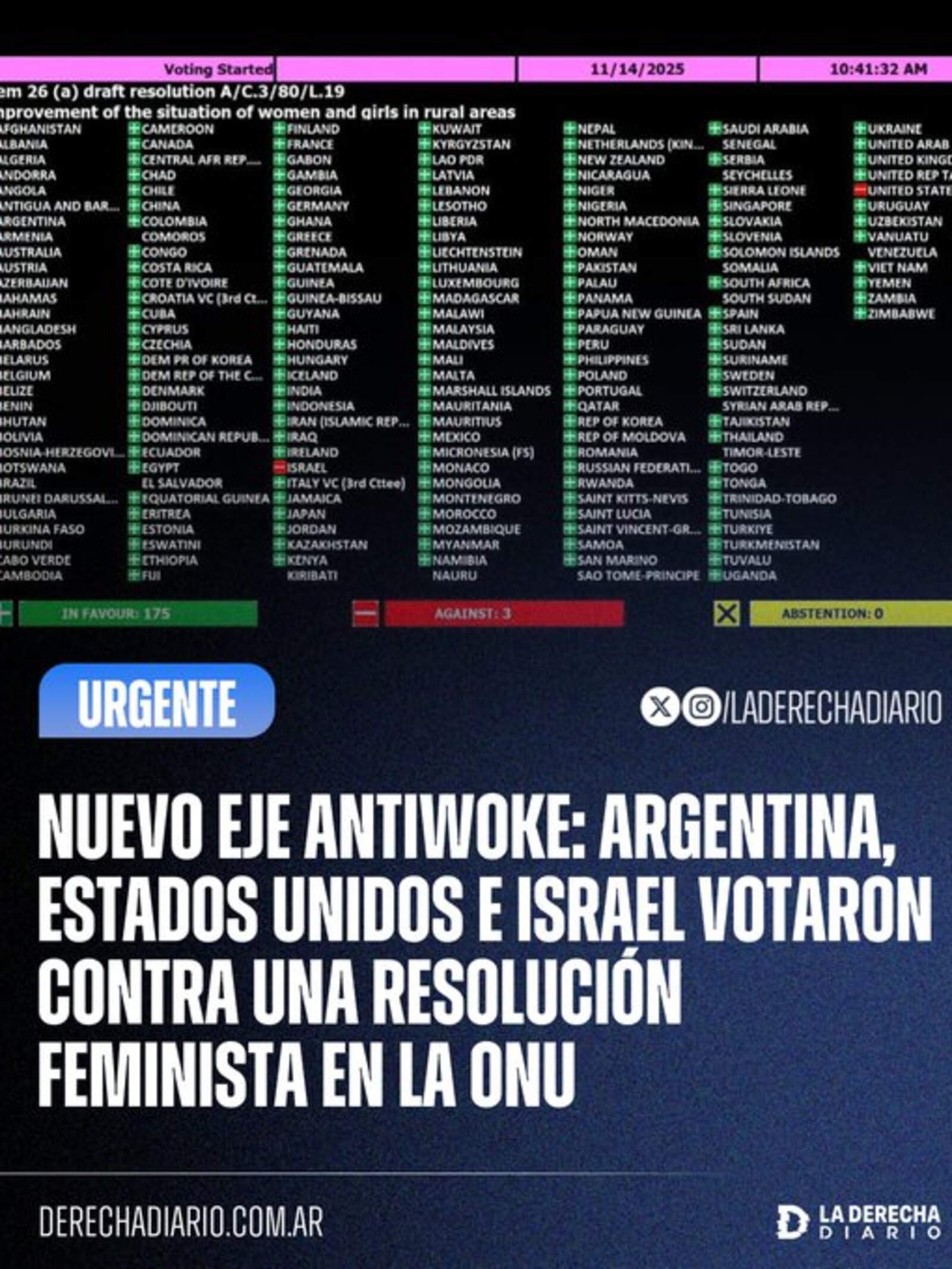

In a decisive move, Argentina, United States, and Israel formed a strong "anti-woke axis" at the United Nations (UN) by voting against resolution A/C.3/80/L.19, presented under the title "improvement of the situation of women and girls in rural areas."
Although the name appeared to align with humanitarian objectives, the fine print of the initiative caused strong criticism from the three countries, which denounced that the text concealed a package of ultra-progressive measures, with unilateral privileges and without a balanced approach to true equality.
The resolution proposed to promote digital, educational, and social access for women and girls in rural areas, recognizing alleged structural gender barriers. However, it did not include any comparable reference to men or boys in the same vulnerable situations, which constituted an evident ideological bias.

This type of initiative, like many others, although presented with inclusive rhetoric, ultimately becomes a tool to impose radical feminist political agendas, which, far from promoting equality, create new legal and social imbalances.