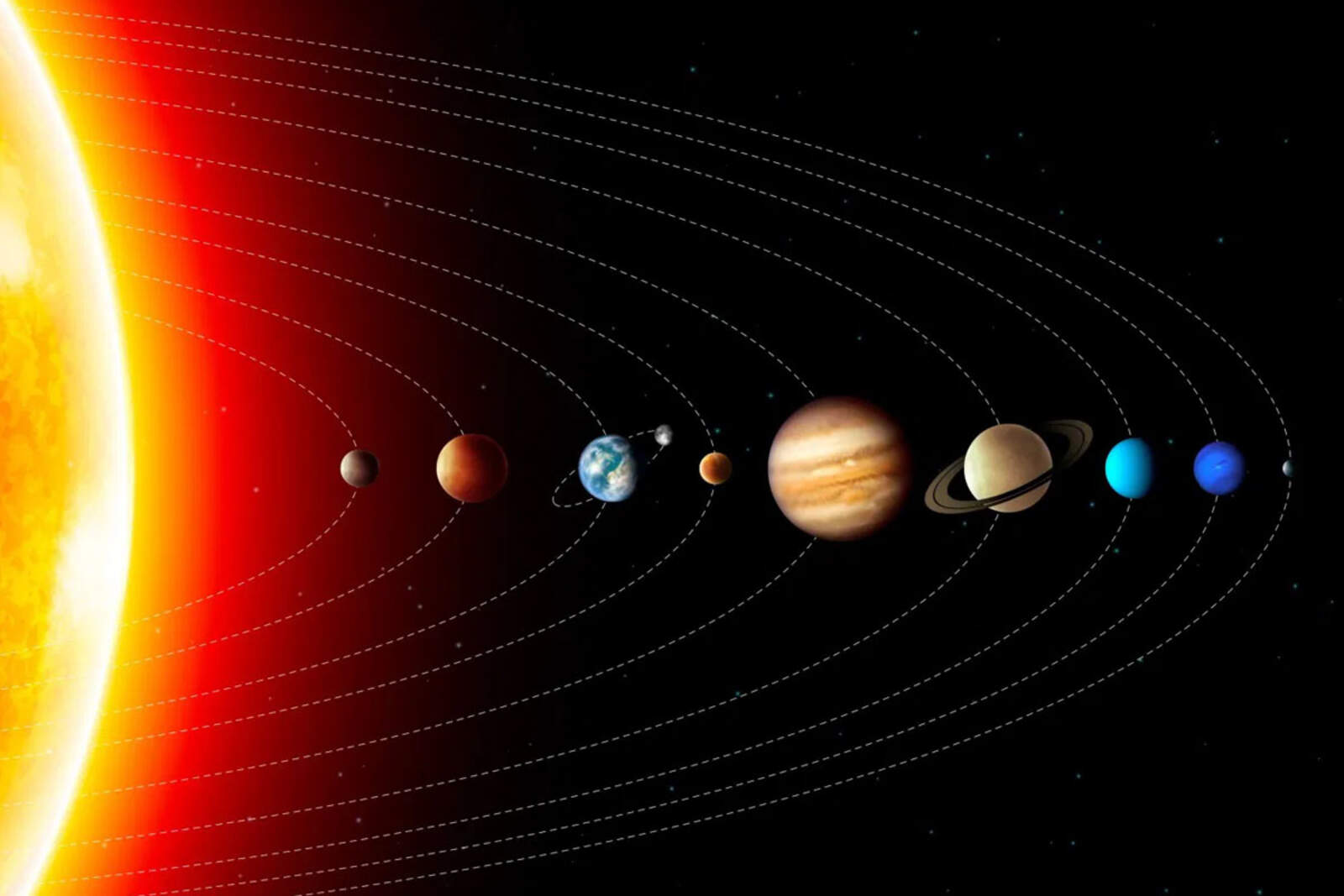
Princeton scientists have found unusual orbits in the Kuiper Belt that could indicate another planet
Compartir:
A team of astronomersfrom Princeton University has sparked worldwide curiosity. After analyzing more than 50 objects in the Kuiper Belt, they detected anomalies in their orbits that could indicate the presence of a unknown planet.
Nicknamed Planet Y, this hypothetical world would be rocky and have a mass between that of Mercury and that of Earth. According to experts, it would be between 100 and 200 times farther from the Sun than our planet.
Un sistema solar lejano que explica el nuestro
An anomaly that raises suspicions
The study, led by Amir Siraj, keeps that the orbits of the Kuiper Belt can't be explained without the presence of this planet. "You really need a planet there", Siraj told CNN.
Planet Y differs from the famous Planet X, proposed in 2016, by being smaller and less massive. Its distance and low luminosity make it difficult to detect directly, although telescopes such as Vera C. Rubin in Chile could provide key data in the coming years.
Scientific debate and skepticism
The hypothesis has caused divided opinions among specialists. Patryk Sofia Lykawka considers it plausible, while Samantha Lawler describes it as "not definitive" and calls for more observations to confirm its existence.
Rubin Observatory
Currently, the existence of another Earth remains a mystery. However, technological advances and new research could solve the question in the near future, bringing us closer to understanding the limits of the solar system.