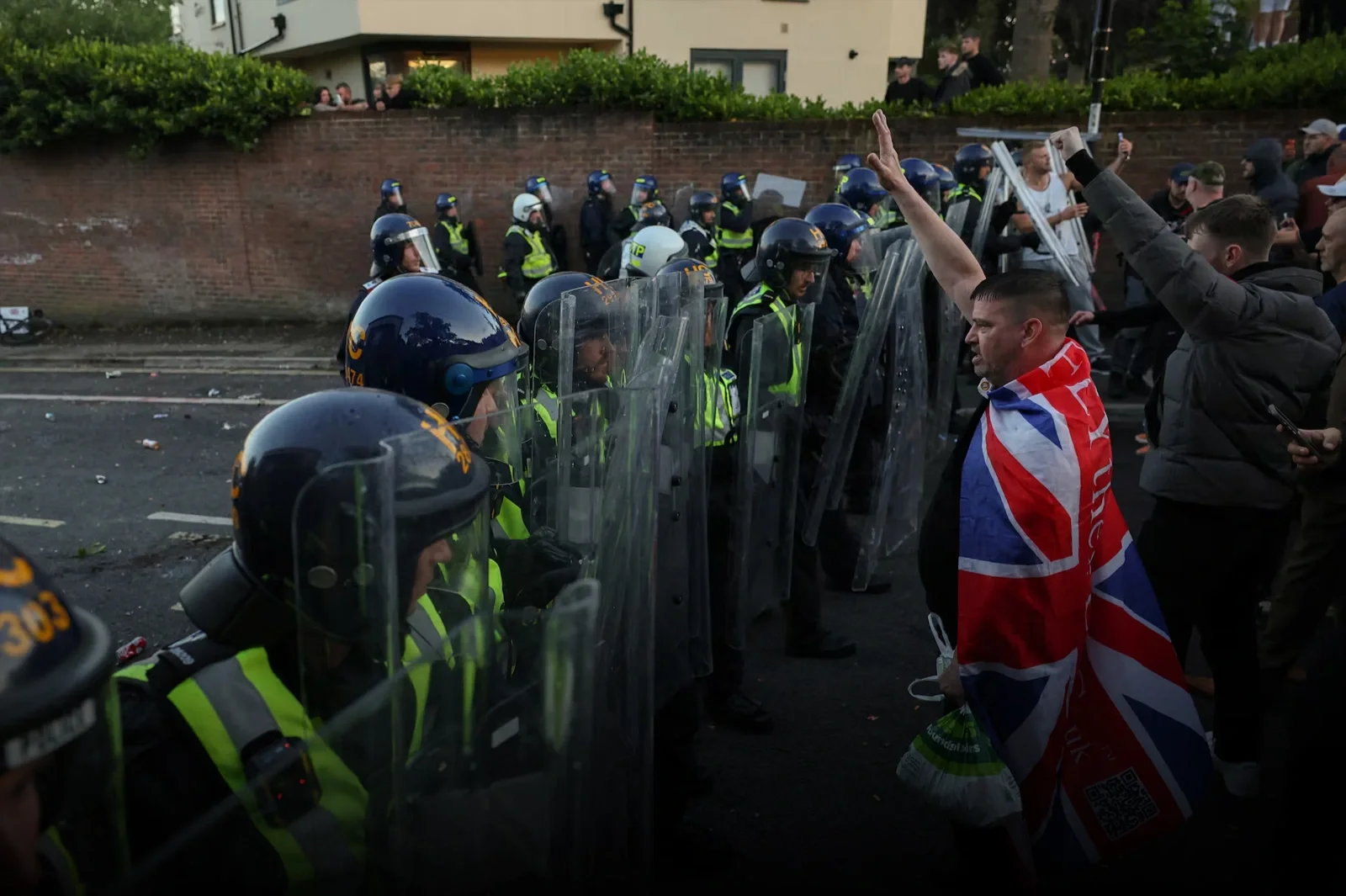
Hundreds of people took to the streets of Belfast on Tuesday night after a violent knife attack committed by a Sudanese asylum seeker left a man seriously injured. The subsequent riots included burning vehicles, clashes with police, and attacks on property, in an episode that once again brought illegal immigration and asylum policy to the forefront of British debate.
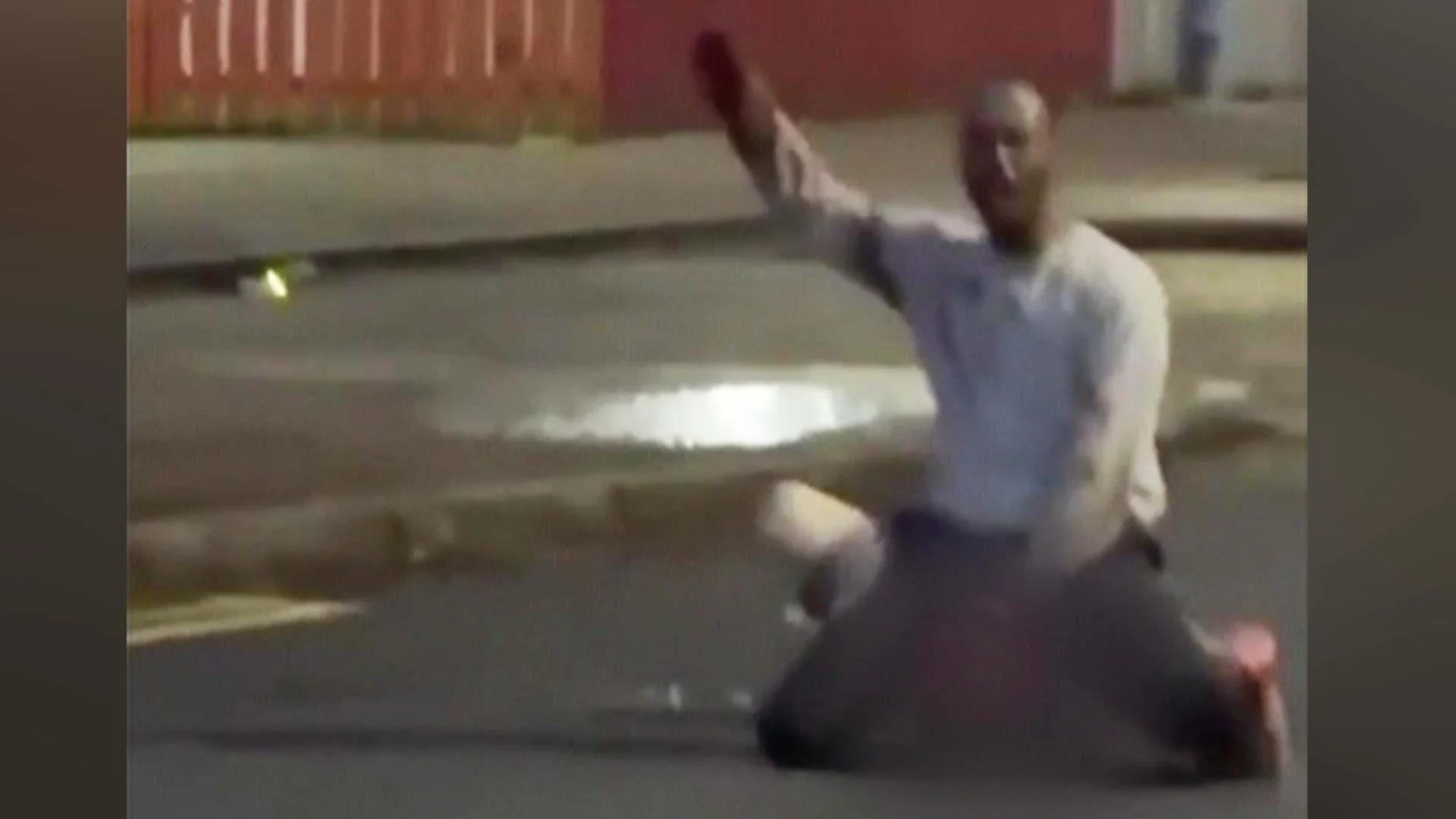
The incident occurred on Monday night in north Belfast. The victim, a man in his 40s, suffered severe injuries to his face, eyes, neck, and back during what police described as an extremely violent assault. Videos of the attack circulated on social media showed several citizens intervening to stop the attacker before the arrival of officers, an action that authorities acknowledged was crucial in saving the victim's life.
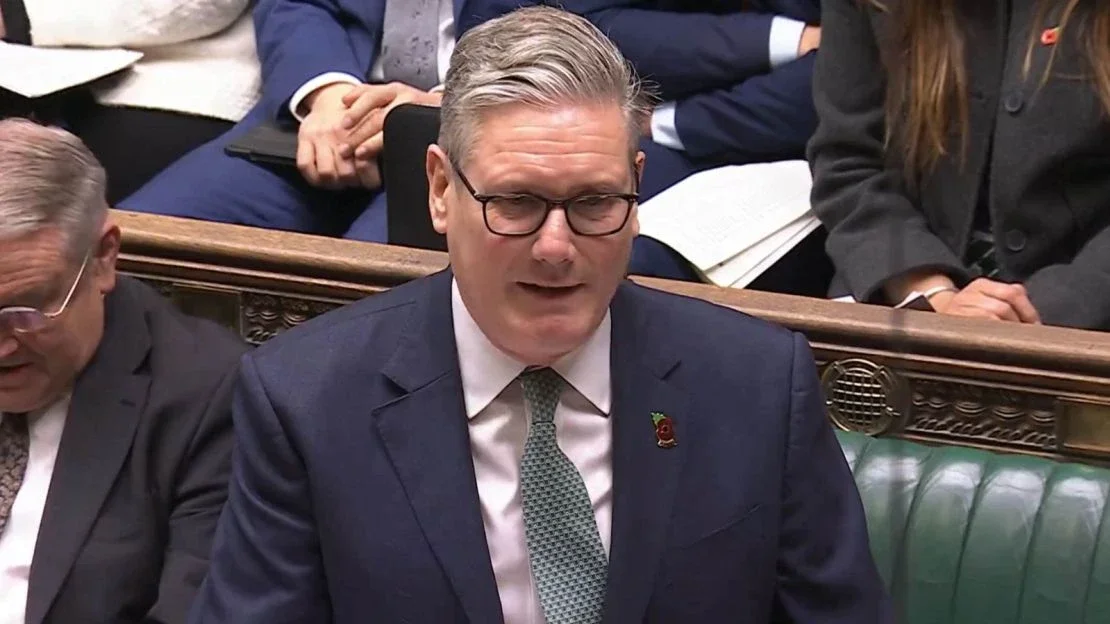
The British socialist Prime Minister, Keir Starmer, described the attack as "horrific" and "repugnant," while the Police Service of Northern Ireland declared a "critical incident" due to the social impact generated and the risk of further disturbances.
The case that triggered the crisis
Police reported that the suspect is a 30-year-old Sudanese citizen formally charged with attempted murder, possession of a knife in a public place, and making death threats. The man will appear in court in Belfast.
According to authorities, the accused had been granted permission to remain in the UK in September 2023 after applying for asylum. It was also confirmed that he had arrived in Northern Ireland from Dublin after previously entering Ireland from France.
Investigators noted that the suspect was not listed in national security databases and had no known history with the Police Service of Northern Ireland. For now, authorities maintain that there is not enough evidence to consider the attack a terrorist act, although the investigation remains open to clarify the motive.
The brutality of the assault and the accused's migratory circumstances provoked an immediate public reaction, further fueled by the rapid spread of images of the attack online.
The socialist Prime Minister of the United Kingdom condemned the attack by the illegal Sudanese, but did not take concrete measures to stop illegal immigration
Protests and riots in Belfast
Hours after the details of the case became known, calls began circulating to protest against mass immigration and the British government's asylum policies. During Tuesday night, hundreds of protesters gathered at various points in Belfast.
Some groups blocked streets, set vehicles on fire, and caused property damage. Among the affected vehicles was a bus that was attacked and burned. Incidents were also reported against homes and businesses in some neighborhoods of the city.
The police deployed armored vehicles and increased the presence of officers to contain the riots, while helicopters flew over the area. Authorities and key political leaders in Northern Ireland called for calm, warning that violence would only exacerbate existing tensions.
The protests were triggered after a Sudanese asylum seeker attempted to behead an Irish citizen
The illegal immigration debate resurfaces
The case has reopened an intense debate about immigration control in the UK. Various political sectors argue that the asylum system has allowed the presence of individuals whose situations were not adequately assessed, generating concern among the population.
Critics of current policies argue that the country needs to strengthen border surveillance, accelerate the expulsion processes for immigrants who do not meet legal requirements and tighten security checks for those seeking international protection.
Indignation is also occurring in a context of growing social unrest over immigration. In recent years, there have been increasing protests against hotels designated to house asylum seekers and political formations demanding a drastic reduction in immigration have gained support.
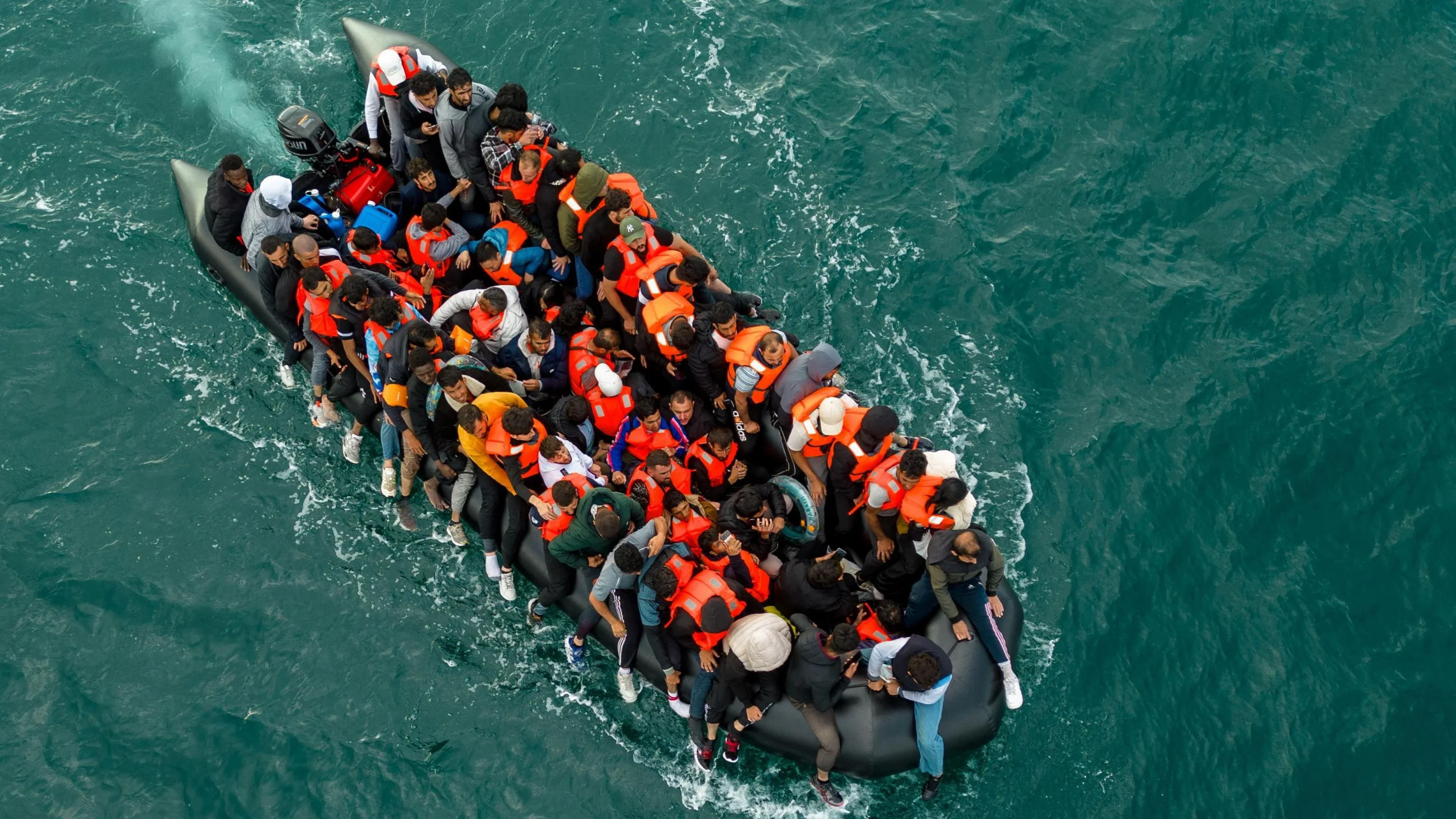
Many British citizens have demanded the immediate expulsion of illegal immigrants from the United Kingdom
For many citizens, the Belfast attack has become a symbol of the problems associated with a migration system they consider incapable of fully ensuring public safety. Although authorities insist that immigrants should not be collectively blamed for the actions of an individual, the case has reinforced demands for stricter border policy and a thorough review of asylum mechanisms.
As the victim remains hospitalized in serious condition, the UK faces a new controversy over immigration, security, and social cohesion that promises to dominate political debate in the coming weeks.