
August 2026 became a particularly attractive month for astronomy enthusiasts. After the total solar eclipse on August 12, the Moon will once again take center stage with a partial eclipse that will be visible from all over Argentina.
The phenomenon will occur during the night of Thursday, August 27, and the early morning of Friday, August 28. Although it will not be a total lunar eclipse, it will be very close: at the moment of greatest obscuration, approximately 93% of the Moon's disk will be within the umbra, the darkest part of the Earth's shadow.
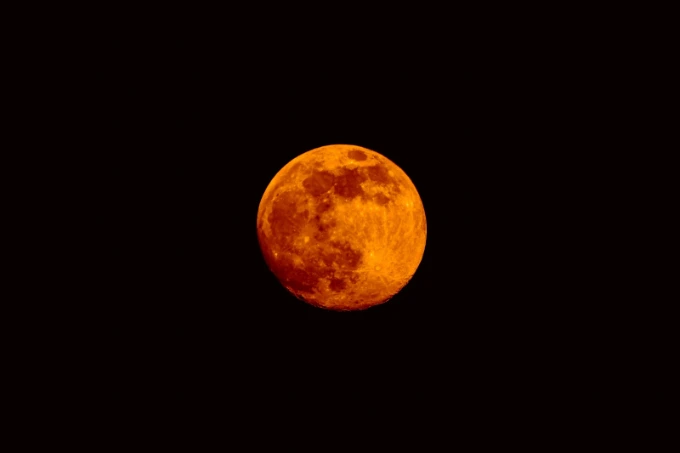
This characteristic will make the event especially striking. During its development, a significant part of the lunar surface may acquire reddish, orange, or coppery hues, the effect popularly associated with the so-called “Blood Moon”.

Additionally, there will be an advantage for those who want to observe it from Argentina: it will not be necessary to travel to a specific region of the country. The eclipse can be viewed from start to finish from all provinces, as long as the weather conditions allow for a clear sky.
What is the Blood Moon and why does it turn red
The term “Blood Moon” is popularly used to describe the reddish appearance that the Moon can take on during certain lunar eclipses.
These phenomena occur when the Sun, Earth, and Moon are aligned in such a way that our planet interposes itself between the Sun and its natural satellite. As a result, the Earth's shadow begins to project onto the lunar surface.
But there is a peculiarity: the Moon does not necessarily disappear completely when it enters the shadow.
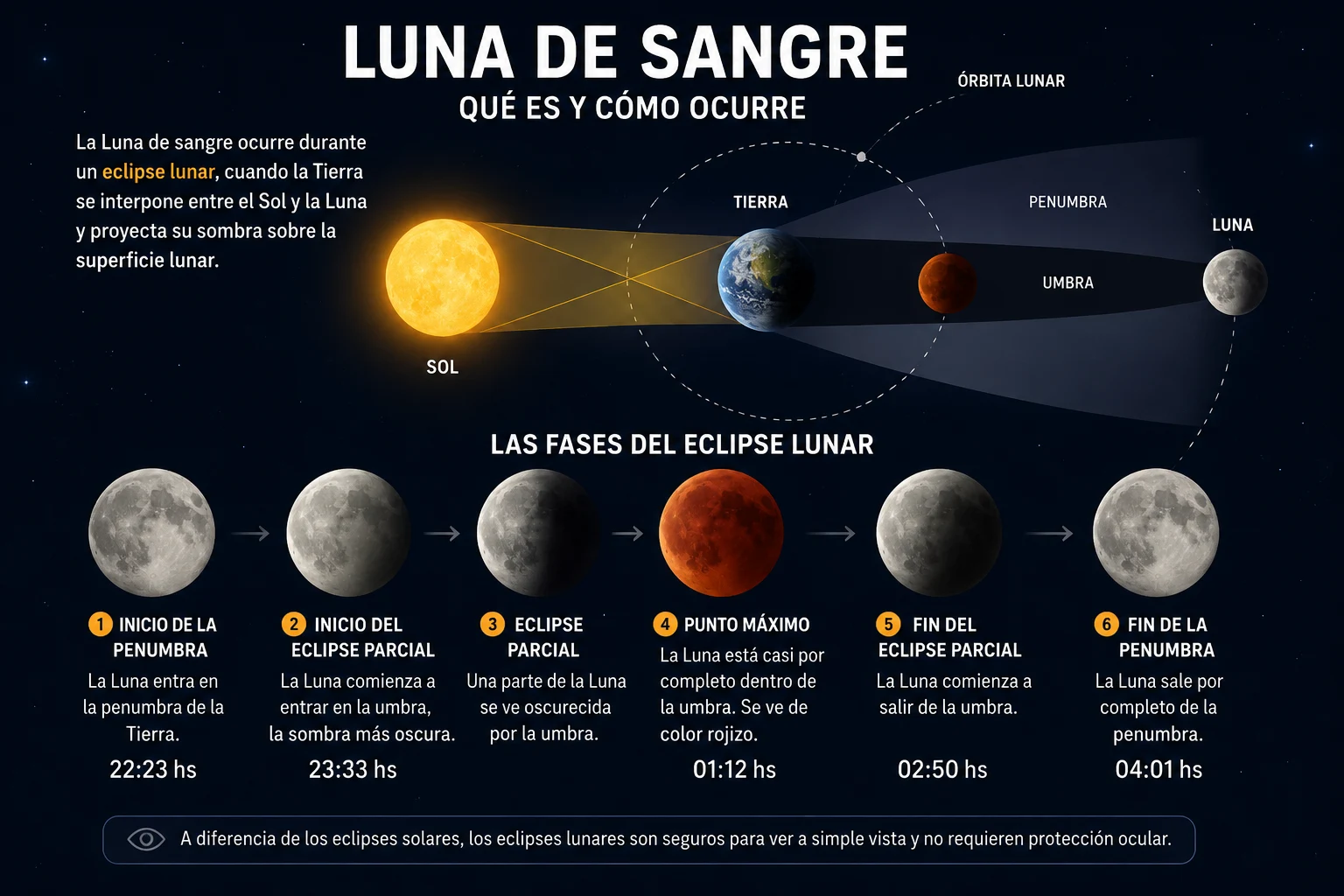
A part of the sunlight passes through the Earth's atmosphere, where shorter wavelength colors scatter more easily. Reddish and orange tones manage to pass through, and part of that light ends up reaching the lunar surface.
It is a phenomenon similar to what allows us to see red and orange tones during sunrises and sunsets.










