The Code with Claude event organized by Anthropic in London made it clear that programming is no longer what it used to be. Developers from around the world gathered to share how they are increasingly leaving tasks in the hands of artificial intelligence, especially with the Claude Code tool.
During the conference, which took place on the same day as Google I/O, an engineer from Anthropic asked how many had submitted a pull request entirely written by Claude. Almost half of the room raised their hands. He then asked who had done it without even reading the code. Most kept their hands up, amid laughter.
Pull requests, those code updates that programmers handle daily, are now largely generated by AI. This represents a profound change in the industry.
A new way of working
Jeremy Hadfield, an engineer at Anthropic, highlighted that most of the software in the company is already written by Claude. Other large companies like OpenAI, Google, and Microsoft have similar stories. What is surprising is not only the tool's capability but how quickly it became something normal.
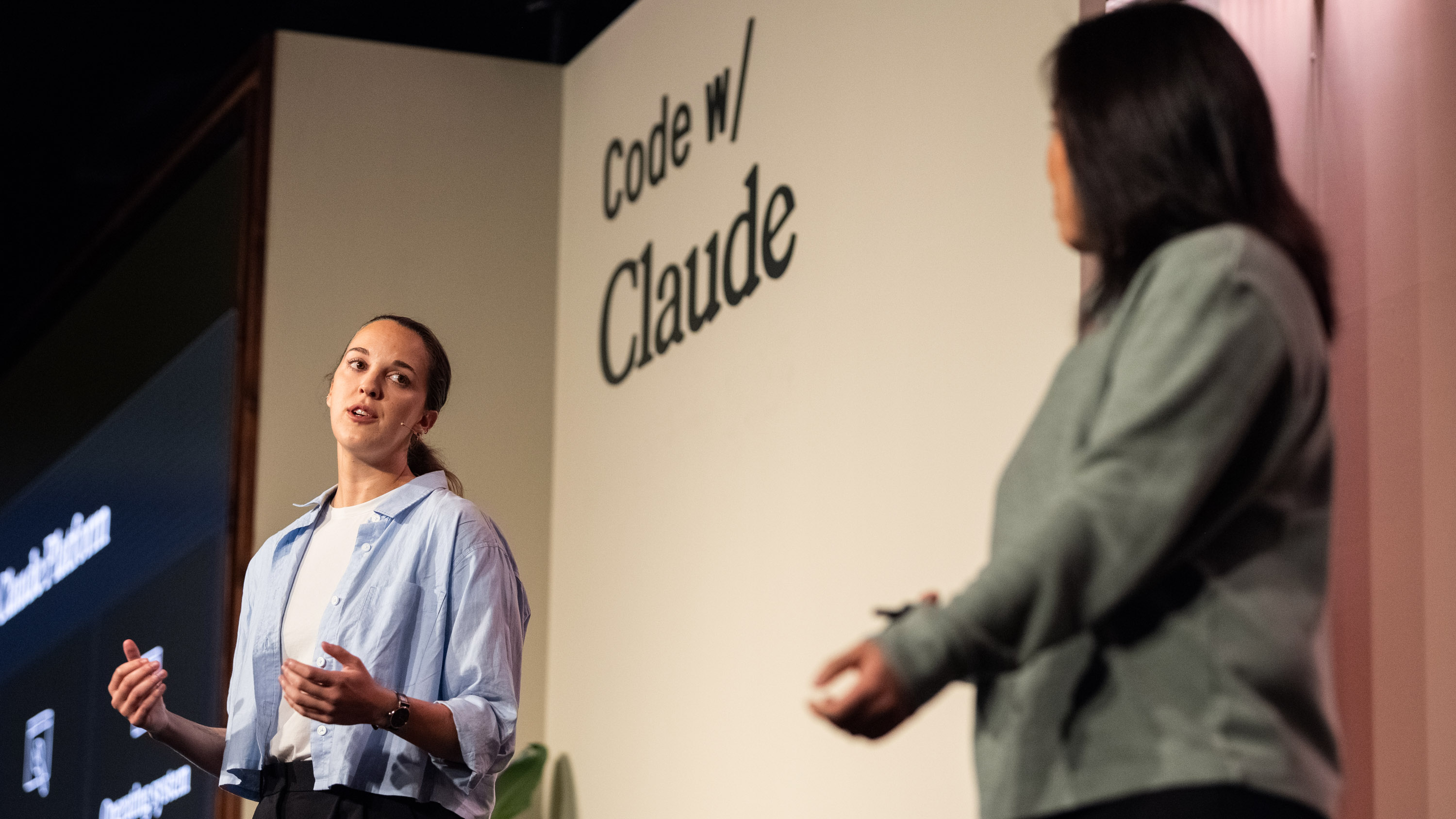
With the latest updates of Claude 4.6 and 4.7, developers are increasingly comfortable delegating complete work. Anthropic's central idea is to take automation to the maximum: that Claude not only generates code but also reviews it, corrects errors, and improves it by itself.
The focus now is for Claude to "request itself," explained Boris Che, head of Claude Code. Instead of humans intervening all the time, the AI tests, adjusts, and keeps iterating until everything works.
The "dreaming" feature and continuous learning
One of the new features presented is called "dreaming." Claude Code agents leave notes for themselves about tasks, recording problems and solutions. When another agent takes over, it uses those notes to move faster and avoid repeated mistakes.
This allows the tool to continuously learn about a specific codebase and improve its performance over time. The message is clear: let Claude "cook," as engineer Ravi Trivedi said, without getting in its way.
Companies like Spotify and Delivery Hero shared how they reorganized their development teams around this technology. Startups that create tools to facilitate this new programming style also participated.
Concerns on the other side
Despite the enthusiasm at the event, not everything is rosy. On forums like Reddit and Hacker News, several programmers express doubts. Some say that reviewing AI-generated code ends up taking more time than writing it from scratch. Others feel that their own skills are diminishing due to relying so much on the tool.
Additionally, there are alerts about potential security issues. The AI can generate code with vulnerabilities that are then deployed without sufficient human oversight.
Katelyn Lesse and Angela Jiang, heads of engineering and product at Claude, acknowledged these concerns. They stated that good development practices remain fundamental, although many teams are sidelining them in the race for speed.
Lesse mentioned that even technical directors at Anthropic feel overwhelmed by the amount of code now being produced. However, they believe that Claude is already at the level of an intermediate engineer and that their long-term goal is for it to be able to build complete systems, even "build itself."
The event left the feeling that, like it or not, this is the path programming has taken. The discussion is no longer whether to use AI, but how to manage it to truly improve work without creating new problems.