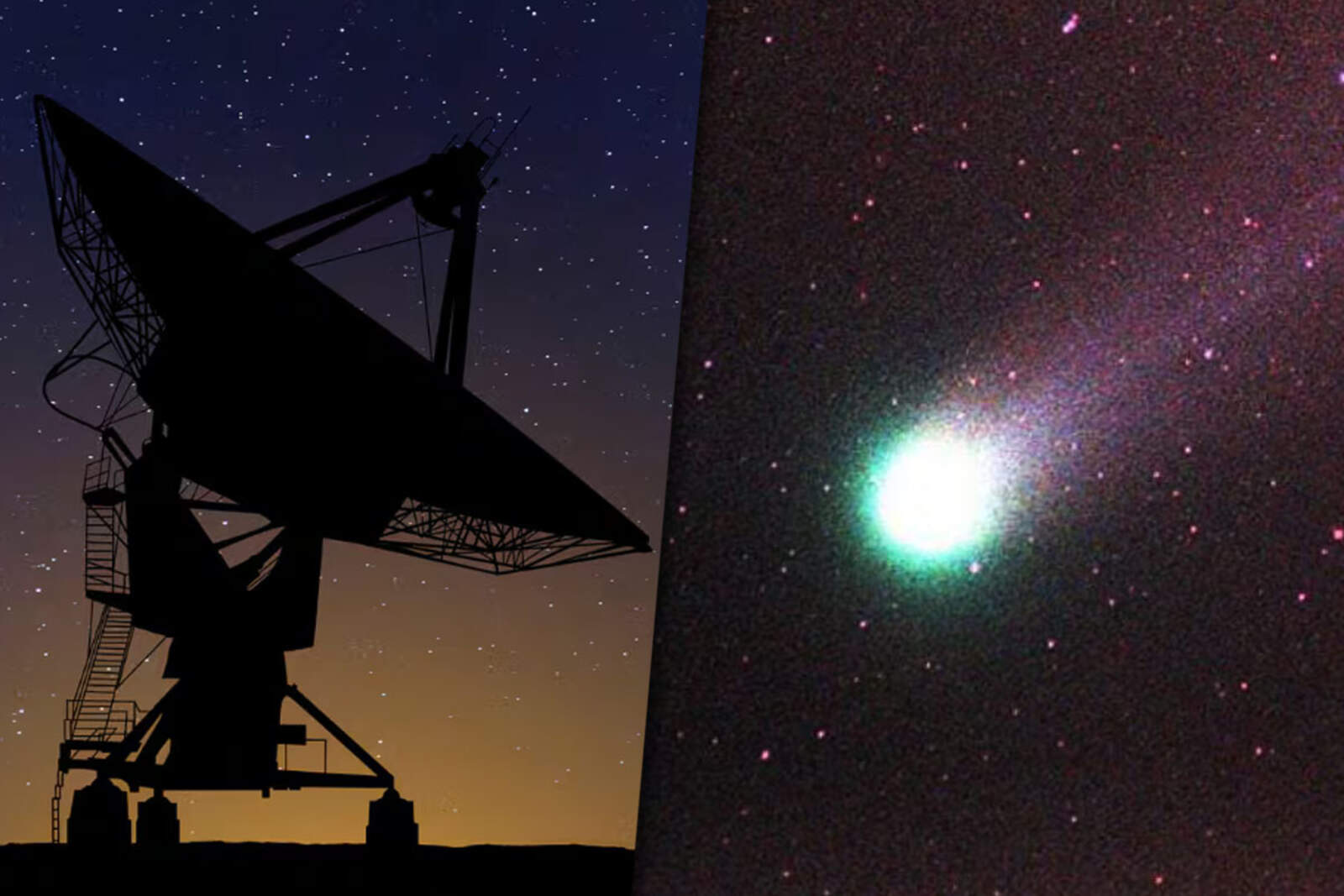

The comet 3I/Atlas made headlines again after the detection of its first radio signal. According to information released by The Astronomer’s Telegram, what was recorded by the South African radio telescope MeerKAT is not technological at all: these are OH molecules, a typical marker of cometary activity.
The discovery reinforces the scientific position that 3I/Atlas is a natural comet, not an artificial object or a spacecraft. The detection provides a key piece to close the debate, although the public discussion promises to remain active.
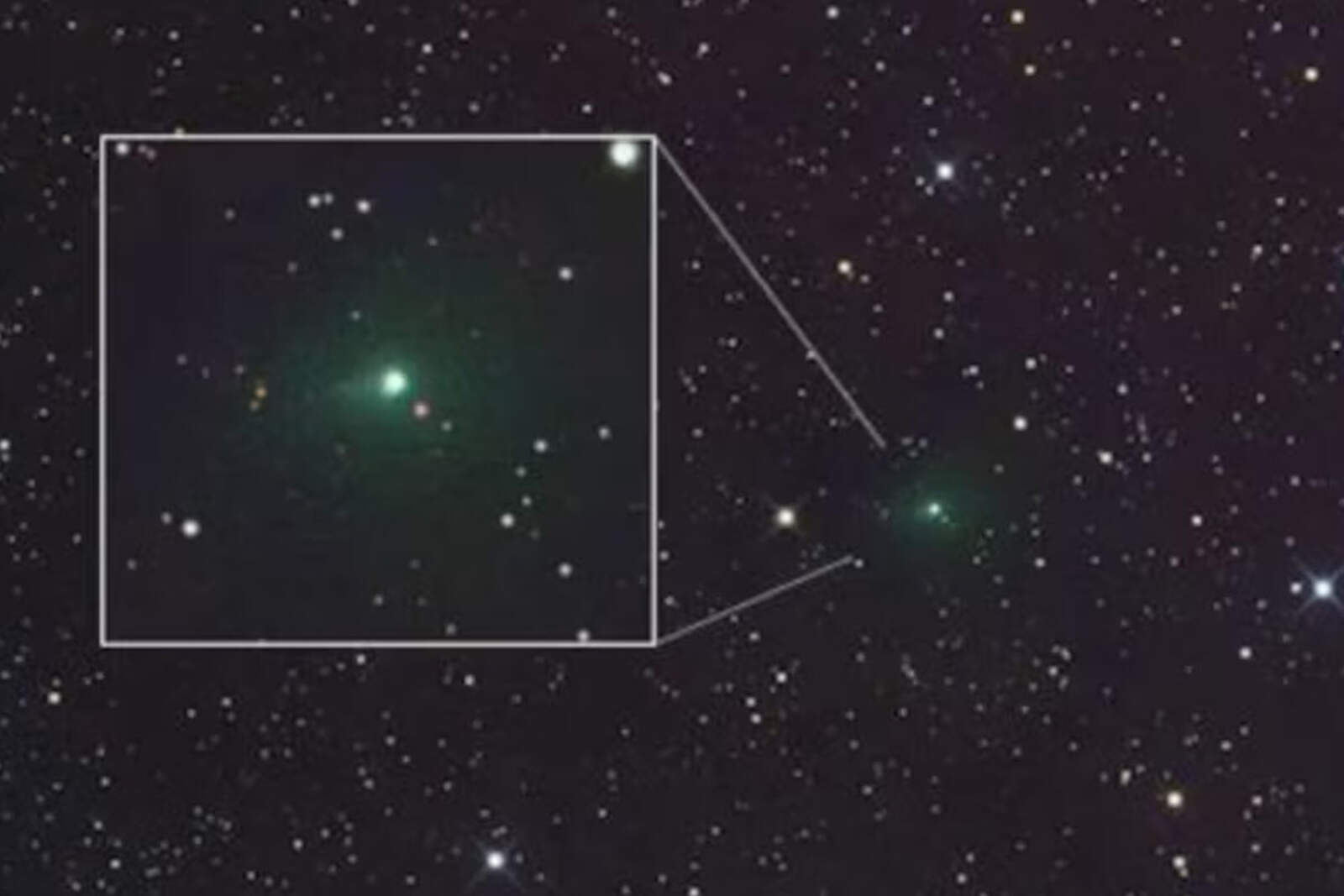
What exactly did MeerKAT detect?
MeerKAT, a radio telescope composed of 64 antennas, recorded absorption lines of hydroxyl radicals (OH) at frequencies of 1665 MHz and 1667 MHz. This is typical behavior in comets approaching the Sun, where they sublimate ice and release water into space.
These lines appear in absorption due to the comet's position relative to the Sun. The sublimation of ice alters the trajectory and generates these radio signatures.
OH: the molecule that confirms the comet's nature
The hydroxyl radical can absorb or emit radiation at specific frequencies. It is a frequent signal in nebulae, star-forming regions, and comets. Its presence in 3I/Atlas fits perfectly with the expected behavior for a naturally occurring object.