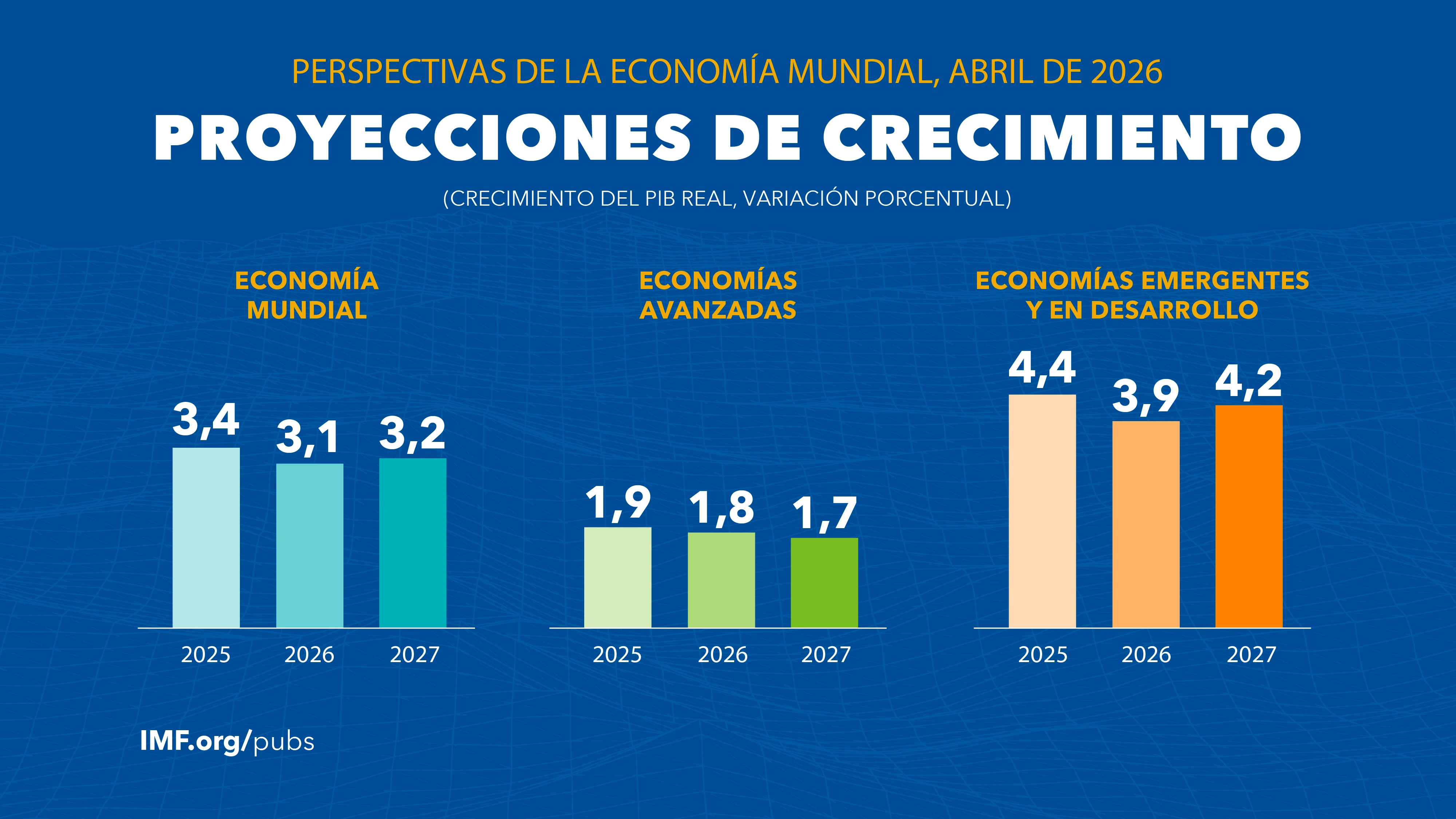
The Fund warned that the war in the Middle East abruptly overshadowed global prospects, that the closure of the Strait of Hormuz could lead to an energy crisis of enormous magnitude and that, under its reference scenario, global inflation would rise to 4.4% in 2026. He also noted that risks remain biased to the downside and that a longer conflict could further deteriorate global growth
In the midst of an increasingly unstable international scenario, the International Monetary Fund projected that Argentina will grow 3.5% in 2026, a figure that not only places it among the best-performing economies in Latin America, but also above Brazil and all the countries that make up the G7. The estimate appears in the new World Economic Outlook report, marked by the impact of the war in the Middle East
.
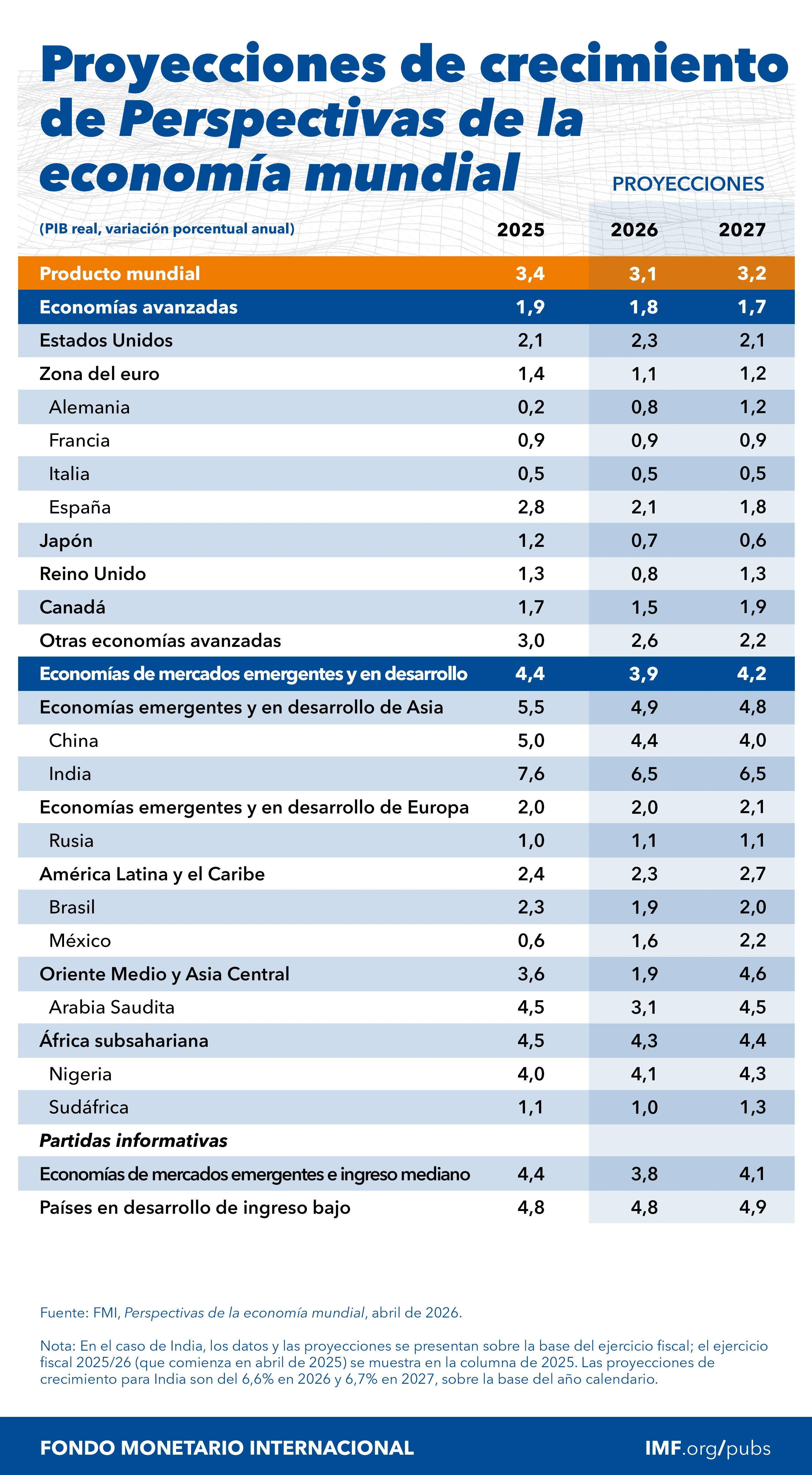
According to material released by the IMF, the world economy would grow 3.1% in 2026, while advanced economies would grow by around 1.8%. In this context, Brazil appears to have an expected expansion of 1.9%, the United States with 2.3%, the euro area with 1.1% and Japan with just 0.7%. The organization's table also includes Germany with 0.8%, France with 0.9%, Italy with 0.5%, the United Kingdom with 0.8% and Canada with 1.5%. In other words: even with the cut applied by the Fund, Argentina would be ahead of Brazil and each of the G7 powers
. The revision of the IMF's growth projections after the war in the Middle East.
The IMF itself explained that the downward correction for Argentina responded “largely to the lower momentum in activity in the second half of last year”, although it maintained the 4% forecast for 2027. Even so, the figure continues to show a very strong performance compared to a large part of the region and, above all, to the block of the main developed economies. While several powers are barely scratching growth, Argentina would continue to expand
.
The figure does not imply an absence of challenges for Argentina: the IMF itself forecasts inflation of 25% at the end of the period by 2026 and a more gradual process of disinflation than expected months ago, in line with what President Javier Milei said at the AmCham Summit 2026.
Regional growth projections. At
3.5%, Argentina would grow well above the Latin American average, which is around 2.3%, and would rank above key economies in the region such as Brazil, Chile, Colombia and Uruguay, in a year where regional growth appears limited by the international context and the
interventionist policies of their governments.
While much of the world is growing poorly and under pressure from war and uncertainty, Argentina shows a solid and consistent performance. In 2026, under the management of Javier Milei, the country would not only grow, but it would grow above the region and the main powers