
La Derecha Diario logo
ESX logoInstagram logoYouTube logoTikTok logoFacebook
ARGENTINAUNITED STATESECUADORISRAELMEXICODERECHA DIARIO TV
  • ES
    XInstagramYouTubeTikTokFacebook
  • DERECHA DIARIO TV
  • Sections
  • ARGENTINA
  • UNITED STATES
  • ECUADOR
  • ISRAEL
  • MEXICO
  • URUGUAY
  • Countries
  • La Derecha Diario logoLA DERECHA DIARIO
  • La Derecha Diario México logoLA DERECHA DIARIO MÉXICO
  • La Derecha Diario Uruguay logoLA DERECHA DIARIO URUGUAY
  • La Derecha Diario Ecuador logoLA DERECHA DIARIO ECUADOR
  • La Derecha Diario Israel logoLA DERECHA DIARIO ISRAEL
  • La Derecha Diario Estados Unidos logoLA DERECHA DIARIO ESTADOS UNIDOS
  • Topics
  • GUERRA EN IRÁN
  • The Newspaper
  • QUIENES SOMOS
  • AUTORES
  • PUBLICIDAD
  • DONAR

The Good Samaritan never asked for a ministry

The Good Samaritan never asked for a ministry
Imagen de Editorial Team
porEditorial Team
Argentina

The parable shows that solidarity arises from freedom and not from the coercion of political power

Add La Derecha Diario on
Share:

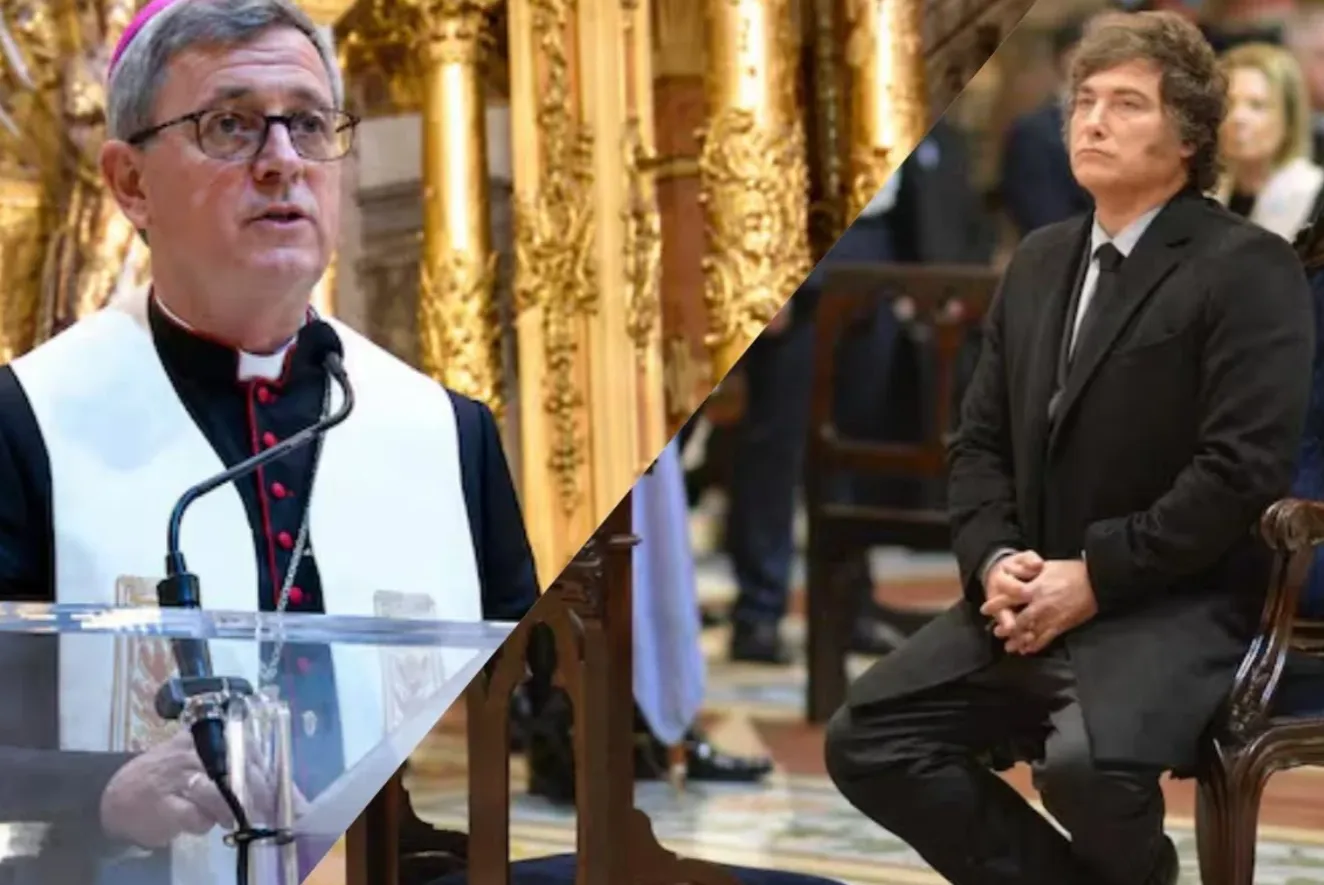
During the Tedeum for Independence Day, Archbishop Jorge García Cuerva chose the parable of the Good Samaritan to invite Argentinians to recover honesty, compassion, and closeness with those who suffer. It is difficult to find anyone who could disagree with that diagnosis. Corruption destroys societies. Indifference degrades individuals. And no nation can aspire to prosper if it abandons the most vulnerable.

However, the parable contains an institutional lesson that often goes unnoticed. The entire story unfolds without intervention from political power. No ministry appears. No state program emerges. There is no extraordinary tax to assist the wounded. What appears is something much deeper: a free person who decides to act morally.

The Good Samaritan stops because he wants to. He uses his own resources. He makes an agreement with the innkeeper. He personally assumes the costs and promises to return to cover any additional expenses. There is compassion, private property, responsibility, and voluntary cooperation. It is hard to find a description closer to the civil society imagined by thinkers like Murray Rothbard, for whom virtue only makes sense when it arises from a free decision.

This difference is not minor. The State can force the transfer of resources. It cannot force love for one’s neighbor. It can collect taxes. It cannot manufacture mercy. Solidarity loses much of its moral content when it ceases to be a choice and becomes an obligation imposed by power.

For decades, Argentina took the opposite path. Kirchnerism promised to replace the spontaneous bonds of society with an omnipresent State. Every problem seemed to require a new public office, a new subsidy, a new tax, or a new bureaucratic structure. In the name of social justice, the state apparatus grew relentlessly while poverty increased, inflation destroyed wages, and corruption occupied a central place in public discussion.

The result was paradoxical. There has never been a State so large and, at the same time, so many Argentinians depending on it to survive. Solidarity ended up being managed by politics, while millions of citizens lost economic autonomy and the ability to decide about the fruits of their own labor.

The government of Javier Milei represents a break with that logic. His bet is to restore prominence to society, reduce the weight of the State, and build an institutional framework where people can produce, exchange, invest, and help freely. His supporters argue that fiscal balance, deregulation, and economic stability are necessary conditions for a more prosperous society with greater capacity for voluntary cooperation to flourish again.

This does not mean denying the existence of suffering or ignoring that there are Argentinians who need assistance. It means asking what is the best way to build a society where fewer and fewer people depend on political power and more and more can develop thanks to their work, their initiative, and the free help of others.

Friedrich Hayek warned that a free society rests on institutions that allow spontaneous cooperation among millions of individuals. Rothbard went a step further by reminding us that no institution can replace the moral responsibility of each person. Both ideas seem to resonate surprisingly well with the parable of the Good Samaritan.

Perhaps that is one of the most valuable lessons of this July 9. True independence does not consist solely of freeing oneself from foreign power. It also involves abandoning the idea that every human need must be resolved through the state apparatus.

The Good Samaritan did not ask for a ministry. He stopped. He helped. He paid with his own resources. He organized assistance together with another citizen and continued on his way.

Two thousand years later, that remains a powerful lesson about the difference between a society organized around power and one built from freedom.


La Derecha Diario logo
TwitterInstagramYouTubeTikTokFacebook
Derecha Diario TV

Nosotros

  • Quienes Somos
  • Autores
  • Donar

Privacidad

  • Protección de datos
  • Canales
  • Sitemap
  • RSS

Contacto

  • info@derechadiario.com.ar
PUBLICIDAD

Related news

LIVE | Press conference of presidential spokesperson Adrián Ravier

LIVE | Press conference of presidential spokesperson Adrián Ravier

Surprise in the Senegal National Team: they discovered that the doctor who accompanied the team at the World Cup was a gynecologist

Surprise in the Senegal National Team: they discovered that the doctor who accompanied the team at the World Cup was a gynecologist

Alert in Atlanta for the Argentina vs. England match: a massive security operation will be carried out

Alert in Atlanta for the Argentina vs. England match: a massive security operation will be carried out

They hate us: Ibai Llanos stated that the Argentine National Team's title in Qatar 2022 "is not valid"

They hate us: Ibai Llanos stated that the Argentine National Team's title in Qatar 2022 "is not valid"

"Lionel Messi statistically should not exist": this is how a mathematical study determined it

"Lionel Messi statistically should not exist": this is how a mathematical study determined it

An opposition leader to Vladimir Putin's government was detained for displaying 'extremist symbols'

An opposition leader to Vladimir Putin's government was detained for displaying 'extremist symbols'






