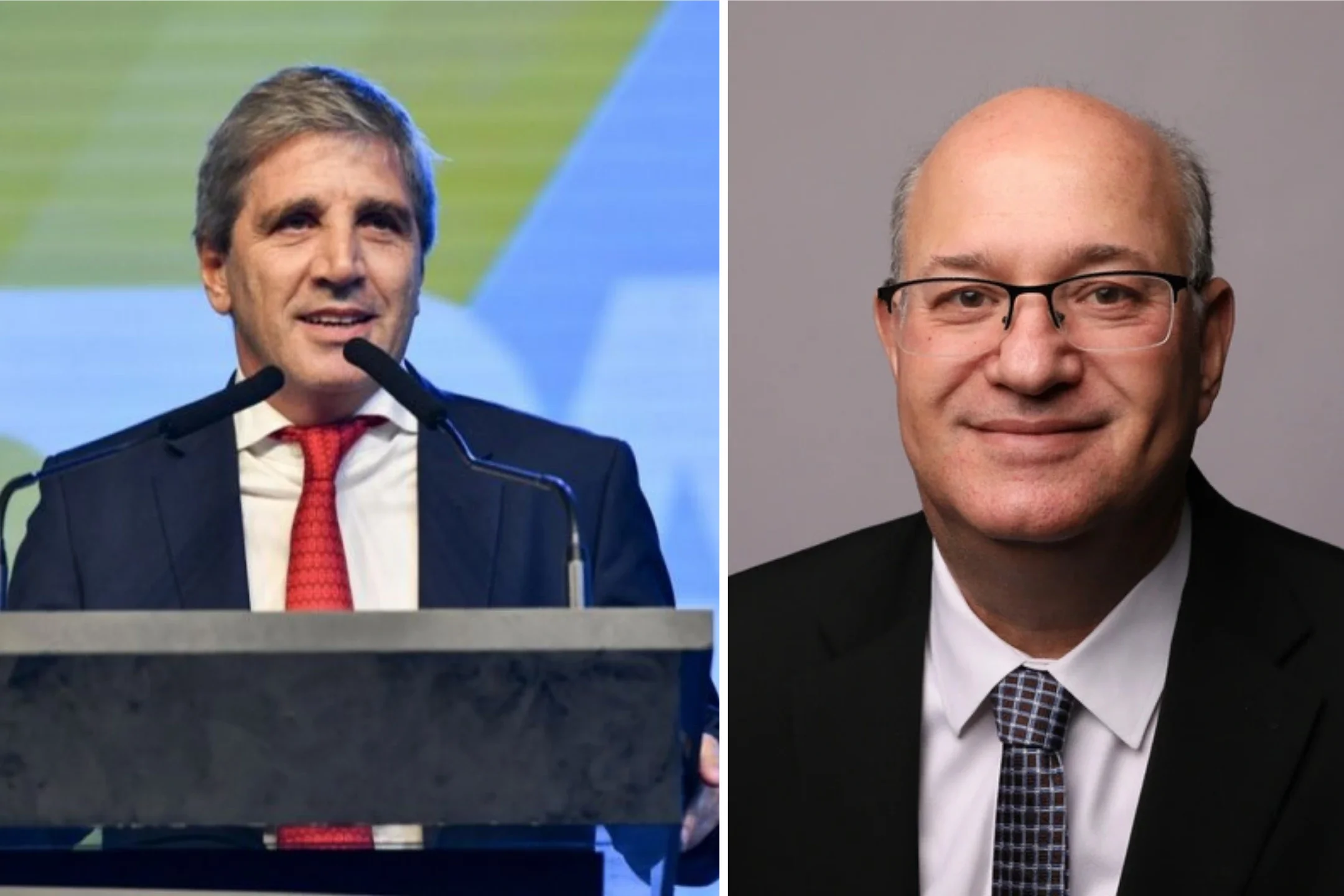
The national government is eagerly awaiting the approval of guarantees from the World Bank and the Inter-American Development Bank (IDB). These guarantees, totaling US$2500 million, would be essential for the economic team led by Luis Caputo to obtain new loans from private banks and strengthen the country's reserves.
According to official plans, the World Bank's board will meet on Tuesday, June 16, to analyze the request submitted by Caputo in April during the IMF spring meetings. It is expected that they will approve guarantees of US$2000 million. The following day, Wednesday the 17th, the IDB will discuss a backing of US$500 million.
With this support from multilateral organizations, Argentina could refinance part of its debt under more favorable conditions. “This will allow us to refinance more expensive debt with cheaper debt, reducing the financial cost for all Argentines,” the Minister of Finance had stated after meeting with IDB officials in April.
In parallel, the Executive is negotiating an additional guarantee with CAF that could range between US$250 million and US$500 million, with approval expected on July 22.

The goal before July 9
The main immediate challenge is to cover debt maturities of US$4400 million that are due on July 9. The guarantees from the World Bank and the IDB would be key to accessing private loans and reinforcing the Treasury's reserves during this critical stage.
So far, the Treasury has managed to raise nearly US$3600 million through the placement of dollar bonds in the local market maturing in 2027 and 2028. However, part of those funds were allocated to payments to international organizations and the cancellation of letters, so the Treasury's dollar deposits at the Central Bank reached US$2917 million last Tuesday.
This Friday, another US$300 million will be added from a new bond placement. Thus, without additional outflows, dollar savings would exceed US$3200 million, covering about 72% of the July commitments. Analysts highlight that, although the July maturities do not represent an immediate risk, the real challenge will repeat in January with another US$4400 million.
The strategy of Javier Milei's government aims to lower financing costs and prepare the ground for a gradual return to the international credit market. If the multilateral guarantees are realized, it would open the door to operations with private entities that would allow for payments to be made without major tensions in public accounts.
According to consulting firms like LCG, time will again run strongly toward January, when it will be necessary to redefine how to meet similar commitments. For now, the approval of these guarantees appears as a key step in the economic roadmap of the Executive.
The entire scheme seeks to provide predictability and improve borrowing conditions, something that directly impacts the sustainability of public finances and investor confidence.