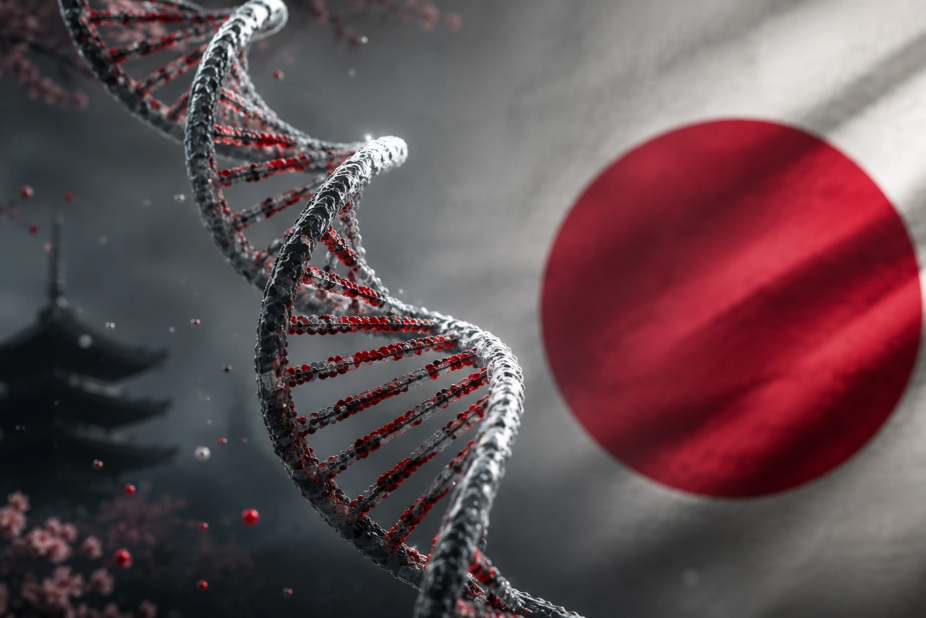

Scientists from the RIKEN center in Japan analyzed thousands of genomes and found evidence of a third ancestral group that had previously gone unnoticed. This finding challenges the classical theory of dual origin that dominated for decades and suggests that the current Japanese population is more complex than previously thought.
For a long time, it was believed that the Japanese descended mainly from two lineages: the Jomon, ancient hunter-gatherers, and migrants from continental East Asia who brought rice agriculture. However, the new study with complete genome sequencing of over 3,200 people from various regions of the country reveals a different picture.
The researchers detected clear genetic signals of a third ancestor linked to Northeast Asia and, in particular, to the ancient Emishi of northeastern Japan. This component is more concentrated in the north and decreases towards the west of the archipelago.
Marked regional differences
The analysis showed interesting variations according to geography. In Okinawa, Jomon heritage reaches 28.5% of the samples, while in western Japan it drops to 13.4%. In contrast, the west shows a greater genetic connection with Han Chinese populations, consistent with the significant migrations that occurred between the years 250 and 794 of our era.
These migratory waves coincided with the arrival of government systems, writing, and education in the Chinese style. The Emishi-related component, for its part, remains stronger in the northeast. The results strengthen the idea of a tripartite origin that previous studies of ancient DNA had already suggested.
In addition to population history, the study found genetic material inherited from Neanderthals and Denisovans, archaic groups that interbred with modern humans tens of thousands of years ago. They identified 44 regions of archaic DNA still present in the current Japanese population, several exclusive to East Asians.









