Early corn, mainly in the southern departments, was the most affected by the high temperatures
Compartir:
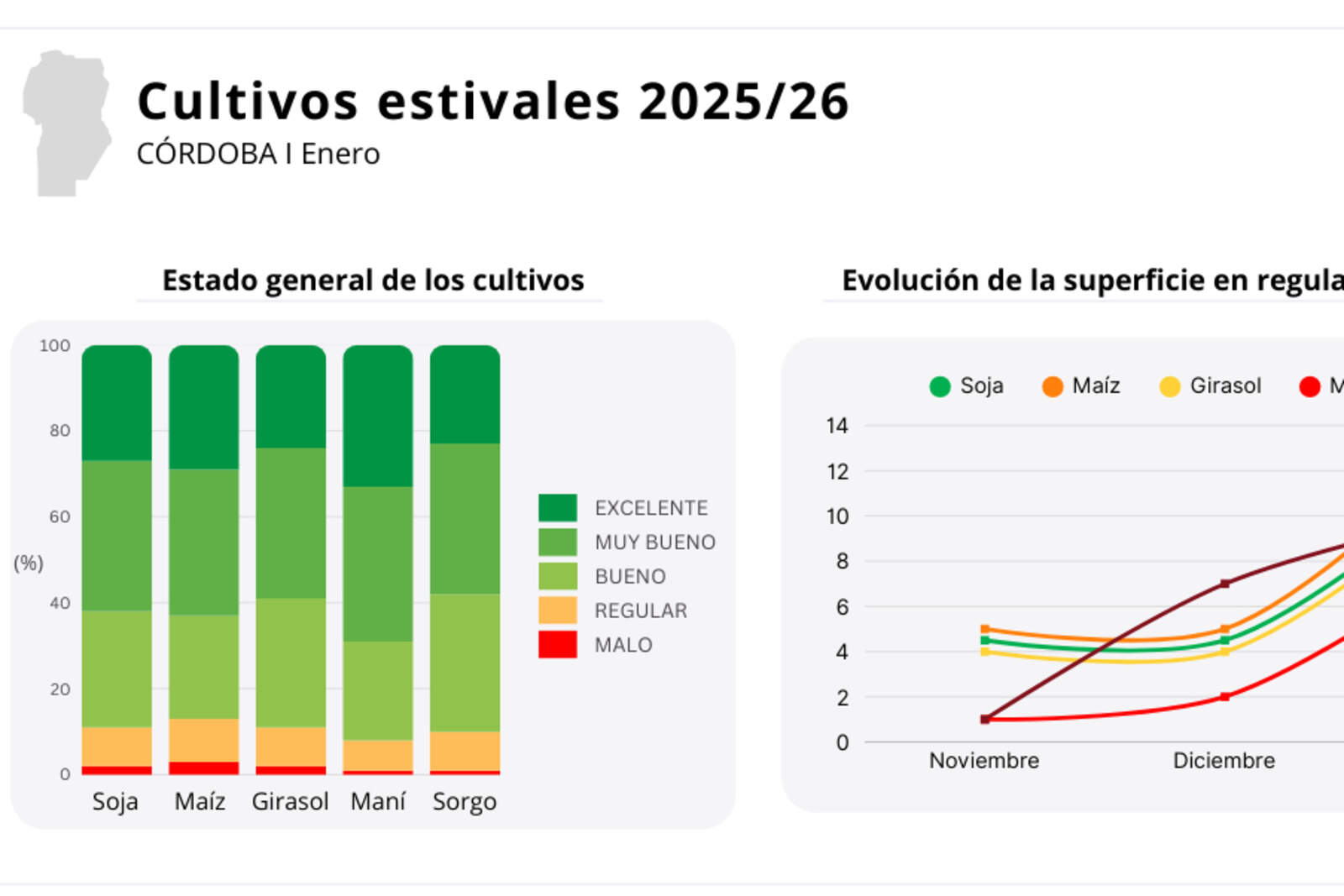
According to the latest report from the Córdoba Grain Exchange, the summer season shows, in general terms, a very good crop condition, although with growing heterogeneity between regions and planting dates.
"The beginning of the cycle was favorable, with good establishment conditions and soil profiles that, in many cases, started with adequate reserves," the entity indicated.
"However, toward the end of December and the beginning of January, high temperatures and lack of rainfall intensified, generating signs of water and heat stress, especially in crops that are going through or entering their critical period," they added.
El calor y la escasez de lluvia condicionan los cultivos de verano en Córdoba.
Early corn in Córdoba affected by heat
Early corn, mainly in the southern departments, was the most affected by high temperatures, the scarcity of rainfall, and hail events that occurred during the months of November and December.
According to the reports, this damage is already evident in the fields and a reduction in yields is expected, given that the unfavorable weather conditions coincided with the crop's critical period.
El calor y la escasez de lluvia condicionan los cultivos de verano en Córdoba.
In contrast, late corn shows a better overall condition, since water demand during the leaf formation stage is lower.
Status of soybean, peanut, and sorghum in Córdoba
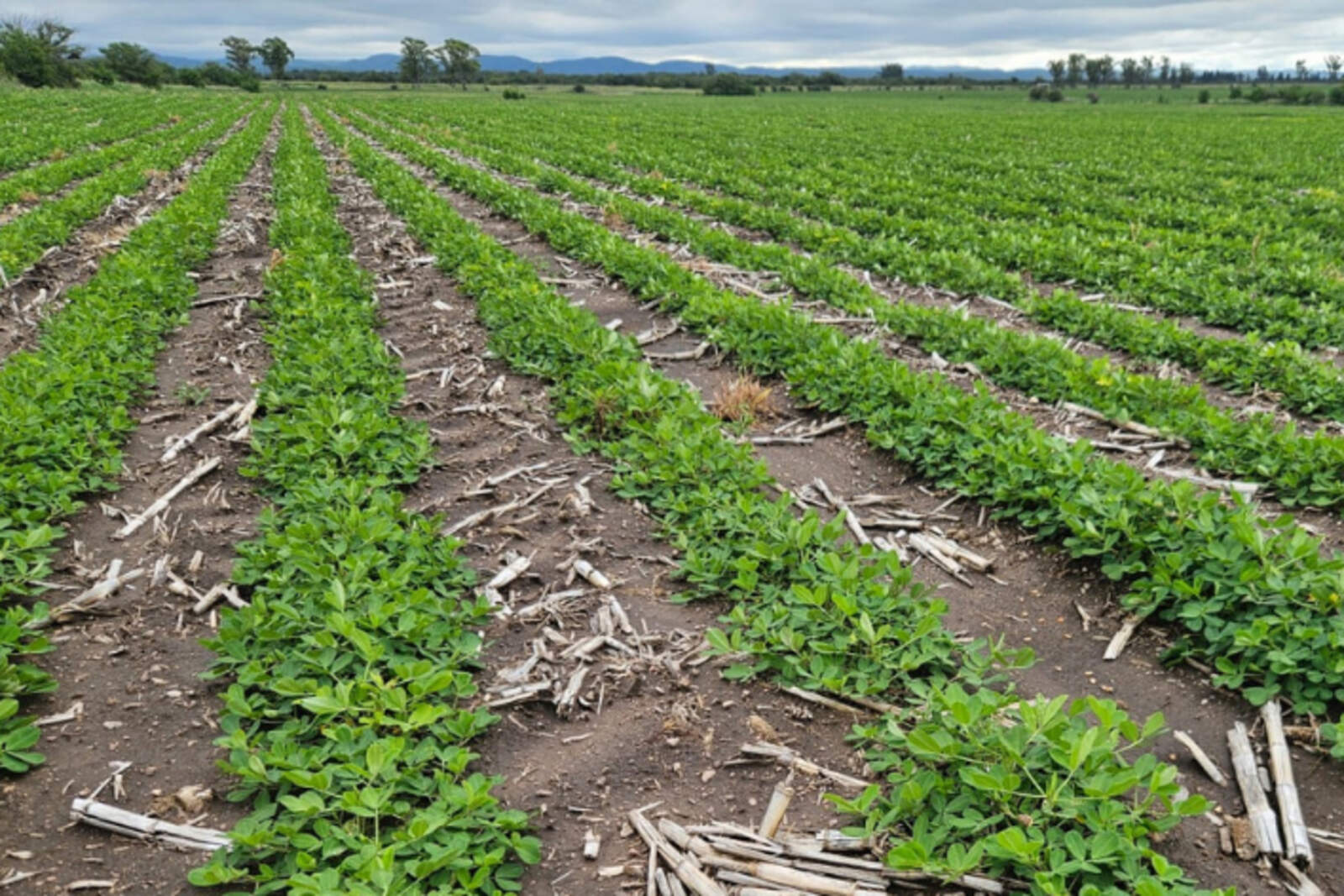
For soybean, peanut, and sorghum, symptoms of stress associated with high temperatures and lack of water were also reported, although with less severity.
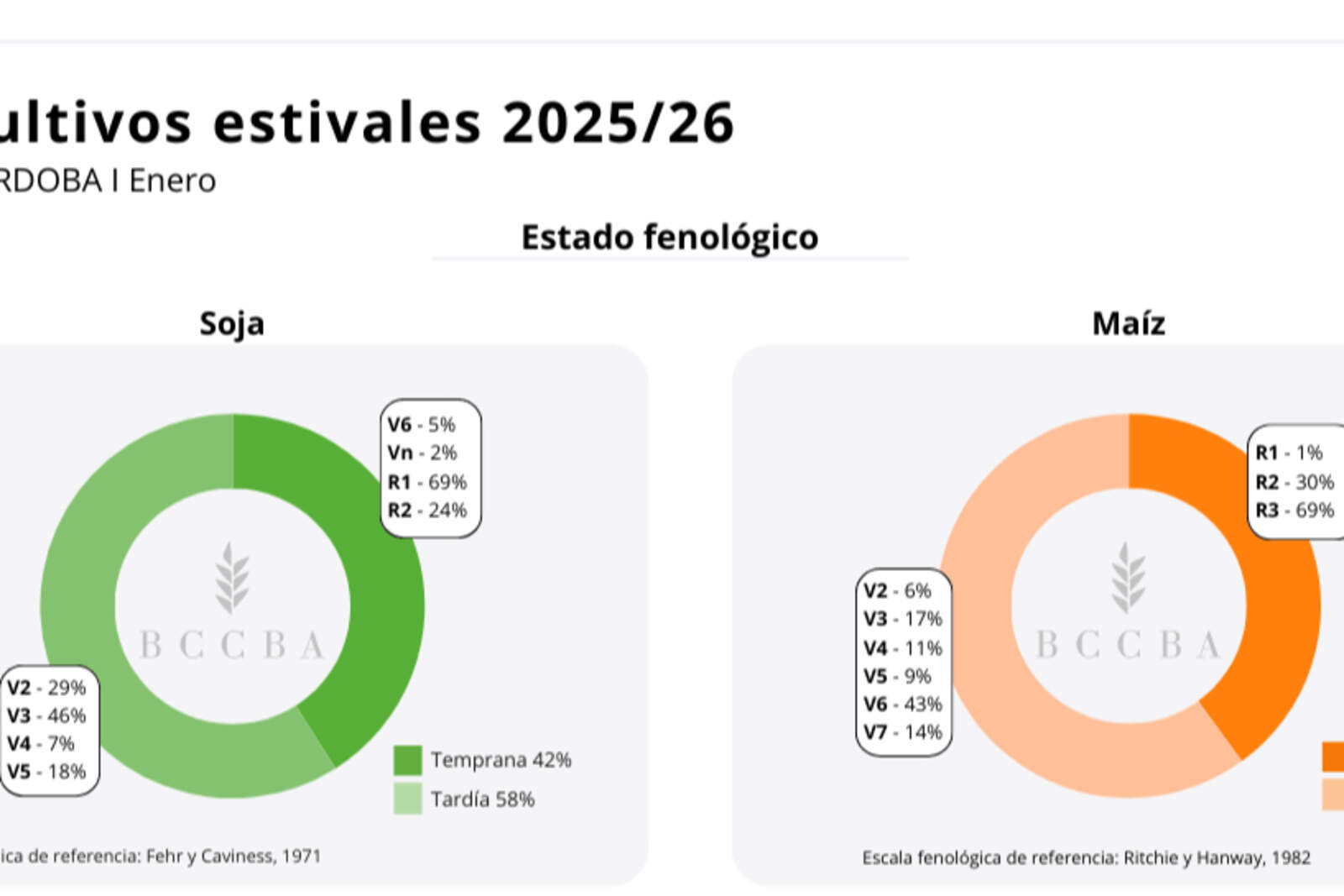
In particular, early soybean and peanut were, to a greater extent, going through the flowering stage and about to enter their critical period, while late soybean and sorghum were still in the vegetative stage.
El calor y la escasez de lluvia condicionan los cultivos de verano en Córdoba.
In this context, the stress recorded so far would not necessarily translate into significant yield losses, as long as environmental conditions improve in the coming weeks.
Sunflower in Córdoba
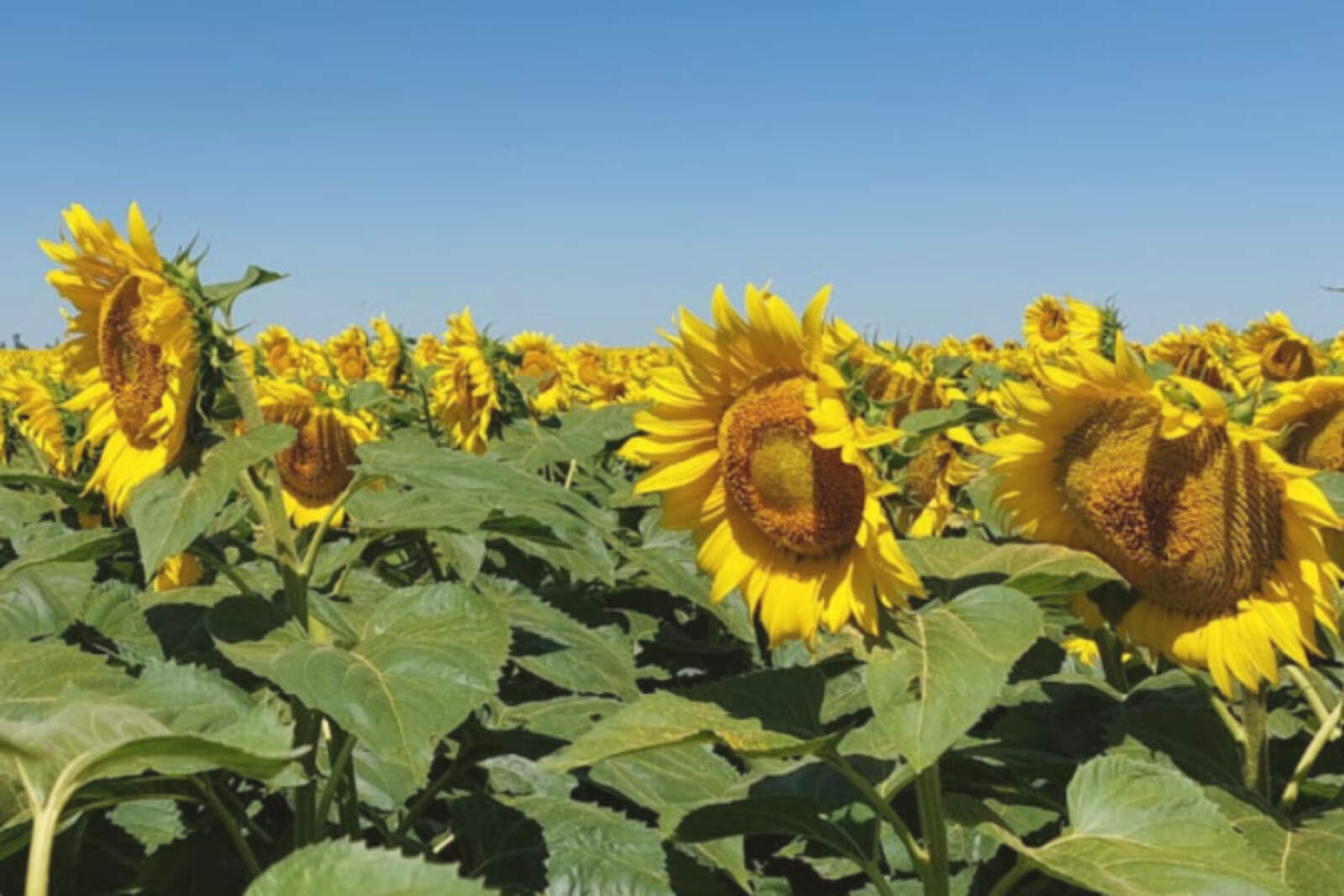
In the sunflower crop, approximately half of the surveyed area was going through the critical period, while the rest had already passed it, with a portion of the area that had already been harvested.
El calor y la escasez de lluvia condicionan los cultivos de verano en Córdoba.
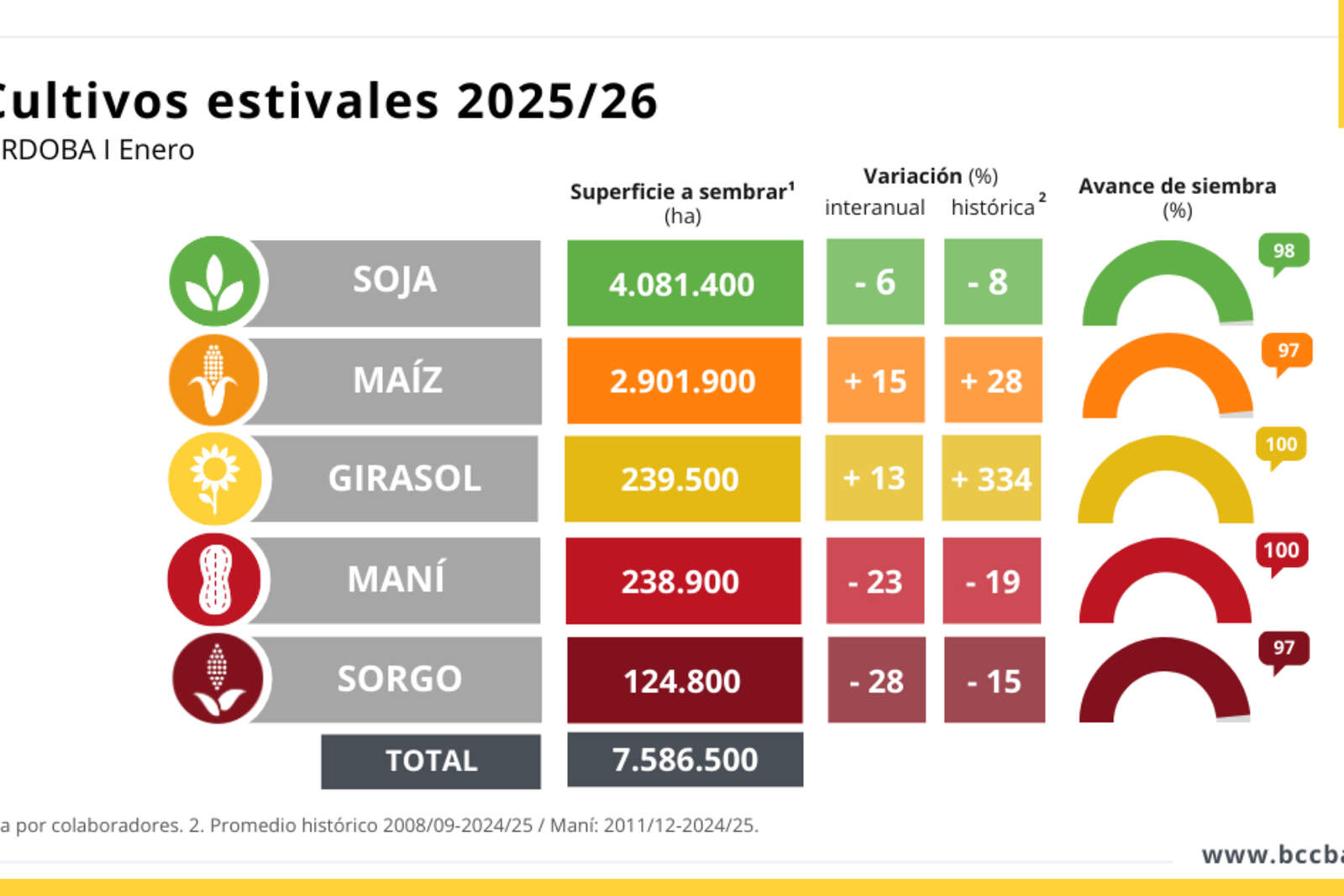
During the first weeks of January, sunflower harvesting showed rapid progress for this time of year, explained by a higher percentage of area planted early.
In this first estimate, yields are higher than the historical average, although lower than those obtained in the previous season.
Regarding expected production, a volume more than 300% higher than the provincial historical level is estimated, driven mainly by the increase in planted area in the current season.
Nevertheless, in the southern departments, cases of stress due to high temperatures and water scarcity were reported, a situation that could be reflected in a reduction in yields as the harvest progresses and affect the grain oil content.