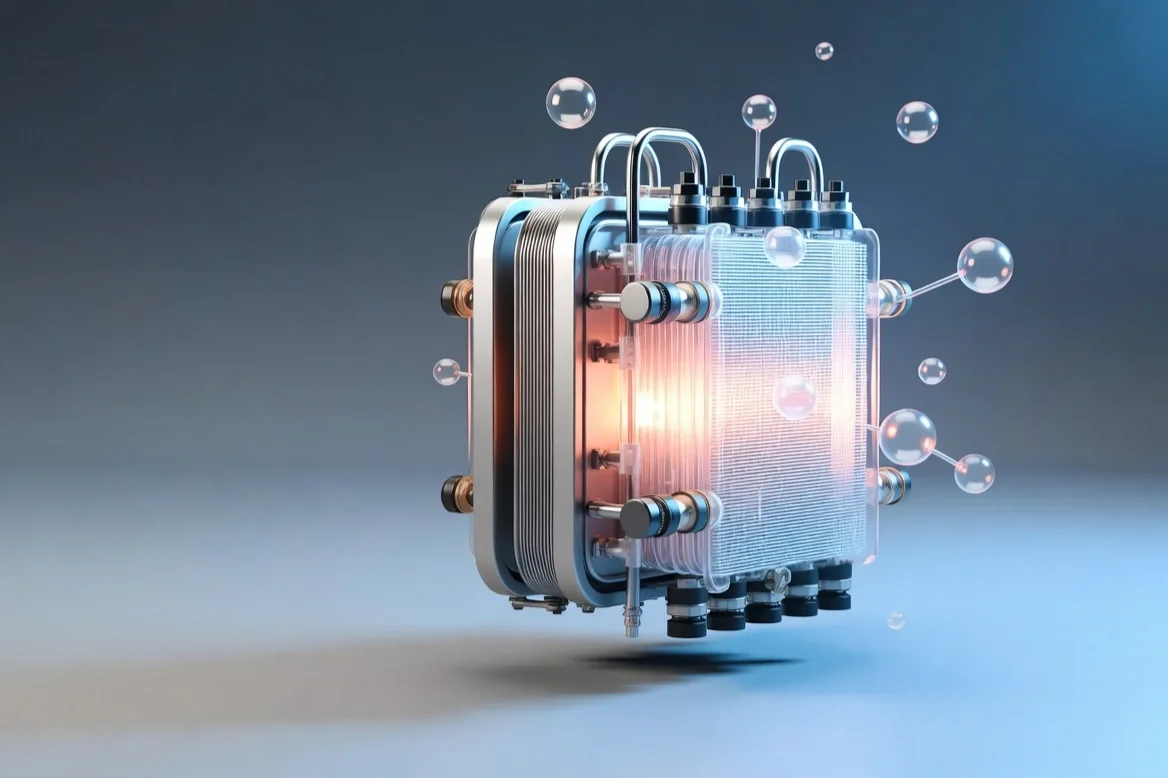

A team of researchers from Monash University in Australia has made a significant breakthrough in hydrogen fuel cell technology. They developed an ultrathin membrane that operates at 250 °C without needing a drop of water, solving an obstacle that has hindered the development of this technology for decades.
Hydrogen fuel cells represent one of the most promising alternatives for decarbonizing sectors such as heavy transport and industry, where traditional electric batteries have limitations. These cells emit only water and heat, recharge quickly, and offer a range similar to that of fossil fuels.
However, conventional membranes, such as those based on Nafion, need to be constantly hydrated to allow the passage of protons. This limits their operation to temperatures below 80-100 °C, as water evaporates at higher temperatures and the system fails.
The new GBP membrane
The scientists, led by Huanting Wang and Kaiqiang He, created atomic-thin nanosheets using graphene and boron nitride. In those spaces, they introduced phosphoric acid in a nanoconfined state, preventing it from evaporating even at high temperatures. The result is a membrane of just 50 micrometers called GBP.
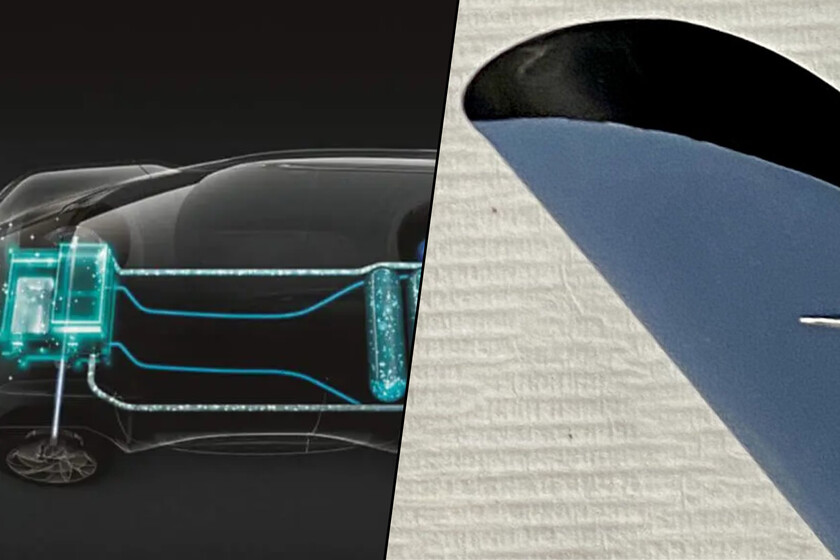
This membrane acts as a "dry highway" for protons, which move with great efficiency without relying on water. Wang explained that they combined conductive nanosheets with nanoconfined phosphoric acid to maintain rapid proton transport in dry conditions.
The mechanism is synergistic: protons traverse the hexagonal rings of graphene and boron nitride while hopping through the hydrogen bond network of the confined acid between the layers. This combination ensures high conductivity and stability.









