The process of economic liberalization led by President Javier Milei continues unabated. This Tuesday, presidential spokesperson Manuel Adorni announced via the social network X the repeal of 71 regulations that enabled abusive controls and required unnecessary information, reaffirming the Government's commitment to move toward fewer absurd regulations and more freedom for Argentinians.
"We have just repealed 71 regulations that enabled abusive controls and required unnecessary information. Among them, the code of 'Good Commercial Practices,' the certificate of origin for potatoes, and other regulations related to the now-defunct 'Supply Law' and 'Shelf Law.' Fewer absurd regulations, more freedom for Argentinians. The end", Adorni wrote in his official post.
El vocero, Manuel Adorni en X:
Among the repealed provisions is the Code of Good Commercial Practices, created on April 11, 2021, by the Secretariat of Domestic Trade during the administration of Alberto Fernández—remembered for his marked state interventionism—under the jurisdiction of the then Ministry of Productive Development.
This Code, intended to complement the Shelf Law (No. 27,545), sought to meticulously regulate the relationship between suppliers and retailers, imposing strict conditions such as uniform payment terms, display criteria on shelves, and limitations on supply agreements. It even went so far as to regulate issues such as the return of reusable containers, product restocking, logistics, and the way merchandise is displayed on shelves.
Additionally, the regulation prohibited retailers from demanding free merchandise or discounts, conditioned agreements with suppliers, and imposed on businesses the obligation to notify with signs about stock shortages, a bureaucratic burden that hindered business operations and the normal functioning of the market.
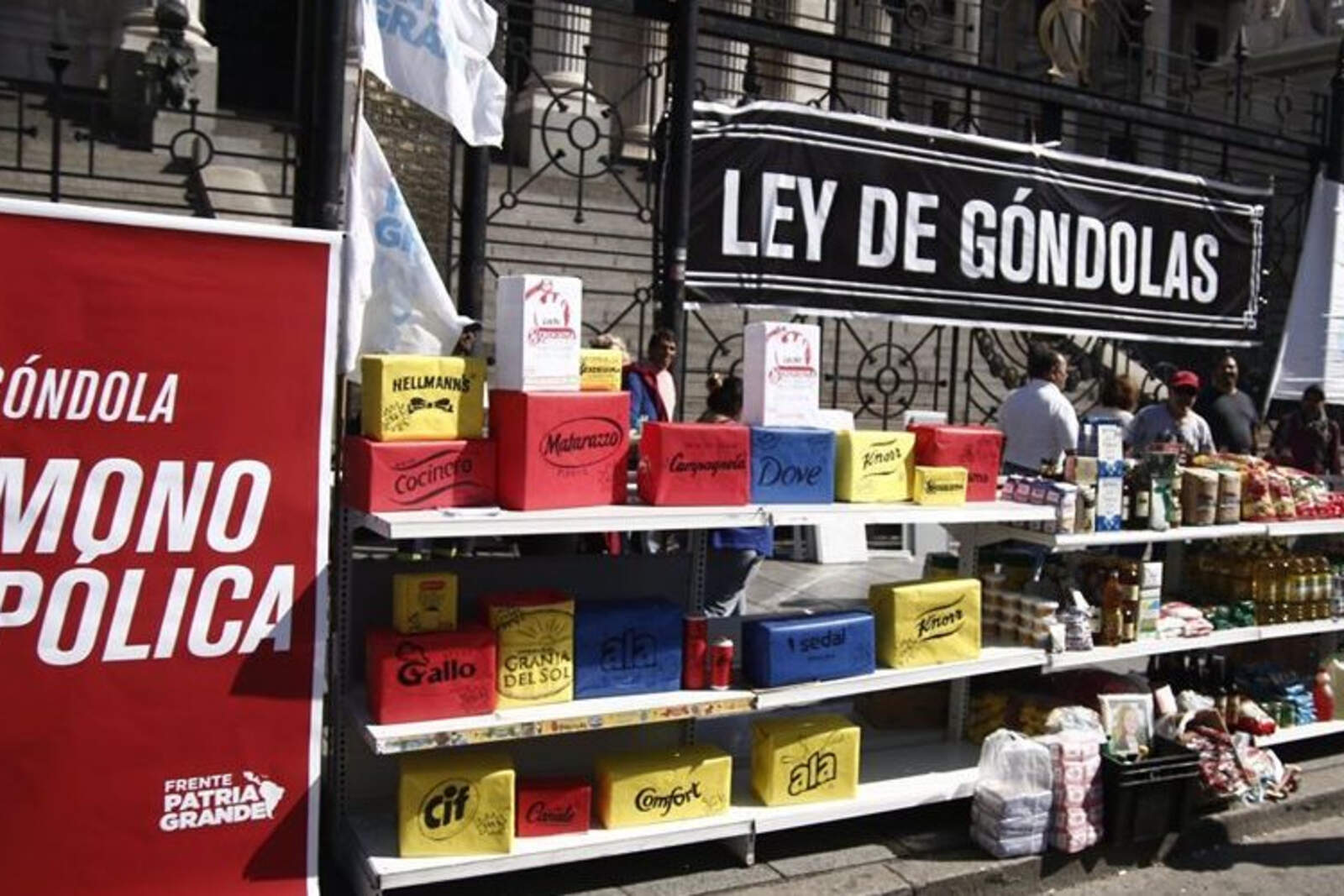
Ley de Góndolas.
Regarding the Shelf Law, also complemented by this Code, its provisions established mandatory quotas and percentages for display in supermarkets: at least five different suppliers per product category, a maximum of 30% of space per company, a mandatory 25% for SMEs, 5% for family farming or the popular economy, and even that on shelves near the checkout counters, half of the space had to be allocated to cooperatives and mutual associations.
These requirements not only caused additional costs and distorted competition but also artificially manipulated the market in the name of a supposed "balance." Far from benefiting the consumer, they ended up causing shortages, arbitrariness, and loss of efficiency.