Caputo defended the new band scheme, vindicated the official strategy during the months of maximum financial tension, and assured that Argentina is entering a stable phase
Compartir:
In a context marked by financial volatility ahead of the legislative elections and by years of inherited macroeconomic fragility, the government of Javier Milei moved to reaffirm the soundness of its economic program. The Economy Minister, Luis Caputo, strongly defended the recalibration of the exchange rate scheme announced for 2026 and maintained that the exchange rate bands "gained credibility" after withstanding what he defined as a political and financial "attack" against the libertarian administration.
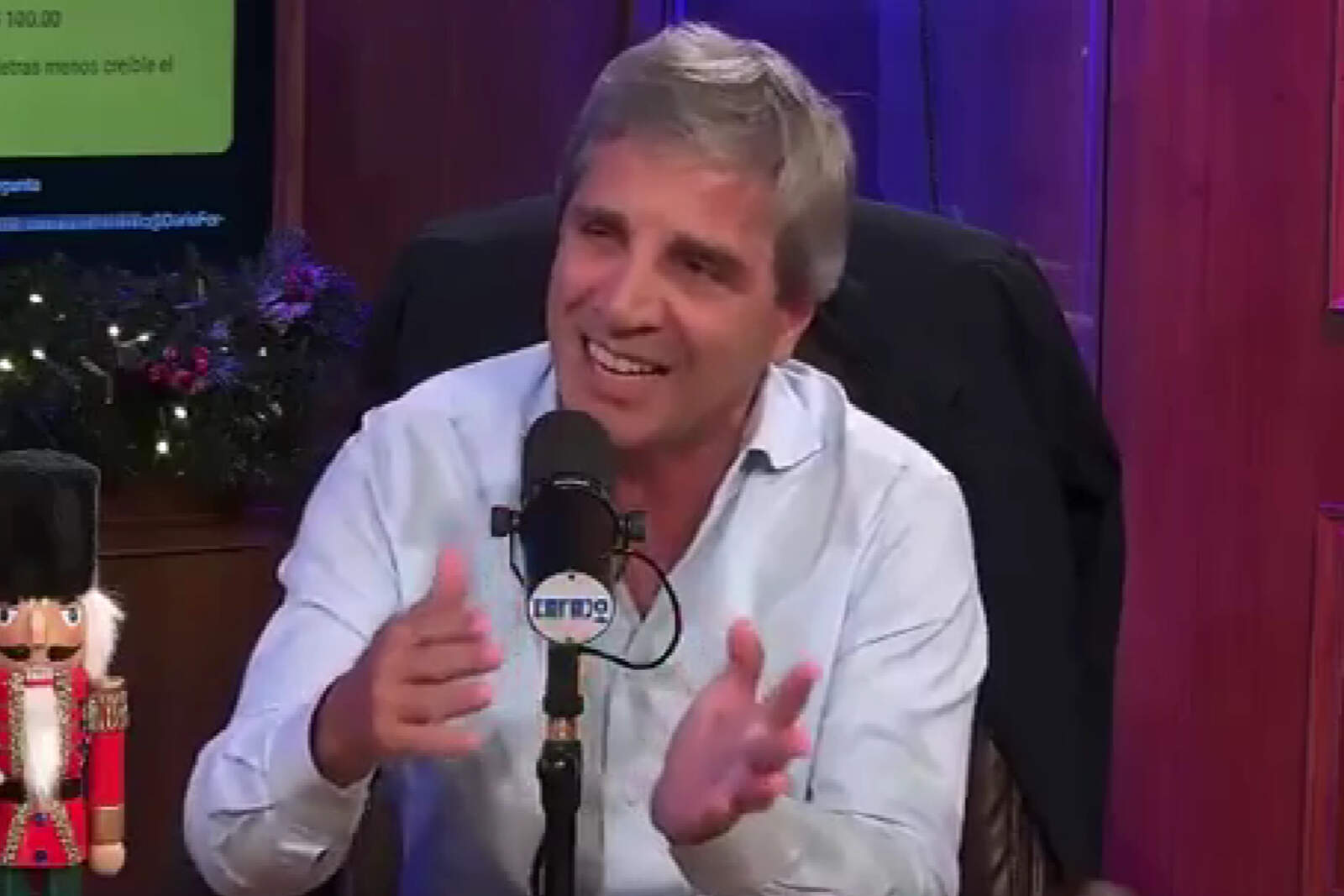
During his participation in the streaming program Las tres anclas, the head of the Palacio de Hacienda explained that the decision to adjust the ceiling of the bands in line with inflation doesn't imply a covert devaluation or an improvised shift, but rather a technical and gradual step toward a more flexible system that is consistent with international standards. "The bands gained credibility", he stated, and he stressed that the new scheme will converge, "sooner or later," with the inflation rate of the United States.
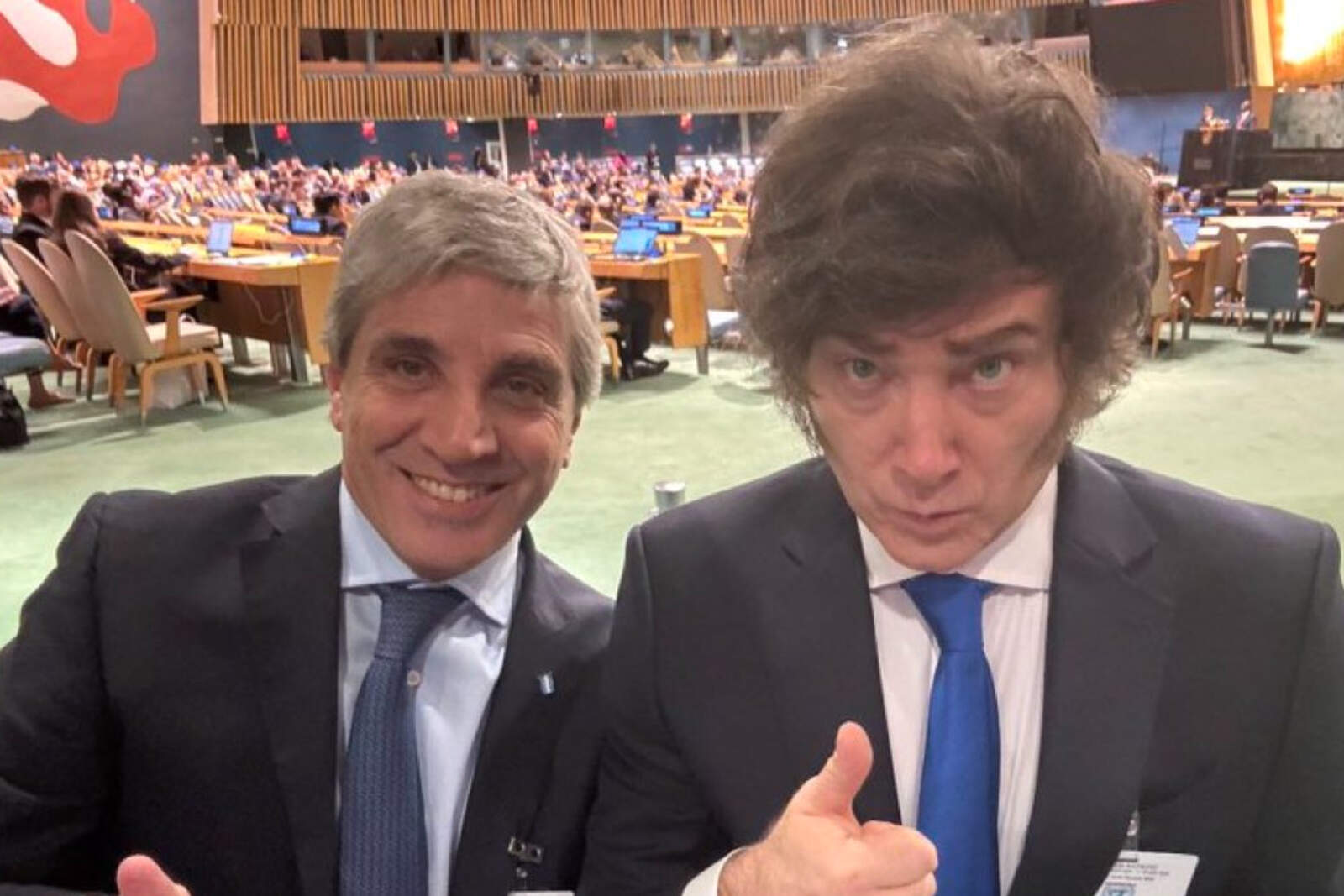
Javier Milei y Luis Caputo.
Caputo defended the exchange rate management applied during the months of greatest tension and he paused on a key distinction: buying dollars is not the same as accumulating reserves. As he explained, the government was the one that bought the most foreign currency in the market, but the heavy legacy of maturities forced it to allocate most of those resources to paying obligations. "For every dollar that we bought, 75% was used to pay debts", he stated, emphasizing that this dynamic was due to the lack of refinancing that Argentina faced when Milei took office.
In that context, he flatly rejected the criticism about the supposed inability to accumulate reserves and he maintained that it was not a failure of the program, but a direct consequence of the inherited debt scheme. Meanwhile, he highlighted that during the current administration public debt was reduced by approximately USD 50,000 million. "Now we can start to accumulate, because of what we did before," he pointed out, marking the beginning of a new stage.
The minister placed special emphasis on the electoral climate as a factor of instability. According to his assessment, political uncertainty caused a collapse in money demand. "When that happens in Argentina, the refuge is the dollar", he explained. In that scenario, he described a "one-way" market, with an almost total demand for foreign currency and the government as the only seller within the band system.
Caputo also explained why the Executive Branch decided not to abandon the scheme to buy dollars ahead of schedule. "If we had done that, the only seller would have become a buyer and the dollar would have gone to 3,000 pesos," he warned. In his view, a decision of that kind would have had immediate political consequences and would have reinforced the risk of a change of course after the elections.
The electoral result, he asserted, fully validated the official strategy. "It was not an issue of reserve accumulation, but of risk", he stated, and he recalled that after the elections the country risk fell sharply. That signal, he explained, enabled the return of financing and marked a turning point for exchange rate and fiscal policy.
From that change on, the Treasury will stop buying dollars to meet maturities and that function will pass to the Central Bank. "Now, instead of accumulating 25 cents for every dollar, we're going to be able to accumulate the whole dollar," he pointed out. "The order of the factors changes the product," he summarized, as he highlighted the deliberate sequence of the plan.
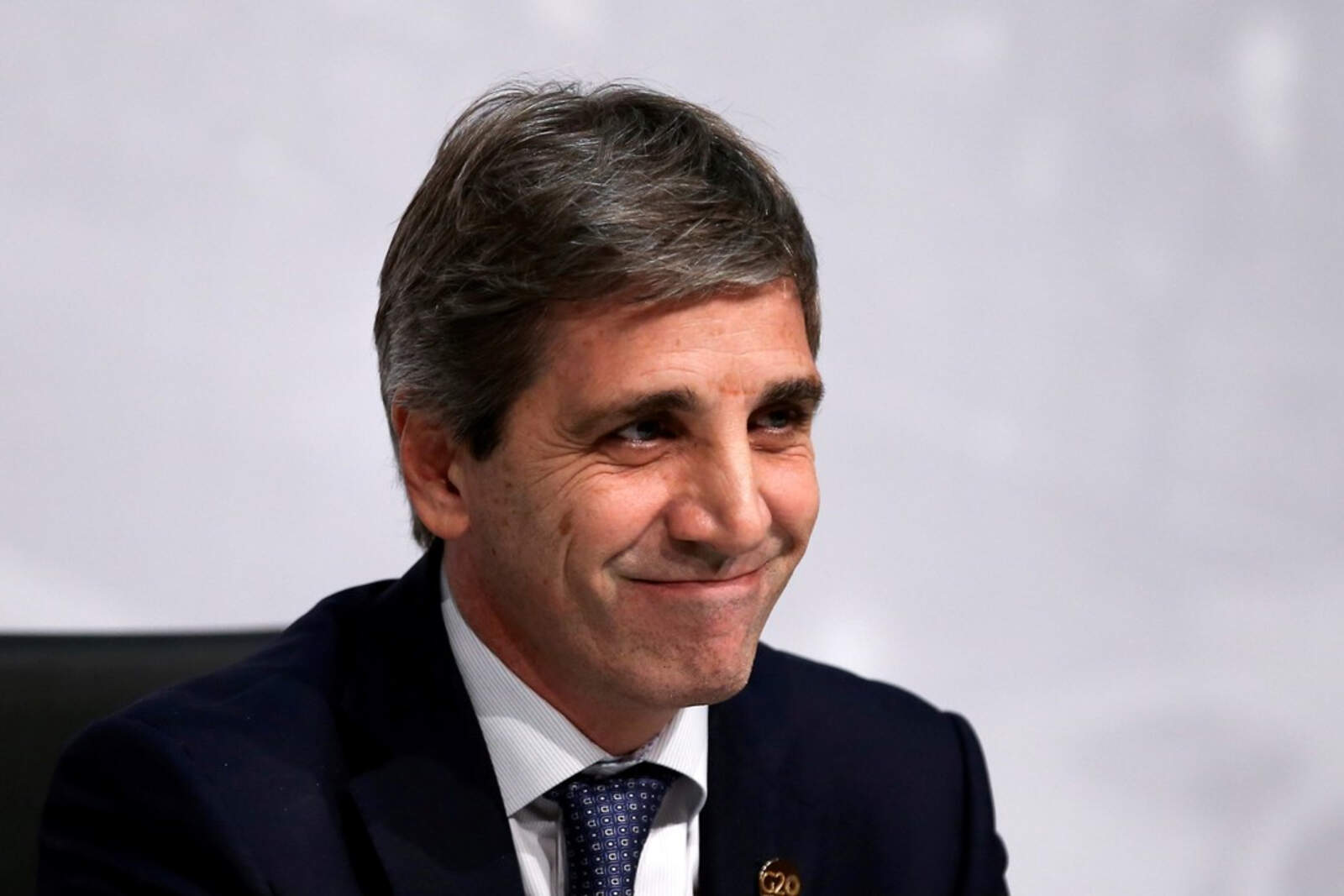
Luis "Toto" Caputo, ministro de Economía.
Regarding the adjustment of the crawl, Caputo clarified that there were no changes in the value of the dollar or an abandonment of the band system. "The only thing that changed is that it went from a fixed crawl to a variable one," he explained. While previously the update was 1% per month, it is now adjusted to the latest inflation figure. As he anticipated, "within nine months, when inflation starts with zero, it will be a lower pace," in line with the continuity of the fiscal anchor.
Finally, the minister once again placed credibility at the center of the economic program. He recalled that at the beginning of the administration there was an abundance of forecasts of extreme crisis and he stressed that the government managed to stabilize the economy without traumatic measures. "This program withstood the most phenomenal attack that any economic program has ever faced", he stated.
For Caputo, the collapse in the demand for pesos and the unprecedented dollarization even of transactional balances during the critical months was due to fear and political uncertainty, not to structural failures. "When what we say is validated, expectations adjust", he concluded, as he defined credibility as the central raw material of the economic course that Javier Milei's government is driving.