The innovative device enables dynamic analysis of various bacterial information criteria
Compartir:
Within the framework of the opening of the 37th Intensive Course on Antimicrobial Updates "Dra. Alicia Rossi" and the 46th Latin American Course on Antimicrobial Updates, the National Administration of Laboratories and Health Institutes (ANLIS) "Dr. Carlos Malbrán" presented the Antimicrobial Resistance Analysis Dashboard of the WHONET-Argentina Network.
This is the first interactive platform at the national level that enables rapid and dynamic analysis of various bacterial information criteria, which will be key to addressing the treatment of infectious diseases caused by resistant pathogens, one of the greatest current public health challenges.
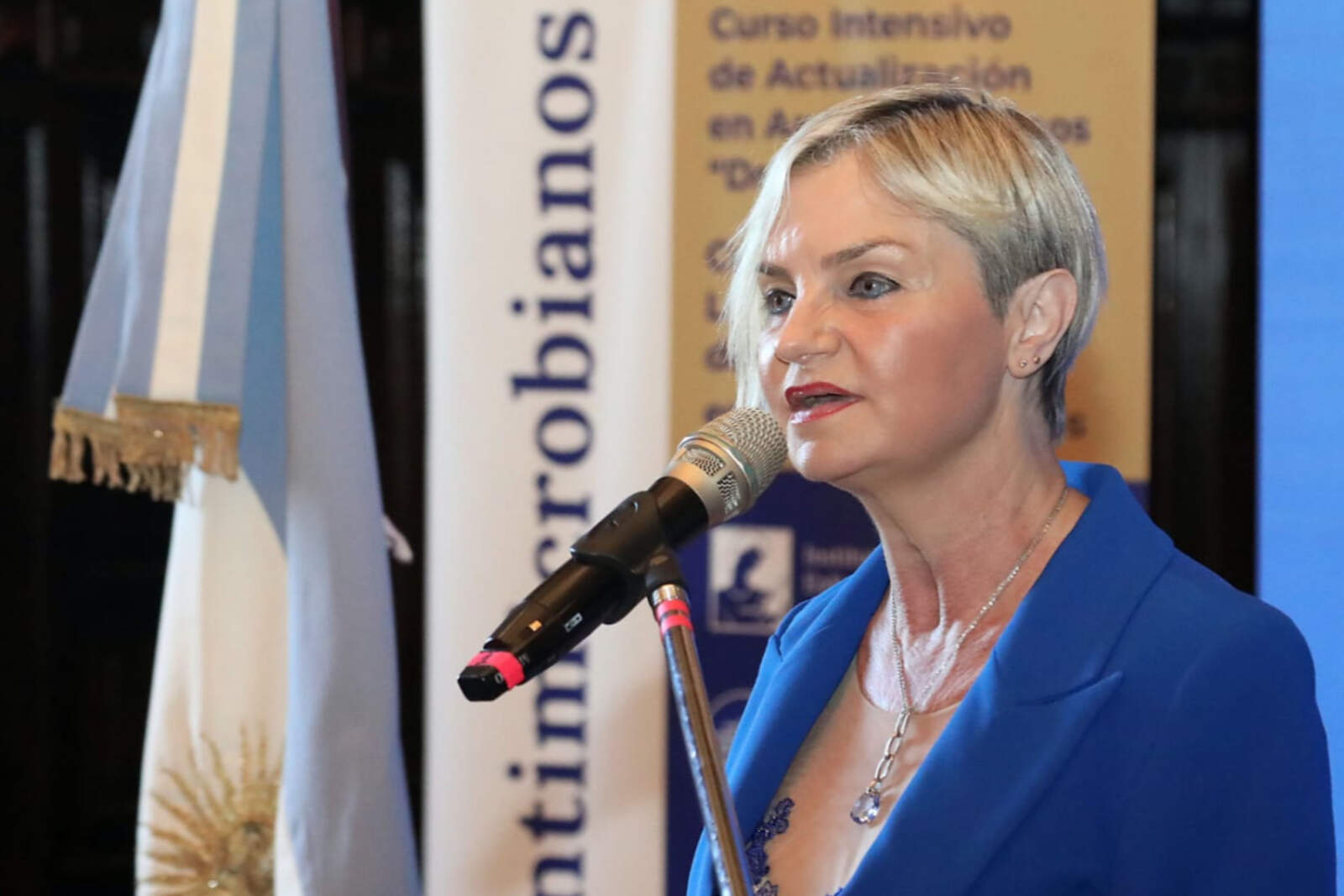
El ministro de Salud de la Nación, Mario Lugones.
"This new development is a marvel that deeply amazes me. I want to congratulate the entire ANLIS Malbrán team because this dashboard allows us to have up-to-date data and information instantly for better decision-making," stated the Minister of Health of the Nation, Mario Lugones.
The minister also emphasized that "this magnificent effort is a sensational contribution to health," so the new tool will be essential for the Ministry of Health of the Nation in its role as the governing and regulatory body of public policy.
Significant progress in AMR surveillance
Meanwhile, the director of ANLIS Malbrán, Claudia Perandones, highlighted that "the implementation of the WHONET-Argentina Dashboard represents significant progress in AMR surveillance. Its use will allow structuring large volumes of data to transform them into useful, accessible, and applicable information for strategic decision-making in national public health."
La directora de la ANLIS Malbrán, Claudia Perandones.
The development of the dashboard was carried out jointly by INEI, the Operational Unit of Artificial Intelligence and Data Science in Public Health, both from ANLIS Malbrán, and the laboratories that make up the WHONET-Argentina Network.
The information is presented dynamically through trend graphs, bar charts, and regional maps, with data from 2020 to the present. This way, it enables rapid analysis of various information criteria, such as bacterial species, type of antibiotic, year, time period, sample type, age range, and gender.
In recent years, the advance of AMR has increased morbidity and mortality among patients in critical care units, generating 4.71 million deaths per year worldwide.
Study by the Argentine Society of Infectology
In Argentina, a study conducted by the Argentine Society of Infectology in 35 hospitals across the country, in collaboration with ANLIS Malbrán, revealed that approximately 50% of patients admitted to intensive care units with infections die from multidrug-resistant germs.
The WHONET-Argentina Dashboard offers multiple benefits for the health system. Its detailed analysis capability supports evidence-based decision-making and promotes the rational use of antimicrobials.
Through its visual tools, it facilitates trend monitoring and the identification of critical hotspots.
Additionally, it provides up-to-date information for selecting empirical treatments, allows open access to a reliable data source for professionals, researchers, and health authorities, and strengthens cooperation between the laboratories of the WHONET Network and the National Reference Laboratory.
The data that feed this tool come from national surveillance carried out by the WHONET Argentina Network, following the criteria of GLASS (Global Antimicrobial Resistance and Use Surveillance System), which ensures their quality and international comparability.