The database developed by Northeastern University, USA Today, and the Associated Press confirmed it
Compartir:
Under the administration of Donald Trump, the number of mass murders in the United States fell significantly in 2025 and reached its lowest level since systematic monitoring began in 2006.
According to the joint database developed by Northeastern University, USA Today, and the Associated Press, only seventeen incidents of this kind were recorded during the last year, a figure far below the 42 episodes counted in 2023.
The decline represents a relevant change in the recent evolution of this type of crime, which had experienced an increase during the years following the pandemic.
Donald Trump, presidente de Estados Unidos.
The monitoring system, which has been in operation since 2006, defines a mass murder as any incident in which at least four people lose their lives in less than 24 hours, not counting the striker and regardless of the method used. This criterion makes it possible to analyze long-term trends and distinguish between different types of episodes, including those that occur in domestic settings or in public spaces.
According to the analysis by the research team, the majority of the cases recorded in 2025 did not take place in open spaces but in private contexts. "Of the 17 cases recorded in 2025, only four occurred in public spaces; the majority were linked to family or domestic disputes", they explained.
The analysis also distinguishes between mass murders and mass shootings, two categories that are not equivalent. While the former refers to incidents with four or more fatal victims, the latter includes cases in which at least four people are wounded by gunfire, regardless of whether there are fatalities.
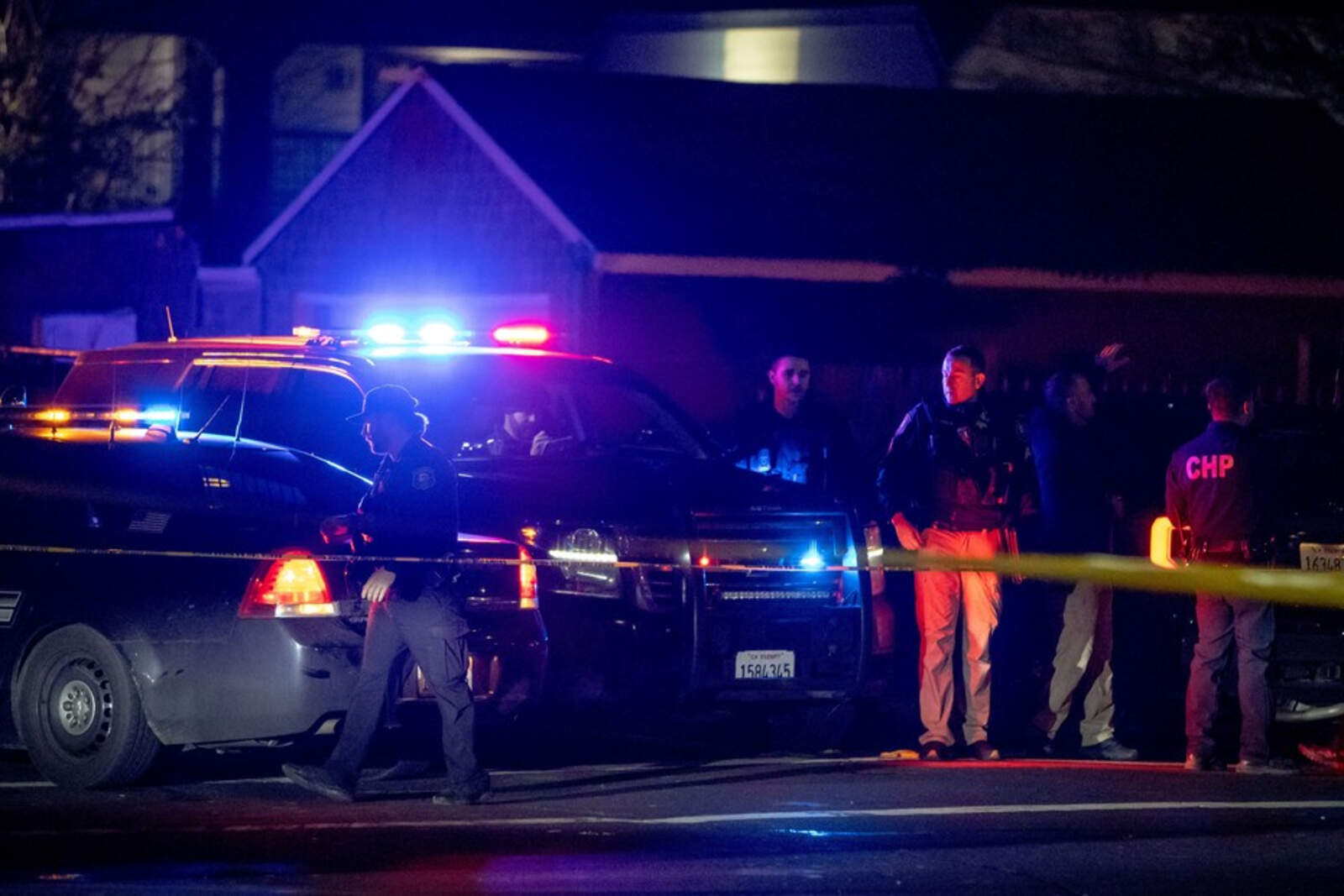
La policía de EEUU.
In that context, the platform Gun Violence Archive reported 388 mass shootings in 2025 through December 11, a figure that also reflects a sharp decrease compared with the 659 recorded in 2023.
Meanwhile, the homicide rate in the United States also recorded a historic drop at the end of last year, reaching the lowest levels since the early 20th century, according to official data. The rate stands at about 4 per 100,000 inhabitants, with a reduction of more than 20% in 2025 in large cities such as Los Angeles, New York, and Richmond.