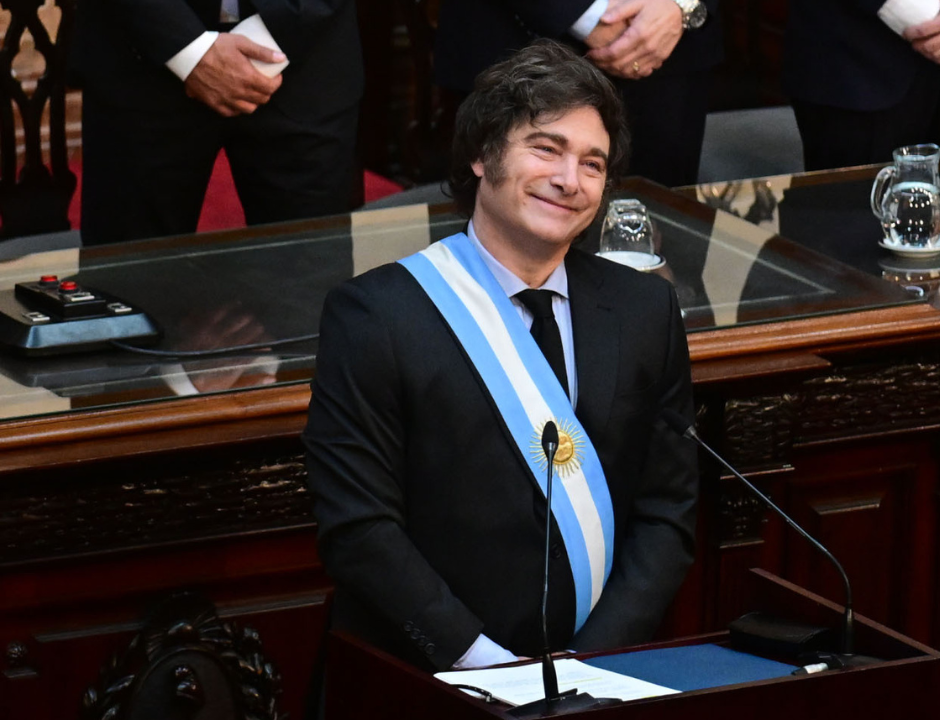
President Javier Milei will lead the opening of regular sessions of the Congress tonight with a speech that will be central to the future of his administration.
Starting at 21:00 in central time, there will be a national channel where the president will outline the balance of his first years in government and, mainly, will present a strong reformist agenda for 2026.
The intervention will be organized in three main axes, as it became known. The first will address the diagnosis of the legacy received from Kirchnerism upon assuming the Presidency and the initial measures taken by his administration to reverse
this critical situation. President Javier Milei.
There will also be a specific section dedicated to the year 2025, which the Government considers to be a critical moment.
As it transpired, the President will refer to that period as a stage in which his administration is a complicated situation, with Kirchnerism and the opposition trying to destroy his administration from Congress, in the context of legislative elections.
However, the core of the discourse will be focused on the future. Milei will use legislative openness to present the course he will seek to consolidate during this year, a period without national elections. In this context, the president will present a new phase marked by dozens of profound structural reforms, in line with the process initiated since his coming to power.
One of the central concepts that will cross his message will be the so-called “cultural battle”, questioning the “status quo” and the “party of the State”, in reference to sectors that, for decades, benefited from privileges because of their ties to politics.
As an example of this confrontation, the president is expected to refer to recent episodes linked to large companies, including Techint, and the tire market, where the Government questioned the high prices offered by local producers as a result of economic protectionism.
President Javier Milei.
The reforms sanctioned and to be approved
In parallel, the president will highlight the legislative advances achieved during the special session and will present new initiatives that are part of
his road map.
Among the projects it will seek to promote are electoral reform, amendments to the Criminal Code and proposals related to the May Pact signed two years ago. To this will be added a historic tax reform to lower more taxes, something that the ruling party considers key to consolidating
its economic model.
The current political context is favorable to the Government, which has registered its best legislative performance since taking office. During the month of February, the ruling party managed to pass wide-ranging reformist laws, while other initiatives, such as the Glacier Law, are pending approval in the Chamber of Deputies soon
.
The presidential message will thus be the starting point of a new phase in which the libertarian administration will seek to accelerate its program of structural reforms.