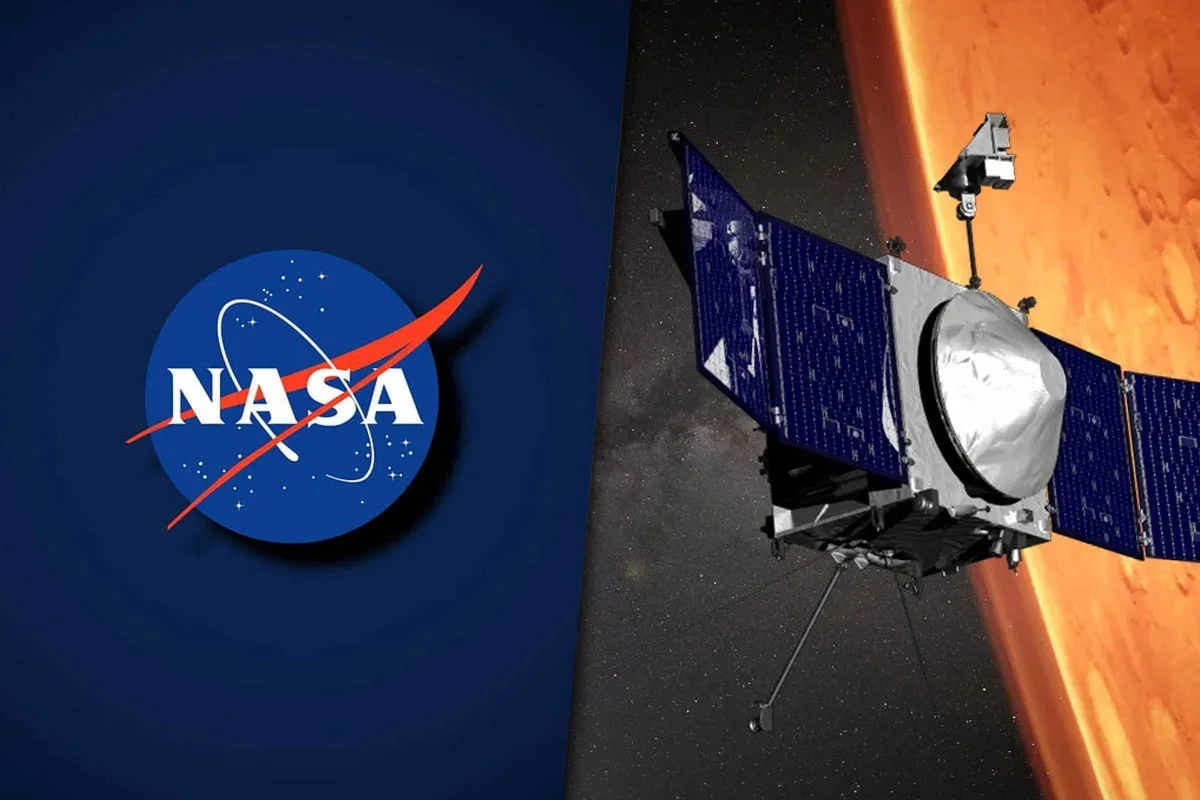
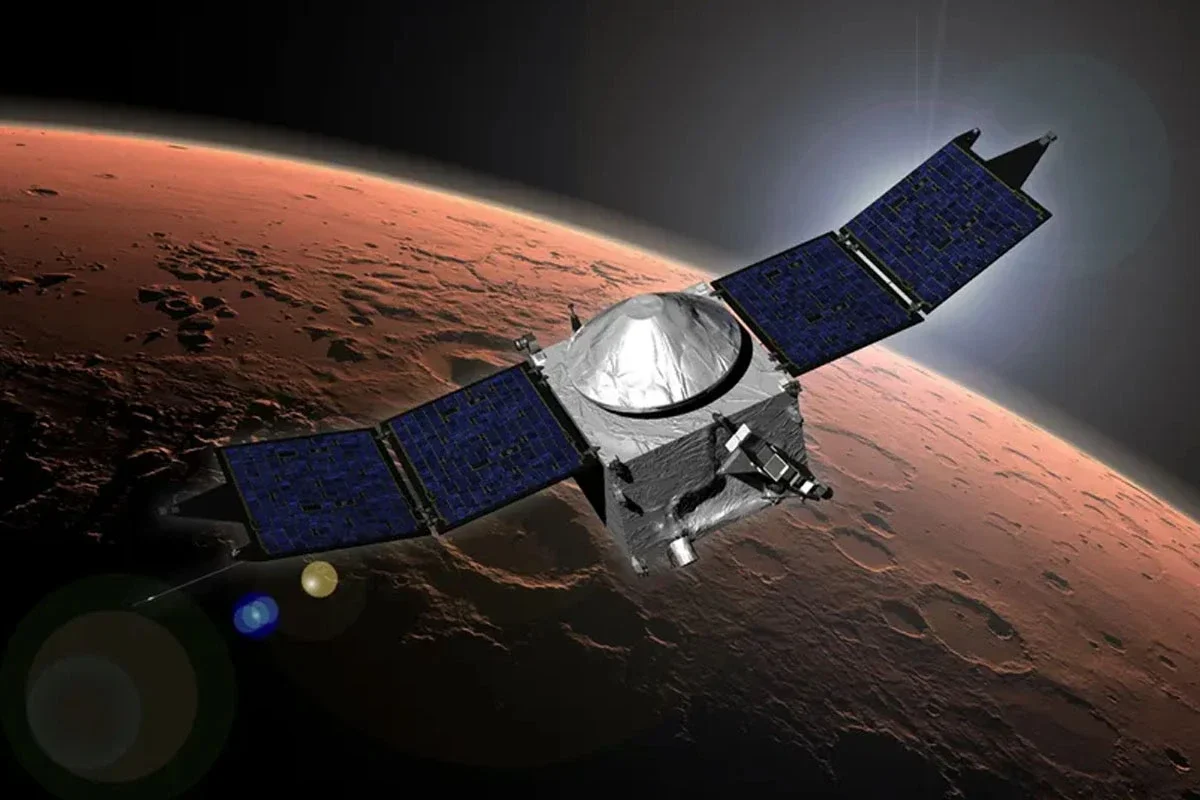
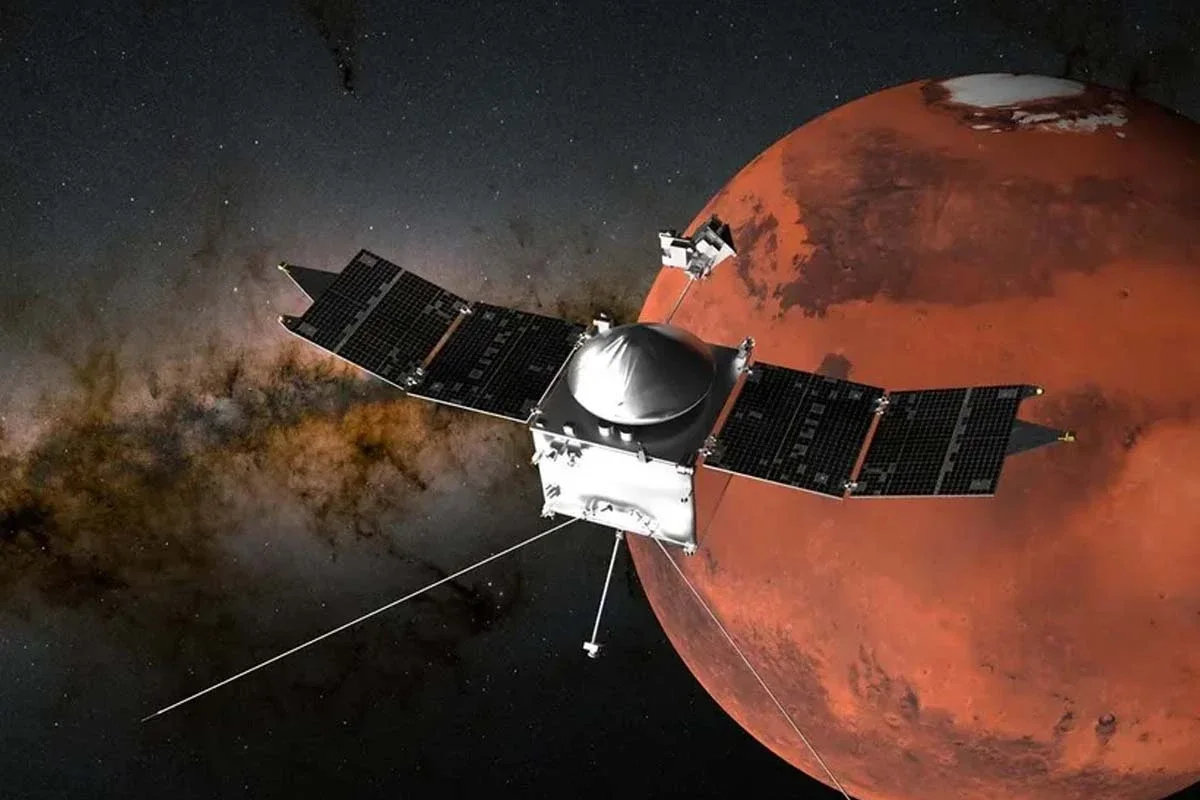
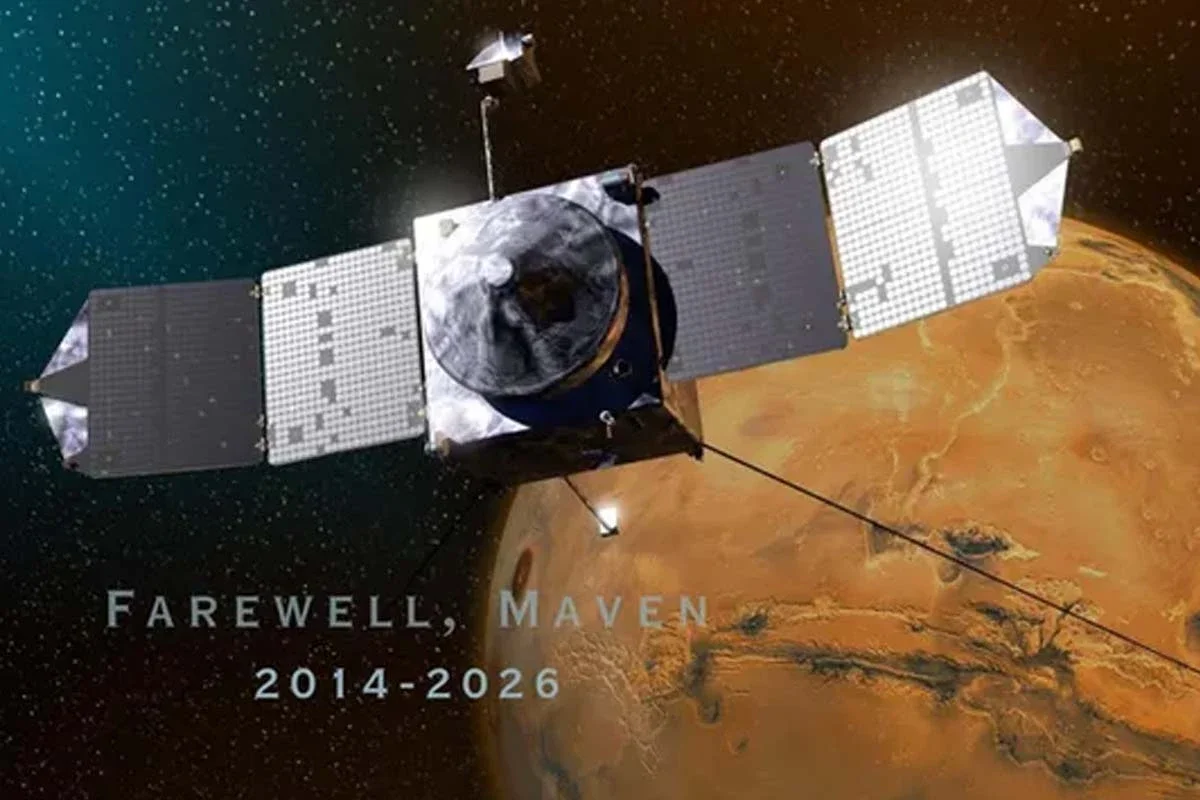
MAVEN, one of the most important probes of the NASAon Mars, was officially declared out of service after several months without communication. The orbiter stopped transmitting in December 2025 and attempts to recover it were unsuccessful.
The space agency confirmed the end of the mission after an internal investigation. For more than ten years, MAVEN provided key data about the Mars atmosphere and helped understand how the planet lost much of its gases over time.
MAVEN was officially declared out of service after several months without communication.
What happened to the MAVEN probe on Mars
The last signal from MAVEN was received on December 6, 2025, through NASA's Deep Space Network.
After temporarily being behind Mars due to its orbit, the spacecraft reappeared with data indicating that it had entered safe mode and was spinning uncontrollably.
According to NASA's preliminary report, this situation caused a progressive loss of power that ultimately left the probe in an unrecoverable state.
What happened to the MAVEN probe on Mars?
The exact cause of the incident is still under investigation.
A mission that far exceeded its original lifespan
MAVEN was launched in November 2013 aboard an Atlas V rocket from United Launch Alliance and arrived at Mars ten months later.
A mission that far exceeded its original lifespan
The mission was designed to operate for just one Earth year. However, it continued to function normally for over a decade.
This performance allowed it to become one of the most successful scientific missions in the recent history of Mars exploration.
The discoveries MAVEN made about Mars
The spacecraft was the first specifically designed to study the evolution of Mars' atmosphere and its interaction with solar wind.
The discoveries that MAVEN left about Mars
Thanks to its instruments, scientists were able to better understand how the planet lost much of its atmosphere and why it ceased to have conditions similar to those of primitive Earth.
Moreover, the mission continued to generate discoveries even after it stopped transmitting data. NASA highlighted that the vast amount of information collected will continue to be analyzed for decades.
Scientists were able to better understand how the planet lost much of its atmosphere.
The NASA reaction after the mission's end
During a conference held on June 3, project leaders expressed their sadness over the loss of the spacecraft.
Shannon Curry, the mission's principal investigator, described MAVEN as the best Mars mission in history and emphasized the scientific advancements achieved.
For his part, Mike Moreau, the project manager, compared the end of the mission to the loss of a loved one due to the strong bond developed by the team over more than a decade of work.
NASA's reaction after the mission's end
Which spacecraft are still operational around Mars
With the decommissioning of MAVEN, NASA now has only two active orbiters around the red planet.
Mars Odyssey, launched in 2001.
Mars Reconnaissance Orbiter (MRO), launched in 2005.
Both continue to operate well beyond the originally planned duration of their missions. Additionally, the European orbiters Mars Express and Trace Gas Orbiter are still functioning, which also serve as communication links with the vehicles exploring the Martian surface.