

Researchers from the University of Aberdeen analyzed narrow-mouthed rhinoceros teeth found in archaeological sites in Spain and France. The remains, about 100,000 years old, show marks suggesting that Neanderthals used them as durable tools.
The team led by Alicia Sanz-Royo examined the pieces recovered at El Castillo in Spain and Pech-de-l’Azé II in France using microscopes. They identified grooves, notches, sliding marks, and scratches that appear to be the result of repeated strikes.
To confirm their hypothesis, the scientists tested current rhinoceros teeth obtained from zoological reserves. They used them to shape stone tools and as anvils to cut plant fibers and leather. The marks generated on the modern teeth were very similar to those observed on the fossils.
The experiments also indicated that Neanderthals selected teeth with the most suitable size and shape for each task.
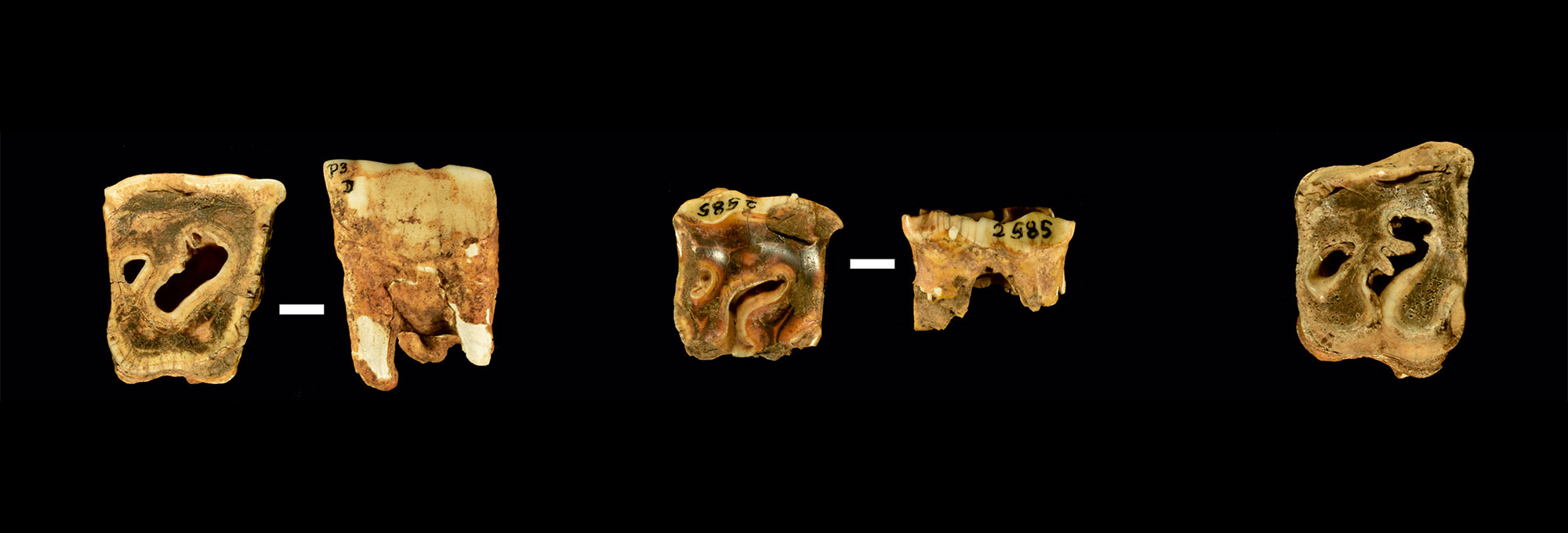 A new look at Neanderthal resources
This finding adds evidence about the Neanderthals' ability to exploit hard materials from their environment. Until now, the use of bones and antlers was known, but teeth represent a particularly durable material.










