Nepotism in the Federal Judiciary of Córdoba: privilege and family positions
A survey of the personnel roster from October 2025, from the Federal Judiciary of Córdoba, confirms that appointments follow a family-based logic unrelated to merit
Out of 30 magistrates, only 11 do not have appointed relatives. Million-dollar salaries paid with your taxes
Compartir:
The National Judiciary keeps a closed system that avoids merit-based access through open and transparent competitions. The Supreme Court of Justice is directly responsible for not regulating Law No. 26,861, which stipulates democratic and equal access. While other areas of the State have implemented the regulation, the highest court has maintained a 12-year resistance to opening the examinations.
This omission has resulted in a consolidated scheme of appointments based on blood relations and social connections within the courts. The lack of a requirement for a qualifying degree for entry allows appointments to depend exclusively on internal discretion. Far from guaranteeing peace, this arbitrary selection mechanism triggers constant power struggles and acts of revenge among the different chambers.
The situation in the Federal Judiciary of Córdoba reflects this issue, where positions are determined by agreements rather than technical competence. A survey of the personnel list from October 2025 confirms that appointments follow a family logic unrelated to suitability. There are currently numerous unfilled vacancies, which intensifies internal battles to place associates in highly stable positions.
La situación en la Justicia Federal de Córdoba refleja esta problemática, donde los cargos se definen por acuerdos y no por capacidad técnica.
X-ray of judicial public employment
The analysis of official data reveals that only 11 out of 30 federal magistrates in Córdoba do not have relatives appointed. Among the officials without relatives are judges Prado and Ochoa, as well as prosecutors such as Senestrari and public defenders such as Mercedes Crespi. Meanwhile, the remaining 19 magistrates have wives, children, or nephews holding positions in the judicial structureof the province.
The magnitude of the phenomenon varies depending on the case, ranging from officials who managed to appoint only one child to entire family clans. The information comes from the list of the Council of the Magistracy, which details entry dates and employment relationships of each state employee. This discretionary management of public affairs contrasts with the transparency requirements that should govern republican institutions.
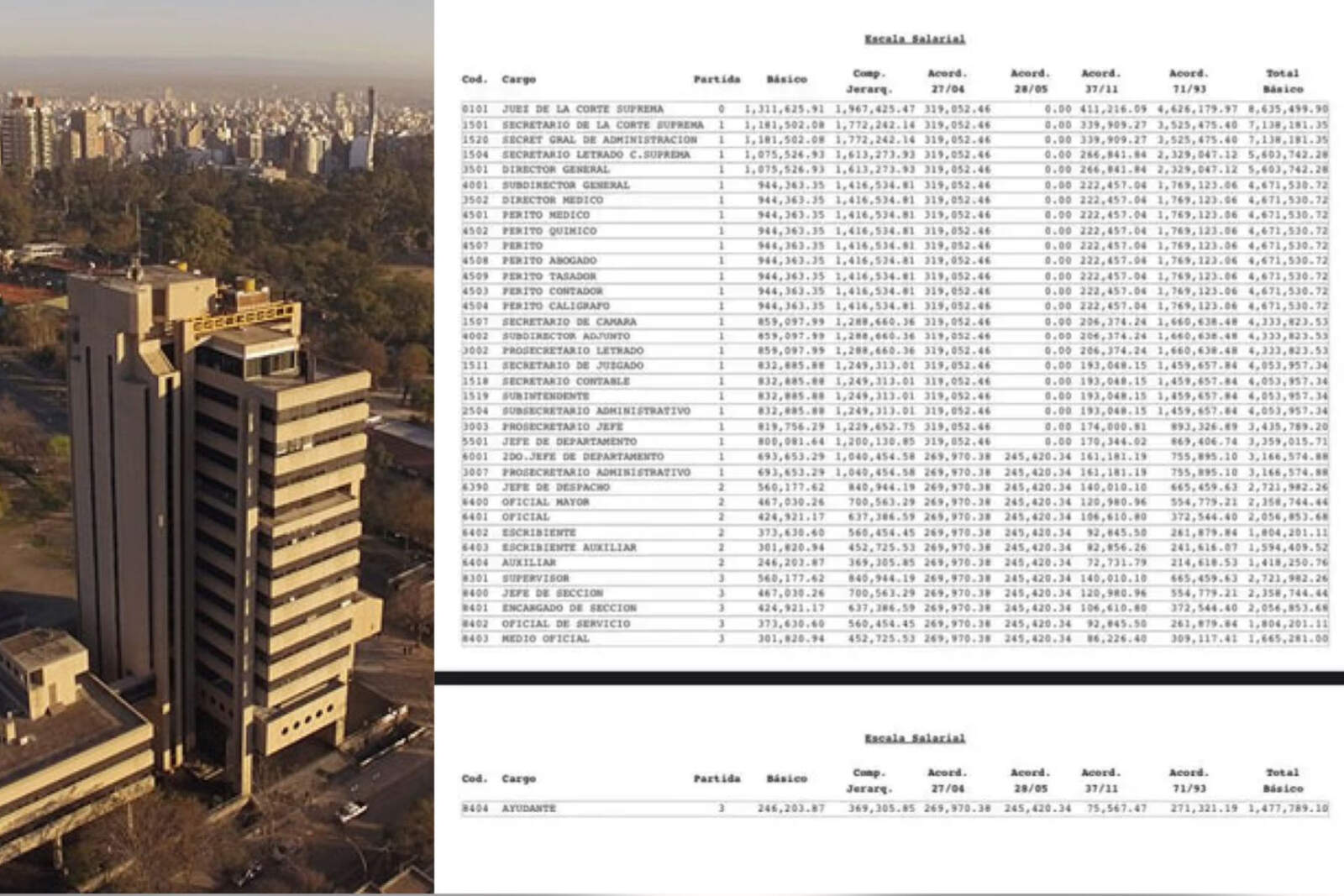
Absolute job stability and benefits such as the judicial recess make these positions a desired target for the social sector. In a national context of economic fragility and low wages, the Judiciary offers salaries that far exceed the average. The initial net income is above 2 million pesos.
El análisis de los datos oficiales de la Justicia Federal de Córdoba revela que únicamente 11 de los 30 magistrados federales cordobeses no poseen familiares designados.
Public resources and lack of management
The salary scale in effect since October shows a base of $1,477,789, to which various additional payments for seniority and degrees must be added. With these bonuses that increase the net by fifty percent, the initial net salary easily exceeds 2 million pesos today. This dynamic of privileges is financed with taxpayers' resources, while complaints persist about the lack of supplies to work.
Judicial sources consulted warned about the existence of exchanges of favors with external business sectors to obtain positions. Inefficiency in resource allocation coexists with fierce disputes over appointments and a notable lack of adequate technology. Meanwhile, the bureaucratic structure expands through blood ties, and the justice service faces serious material and operational limitations.
La magnitud del fenómeno varía según el caso, observándose desde funcionarios que lograron nombrar a un solo hijo hasta clanes familiares enteros.