Machado was left adrift in the Caribbean and was rescued in a private operation that almost failed, according to the WSJ
Compartir:
"María!" was the cry that pierced the rain and wind in the midst of a completely dark Caribbean. Two boats were being violently shaken by waves nearly 3 meters (9 feet 10 inches) high, while from a fishing boat, cell phones were raised as if they were improvised flares. This is how the story begins of the journey undertaken to reach the Nobel Peace Prize.
The larger boat approached slowly, from there, a figure wrapped in a thick jacket and a black cap waved their arms and replied: "It's me, María".
It was María Corina Machado, the Venezuelan opposition leader had just crossed the most dangerous stretch of her clandestine exit from the country toward Norway. According to the account reconstructed by The Wall Street Journal, Machado and a small group had been adrift for more than three hours in the Gulf of Venezuela. This mishap began after the GPS fell into the water in the middle of the rough sea and the backup system failed.
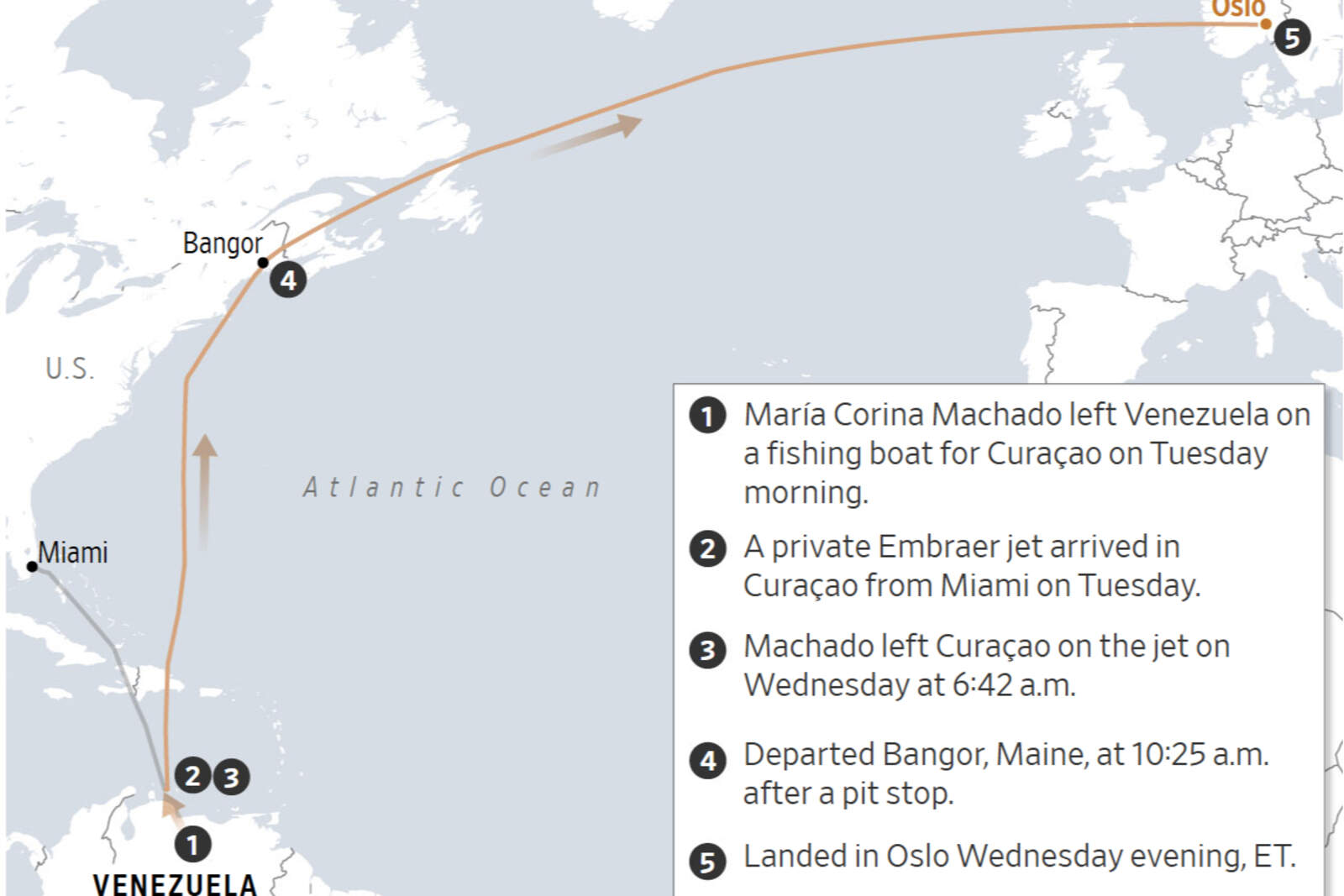
El recorrido de debió haber Corina Machado para llegar a Oslo
"Jackpot": an extraction that nearly failed
Bryan Stern, a U.S. combat veteran in charge of the extraction, recounted that he managed to get her onto the larger boat. Once safe, he gave her snacks, Gatorade, and a dry coat, and notified his team with a message full of relief: "Jackpot, jackpot, jackpot".
In a proof-of-life video sent to U.S. officials and shared with the Journal, Machado appears trying to stay on her feet while the boat crashes against the waves. "My name is María Corina Machado", she says. "I'm alive, safe, and very grateful".
Stern named the operation "Golden Dynamite Operation", in reference to the Nobel Prize and its creator. The mission was funded by private donors and lasted nearly three days.
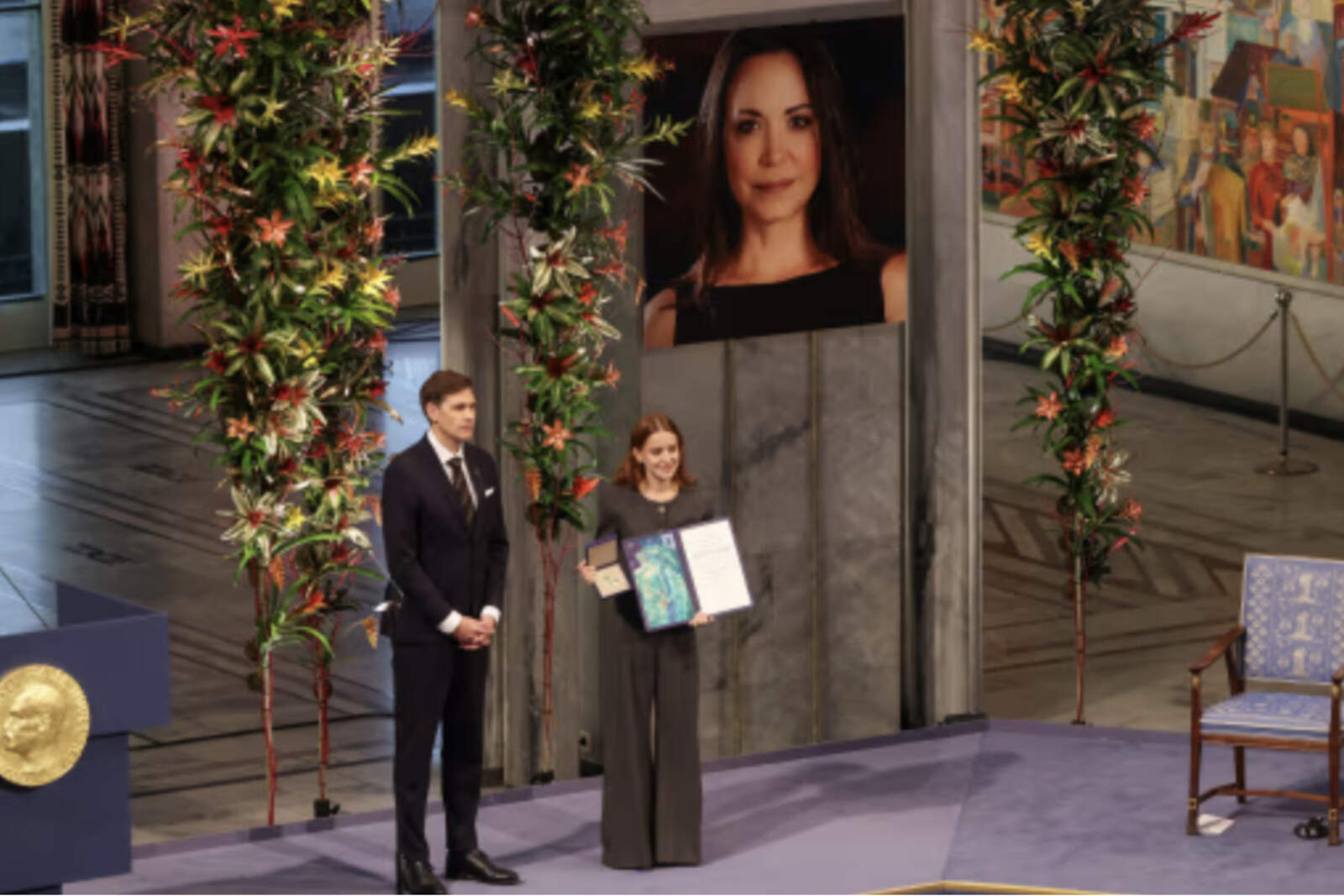
Machado left by land from a suburb of Caracas to a fishing village and then crossed by sea to the island of Curaçao, a journey of about 12 hours. From there, a private jet took her to Oslo, although she arrived after the official ceremony, where her daughter received the prize on her behalf.
La hija de Corina Machado recibió el premio de su madre
False rumors, disguises, and real-time coordination
Stern explained that he understood from the beginning the magnitude of the challenge: "This is any counterintelligence expert's dream or nightmare". He summed up the central problem with a blunt phrase: "Everyone knows her face. Moving María is like moving Hillary Clinton".
To avoid leaks, the team spread false rumors about her whereabouts while Machado left her hideout "with a wig and disguise". Nothing went as planned: there were mechanical failures that caused a 12-hour delay, extremely rough seas, and the constant risk of being mistaken. The escape took place in an area where the United States had intensified attacks against vessels suspected of drug trafficking.
When Machado's boat disappeared from the radar, Stern wrote desperately: "She didn't appear. Are there eyes in the sky?" He decided to wait despite the danger: "We're going to stay very still, very low, and turn everything off", he ordered.
Finally, hours later, they managed to locate the boat 25 miles from the agreed point. After verifying that they weren't armed, Machado was brought onto the second boat. Stern introduced himself calmly: "Hello, my name is Bryan Stern, nice to meet you".
Now safe in Oslo, Machado described the operation with a single word: "miracle".
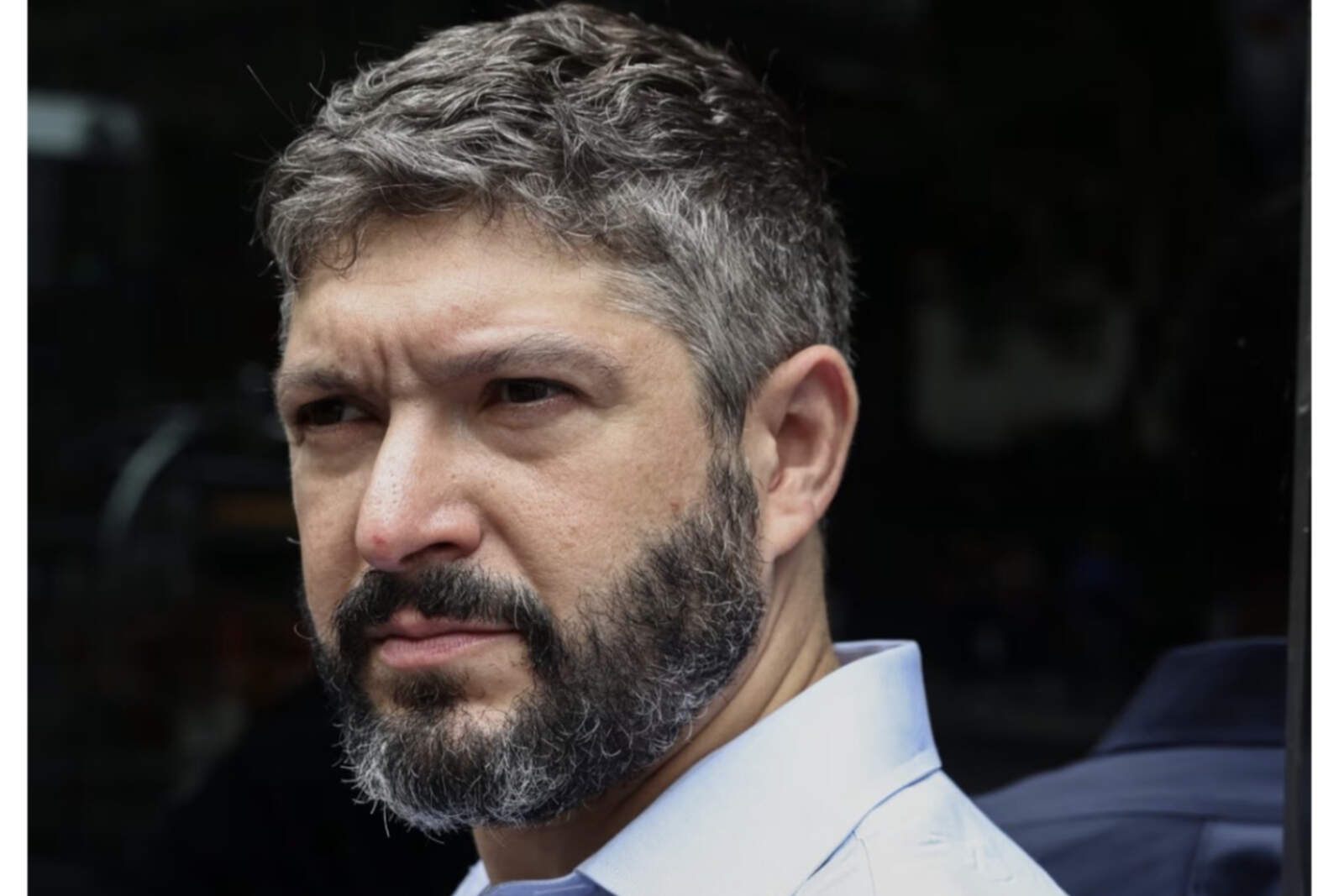
Bryan Stern, oficial estadounidense a cargo de la huída de Maria Corina.
Courage, conviction, and a cause that isn't abandoned
María Corina Machado's journey was not just an escape, it was a political decision made under direct threat from a regime that persecutes her for challenging it. She could have chosen silent exile much earlier. She chose to stay, to resist, and when leaving became inevitable, to do so without giving up her commitment to return.
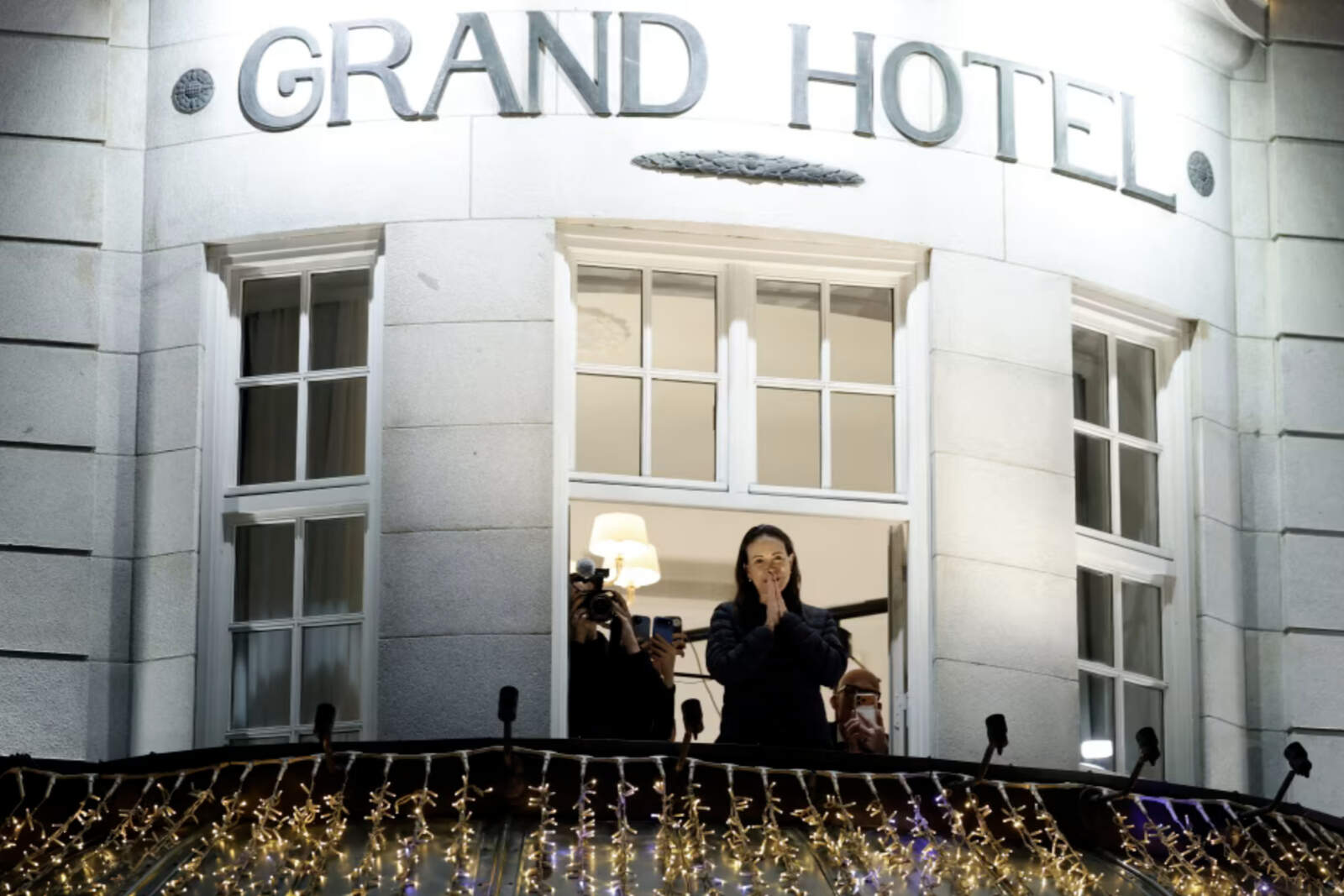
Corina Machado, tras una larga travesia cercana a la tragedia, pudo llegar a Oslo
Facing a dictatorship involves extreme personal costs: years in hiding, separation from her children, and even a highly dangerous extraction at sea. Even so, Machado kept her democratic conviction intact. Her departure from Venezuela doesn't symbolize a retreat, but rather the international projection of a struggle that remains alive.
In times when many give up, Machado's journey leaves an unbreakable message. Political courage doesn't mean the absence of fear, but acting despite it, when the cause is worth it.